Land Rover Discovery Sport review
Category: Family SUV
The 2024 Discovery Sport offers plenty of luxury and practicality but isn't the best family SUV to drive


What Car? says...
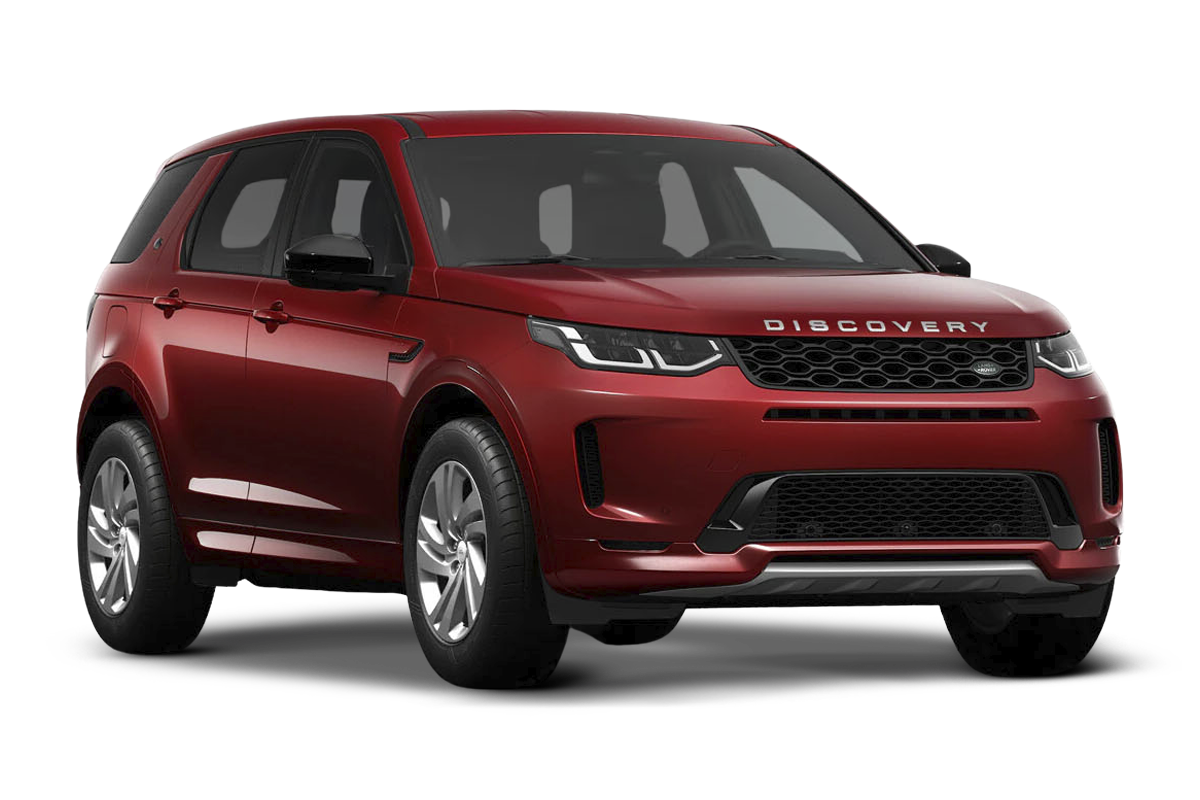
The Land Rover Discovery Sport is an exception to the rule that a car with "sport" in its name must be a high-performance model – or at least have go-faster looks.
Instead, what this family SUV does is offer a more compact and affordable alternative to the enormous Land Rover Discovery.
It still promises plenty of room for five people, while most versions can be had with a third row of seats for seven-seat practicality. On top of that it promises a plush interior, impressive towing capability and supreme off-road skills.
The Discovery Sport has been on sale for more than ten years now, so it’s had a few updates along the way. The latest revisions include a revised dashboard layout and a drop in power for the plug-in hybrid.
The Land Rover Discovery Sport competes with upmarket five-seat family SUVs – including the Audi Q5, BMW X3, Lexus NX and Volvo XC60 – as well as pricier versions of the Honda CR-V, Mazda CX-60 and Toyota RAV4. When equipped as a seven-seater, there’s also the Mercedes GLB to consider, as well as the Hyundai Santa Fe, Kia Sorento and Peugeot 5008.

What’s new?
- May 2025: Luxurious Tempest and Gemini special editions released, with names that hark back to codenames given to prototype models of previous-generation Discoveries
- July 2024: Discovery ‘35th Edition’ launched with new engine
- November 2020: facelift brings tweaked looks, updated infotainment and mild-hybrid engines
- June 2018: Discovery gets new twin-turbo diesel engines and extra driver assistance tech
- February 2017: All-new Land Rover Discovery appears in dealerships
Performance & drive
What it’s like to drive, and how quiet it is
Strengths
- +Well-weighted steering
- +D200 offers great low-end power
- +Quiet at a cruise
Weaknesses
- -PHEV has a poor electric range
- -Lumpy ride on standard suspension and big wheels
- -Lots of body lean in corners
How fast is it and which engine is best?
The Land Rover Discovery Sport’s engine range is simpler than before, with just two mild hybrid (MHEV) diesels and one plug-in hybrid (PHEV). There is no pure petrol option.
We haven’t driven the entry-level 2.0-litre diesel, badged D165. On paper, its 161bhp output isn’t as powerful as most big SUVs, and the 0-62mph time of 10.2sec suggests it will feel pretty sluggish. It’s still capable of towing up to 2200kg, though.
The D200 has a more powerful version of that engine, with 201bhp and a 0-62mph time of 8.6sec. There’s plenty of low-down grunt, and it feels pleasingly punchy across the rev range. Its relatively effortless performance makes it our pick of the engine range, especially if you frequently travel with a full car. It also has an impressive 2500kg towing capacity.
The P270e PHEV version combines a 1.5-litre petrol engine that drives the front wheels with an electric motor driving the rears.
It’s the quickest way to travel in a Discovery Sport, covering 0-62mph in 7.4sec when the petrol engine and electric motor combine forces. Run on battery power alone and the electric motor is nippy enough around town, but it builds up to motorway speeds at a more moderate pace.
Is it agile and is the ride comfortable?
Driving a Discovery Sport with 20in wheels on standard suspension can get a touch bumpy around town. Opting for smaller 18in or 19in wheels, or selecting the Comfort setting with the optional Adaptive Dynamics adjustable suspension system, helps take the edge off that. The ride improves on motorways, where it's quite a relaxing mile-muncher.
The Discovery Sport floats and wallows more over undulating roads than the Audi Q5 and the BMW X3, although it never feels so loosely damped that it’ll make your passengers go a verdant shade. Compared with rivals, the Discovery Sport is more comfortable than the Mazda CX-60, but there are less bumpy family SUVs available, such as the Q5 and Volvo XC60.
The P270e PHEV has a slightly firmer setup than the rest of the range to deal with the added weight of its battery. While the ride is slightly lumpier and it doesn’t control its body movements over dips and crests quite as well, it’s still largely comfortable. That said, the XC60 T6 strikes a better balance of being soft and well controlled.
There's noticeable body lean when you corner with pace in the Discovery Sport, and with all-weather tyres fitted there's not a vast amount of grip. It's certainly not as keen to scythe through bends as a Q5, and never feels as agile along twisting country roads as an X3.
The steering is a little too quick given the car's ponderous nature, and it's overly keen to return to its straight-ahead position to feel completely natural at speed. That said it is light around town, which makes it easy to manoeuvre.
All in all, the Discovery Sport feels rather disjointed if you try to drive it briskly, and the heavier P270e PHEV version is even more compromised. It’s far more at ease being driven at a moderate pace when you can enjoy its more relaxed nature. What it lacks in on-road handling is more than made up for by its off-road capabilities though – four-wheel drive is standard and you also get a full roster of off-road systems, including Terrain Response to maximise traction, hill-descent control to get you down slopes safely and low-traction launch.
Is it quiet and how easy is it to drive smoothly?
The P270e PHEV’s refinement is impressive. You’re aware from the background thrum that the engine has three cylinders – one fewer than the Discovery Sport’s rivals – but it doesn't sound as vocal as those fitted in the Honda CR-V or Toyota RAV4.
You hardly feel any vibration through the steering wheel, while the switch between power sources is smooth, if sometimes a little slow. It’s certainly better than the rather clunky CX-60 PHEV, but the XC60 T6 is more responsive.
The nine-speed automatic gearbox with the diesel engines can be a little laggy at low speeds but the shifts are slick and quick once you’re on the move.
Engine noise from the diesel engines blends into the background hum at motorway speeds, and is impressively smooth under hard acceleration. Road roar is very well contained in all versions, but you’ll hear more wind noise than you would in a Q5 or X3.
What’s the range and efficiency like, and how quickly can it charge?
With an 11.9kWh (usable capacity) battery, the P270e can officially travel up to 38 miles on pure electric power, depending on the trim level. While that was pretty average a few years ago, it’s quite disappointing against newer rivals today, especially when the RAV4 has an official figure of 85 miles.
We’d expect no more than 30 miles in real-world conditions. For reference, the Volvo XC60 T6 managed 35 miles in our tests while the Audi Q5 covered 45 miles on the same day. Meanwhile, the Mercedes GLC 300e travelled an impressive 57 miles in another test.
To charge, the P270e takes more than two hours to get from 0-100% when using a 7kW home wallbox. There is the bonus of a CCS charging port that allows you to charge at speeds of up to 32kW from a fast public charging point, meaning it takes 30 minutes to charge up to 80%.
“The Discovery Sport has a plush ride at higher speeds, but the optional 20in wheels fitted to our plug-in hybrid test car meant the ride was easily upset by bumps and potholes. I've found that opting for smaller 18in or 19in wheels helps to eliminate this.” – Dan Jones, Reviewer

Interior
The interior layout, fit and finish
Strengths
- +Good visibility
- +Fantastic driving position
- +Beautifully trimmed interior
Weaknesses
- -Heavy reliance on touchscreen infotainment system
What does the interior look like and is it well made?
The Discovery Sport’s interior has evolved over the years, and the latest model has a tidier, simpler dashboard.
All versions get leather upholstery and you can choose between a rather sombre dark grey colour scheme or a two-tone ‘oyster’ colour that brightens up the seats, dash and doors.
The interior of the Discovery Sport is characterised by plenty of plush, dense-feeling materials and classy trim finishers. It’s plusher inside than many of the mainstream family SUV competition, including the Honda CR-V, but it doesn’t feel quite as solidly built or well-finished inside as the Volvo XC60.
Is the driving position comfortable and is it easy to see out?
The driver’s seat in the Land Rover Discovery Sport is a little narrow but still very comfortable, and even entry-level S trim comes with 12-way electric adjustment and a memory function. Top level Metropolitan trim has 14-way electric adjustment.
While the Discovery Sport’s chunky door mirrors provide a great view over your shoulder, they can obstruct forward visibility at junctions. Otherwise, the commanding seating position gives you a great view over the bonnet, while plenty of side windows and a tall rear window provide good all-round visibility.
All versions come with front and rear parking sensors plus a rear-view camera. Mid-level Landmark trim upgrades the camera to a 360-degree view one.
LED headlights are standard across the Discovery Sport range, but if you go for flagship Metropolitan trim they're upgraded to matrix LED units, which you can leave on full beam at all times without dazzling other drivers.
Is the dashboard and infotainment system easy to use?
All versions have a 12.3in digital driver's display. It's a crisp screen that displays information such as music tracks and sat-nav mapping alongside speed and engine data. The menus are a bit fiddly but it is more versatile than the rather basic setup in the Volvo XC60.
On earlier Discovery Sports there were physical dials to adjust the climate control temperature and engage the off-road modes. Unfortunately, the latest version has removed these and integrated these functions into the 11.4in central infotainment touchscreen. As a result, changing the settings has become a far more fiddly and distracting process.
The touchscreen’s Pivi Pro software also features in the Range Rover Evoque and Range Rover Velar. It looks sharp, but being crammed full of functions means the software isn’t quite as responsive to touch inputs as it used to be and it takes a while to get used to knowing where certain features are hidden.
That said, while its operating system is not as intuitive as the one in the BMW X3 (and the BMW iDrive rotary controller interface is much easier to use on the move), it’s still one of the better systems in the family SUV class, being more logical to use than the Lexus NX’s.
You get plenty of connectivity features, including Android Auto and Apple CarPlay smartphone mirroring. That means you can use smartphone navigation apps through the car’s touchscreen (although their instructions won't show on the driver's display, as they do when you use the built-in sat-nav).
All Discovery Sports come with the "connected" version of Pivi Pro, so you benefit from a voice control system, sat-nav and the ability to get ratings and reviews for destinations.
“The Discovery Sport has a high-quality feel inside, with an abundance of soft-touch materials and aluminium inserts. The driving position is nice and high, too, and I found it provides a good, commanding view of the road. ” – Lawrence Cheung, New Cars Editor

Passenger & boot space
How it copes with people and clutter
Strengths
- +Decent rear head and leg room
- +Reasonably sized boot
- +Plenty of storage cubbies
Weaknesses
- -No seven-seat option for the plug-in hybrid
How much space does it have for people?
Even very tall drivers won’t feel cramped in the Land Rover Discovery Sport. There's plenty of leg room, and the head room is among the best in the class. It's still fine even on models with the panoramic glass roof, which reduces head room slightly. It's not as wide in the front as the Kia Sorento, though.
A deep cubby between the front seats houses USB sockets and is the ideal place to keep your phone out of sight, while the two cupholders placed behind the gear selector can hold large takeaway cups securely.
The door pockets are massive – large enough to each take a 750ml bottle – and the glovebox is big enough to hold items such as a windscreen scraper, a pair of sunnies and the car’s handbook.
There's also lots of head room in the back, and while it's not as broad in the second row as some of the competition, the three individual second-row seats are very comfortable.
In most versions, you get a sliding second-row bench and a reclining backrest (it’s an option on entry level Dynamic S). With the bench slid back as far as possible, anyone sitting on them is treated to masses of leg room. If you slide the seats all the way forward (enlarging the boot), taller adults will find their knees pressed against the front seatbacks, but you’re unlikely to need to do this very often.
To have seven seats you'll have to opt for one of the diesel engines (not the PHEV petrol). The rearmost row is distinctly cramped and best suited to children or petite adults (even our most compact 5ft 3in tester felt pinched). Head room right at the back of the car is tight, and while leg room isn't awful, a shallow footwell practically forces your knees up around your ears.
When you pull a lever low down on the side of the outer seats of the second row, they spring forwards giving access to the third row (if fitted). They don't return to their original position automatically, staying further forward to free up leg room behind.
It's also worth pointing out that access to the third-row seats isn't great because the wheel arch juts into the gap passengers squeeze through to get in.
Still, this is one of the few premium-badged cars of its size available as a seven seater (the Mercedes GLB being a notable exception). If you’re willing to go non-premium, look at the Hyundai Santa Fe, Kia Sorento and Peugeot 5008 – they all have more spacious third rows.
How much room does it have for luggage?
An electric tailgate is standard on Landmark trim and above. Once open, it reveals a boot lip that sits flush with the boot floor, making it easy to lug heavy items into the back of the Discovery Sport.
Land Rover measures the boot capacity of their cars up to the roof (rather than up to the parcel shelf), so the Discovery Sport initially looks far more practical than its rivals on paper. In reality, the five-seat versions (or with the third row folded down in seven-seat versions) have enough space for eight carry-on suitcases. In our tests, the Audi Q5, Kia Sorento and Peugeot 5008 all fitted more carry-on cases.
The P270e PHEV model has a slightly reduced boot capacity, but we still managed to squeeze in eight carry-on suitcases. For comparison, the Q5 eHybrid, Lexus NX 450h and Volvo XC60 T6 PHEV took seven cases.
The third-row seats are easy to use and fold away into the boot floor when not needed, while the second row backrest will fold in a 40/20/40 split - and you conveniently have buttons to release them remotely from the boot.
“Unlike other versions of the Discovery Sport, the plug-in hybrid isn't available with seven seats, due to its location of the battery, electric motor and fuel tank. Still, boot space is impressive, and I managed to fit eight carry-on suitcases under the tonneau cover.” – Lawrence Cheung, New Cars Editor

Buying & owning
Everyday costs, plus how reliable and safe it is
Strengths
- +Competitive on PCP finance
- +Plenty of standard kit
- +Slow predicted depreciation
Weaknesses
- -Terrible reliability record
- -PHEV is in higher BIK bracket than rivals
How much does it cost and what equipment do you get?
The Land Rover Discovery Sport entry-level price costs about the same as the Lexus NX, but is less than most of its five-seat premium family SUV rivals, including the Audi Q5, BMW X3 and Volvo XC60.
Against seven seat-rivals, the Kia Sorento and Peugeot 5008 can be had for less, but the Discovery Sport feels like a more expensive product. Meanwhile our favourite seven-seater, the Hyundai Santa Fe doesn’t cost much more if you need a bit more passenger space.
If you’re willing to pay the premium for the Discovery Sport’s upmarket image, you can rest assured that it should have quite slow depreciation thanks in part to that premium badge. That means there should be some competitive PCP offers on our Land Rover deals page.
Even with mild hybrid tech, the fuel economy from the diesels is nothing particularly special, with both the D165 and D200 offering an official figure of around 43mpg.
The P270e plug-in hybrid has scope to cut down on your fuel costs, provided you religiously cover all those short journeys on battery power. It also has the lowest emissions by far, which makes it a tempting choice as a company car. It's worth noting, though, that it sits in a higher benefit-in-kind (BIK) tax band than most PHEV rivals.
Every Discovery Sport model comes with a hefty equipment list, starting with Dynamic S trim, which includes 18in wheels, dual-zone climate control, cruise control, keyless entry, automatic lights and wipers, ambient interior lighting, wireless phone charging and a heated windscreen.
Stepping up to Landmark trim is worth it if you can, because it adds extras including adaptive cruise control, a 12-speaker Meridian sound system, a panoramic roof and 19in wheels.
Metropolitan gets goodies such as 20in wheels, ventilated front seats and a head-up display, but it’s quite pricey for those extras.
Is it reliable, and how long is the warranty?
Reliability really isn’t a Land Rover strength. The Discovery Sport finished near the bottom of the seven-seater class in the latest What Car? Reliability Survey whereas the Mercedes GLB, Kia Sorento and Land Rover Defender finished higher.
In the overall brand league table, Kia ranked eighth, while Mercedes was further down in 22nd place and Land Rover in 26th place out of 30 car companies.
A three-year, unlimited-mileage warranty, which also includes UK and European roadside assistance, should help provide some peace of mind. That's about par for the class, although the Santa Fe and Sorento come with a five-year and seven-year warranty respectively.
How safe is it, and is it easy to steal?
The Discovery Sport received a five-star rating from Euro NCAP in 2022.
In terms of safety technology, automatic emergency braking (AEB), lane-keeping assistance and speed-limit sign recognition are standard across the range. If you want blind-spot assistance and a rear-traffic monitor you’ll either need to step up to Metropolitan trim or select the optional Driver Assist Pack.
“One of the Discovery Sport's trump cards is its slow depreciation. Over three years, it should hold onto its value better than a Peugeot 5008, which makes it a more competitive ownership proposition. I think that makes the list prices that bit easier to swallow” – Doug Revolta, Head of Video
Buy it if...
-You want a quiet and comfortable cruiser
-You occasionally need seven seats but not in a big car
-You’re after an interior that feels upmarket
Don’t buy it if…
- You don’t like relying on a touchscreen
-You want the most spacious seven seater
-You want a plug-in hybrid with a long battery range
For all the latest reviews, advice and new car deals, sign up to the What Car? newsletter here

FAQs
The Discovery Sport comes with five seats as standard but if you choose one of the diesel engines you can pay extra to have seven seats. For alternatives, see our best seven-seat cars page.
It's available with diesel mild-hybrid (MHEV) and petrol plug-in hybrid (PHEV) engines, but not as an electric car. If you're looking for an all-electric family SUV see our best electric SUVs page.
If you're a private buyer, our recommended version of the Discovery Sport is Landmark trim with the D200 diesel engine. For the cheapest company car you'll be better off with the (five-seat only) P270e PHEV.
| RRP price range | £45,520 - £59,310 |
|---|---|
| Number of trims (see all) | 3 |
| Number of engines (see all) | 2 |
| Available fuel types (which is best for you?) | petrol plug-in hybrid, diesel |
| MPG range across all versions | 41.7 - 190.4 |
| Available doors options | 5 |
| Company car tax at 20% (min/max) | £1,122 / £4,063 |
| Company car tax at 40% (min/max) | £2,244 / £8,127 |

