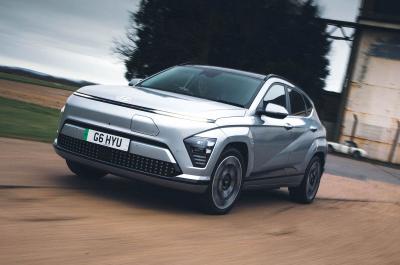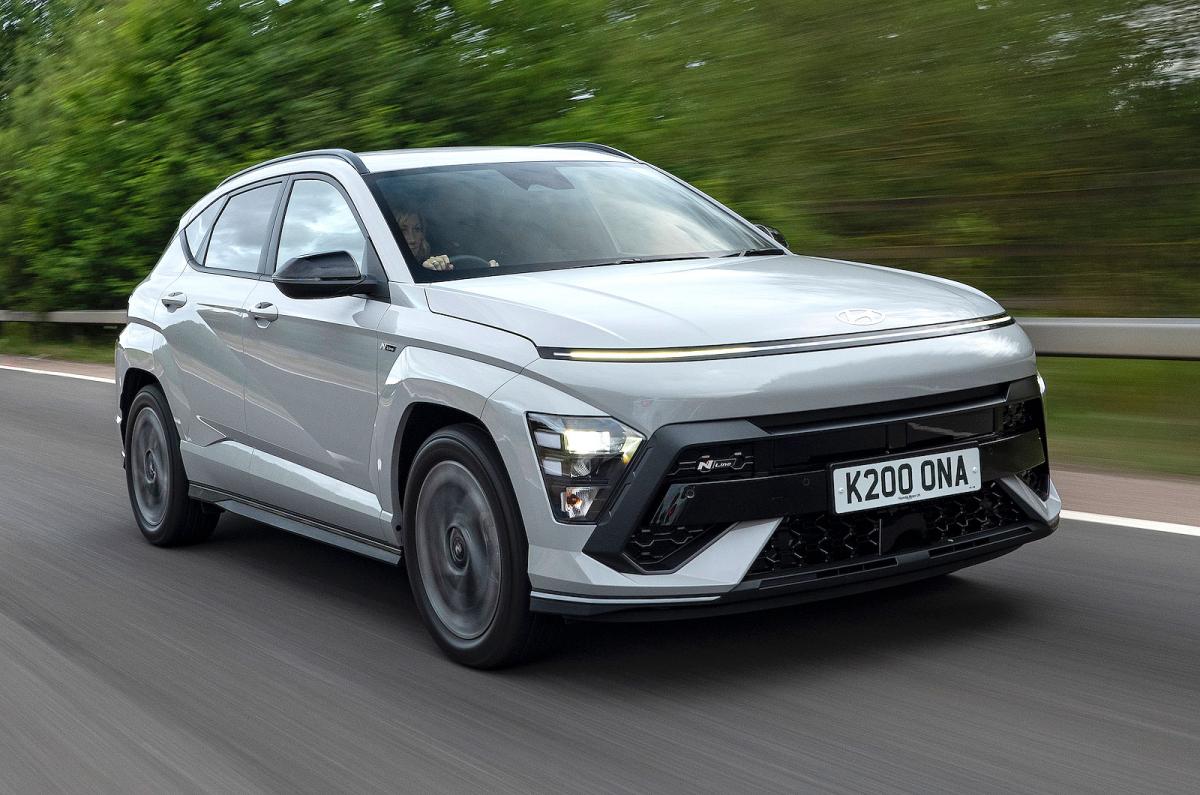
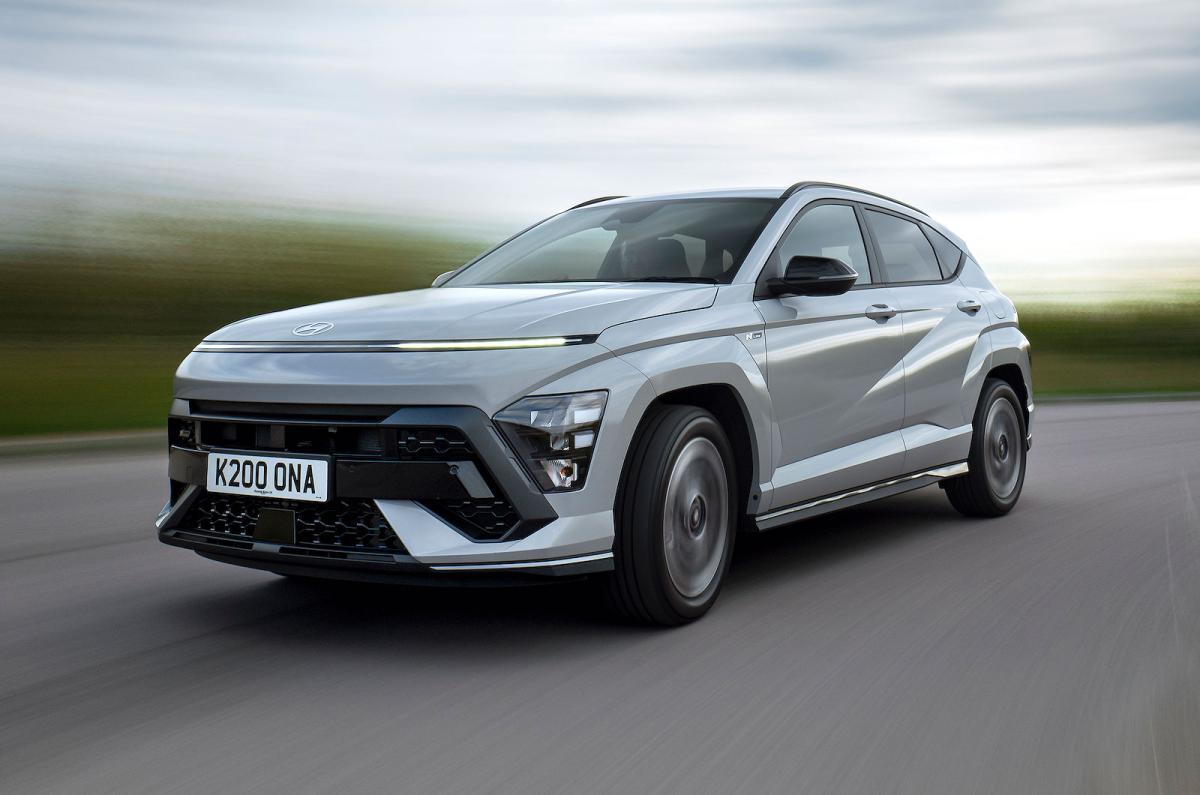
- Hyundai Kona front right driving
- Hyundai Kona front left driving
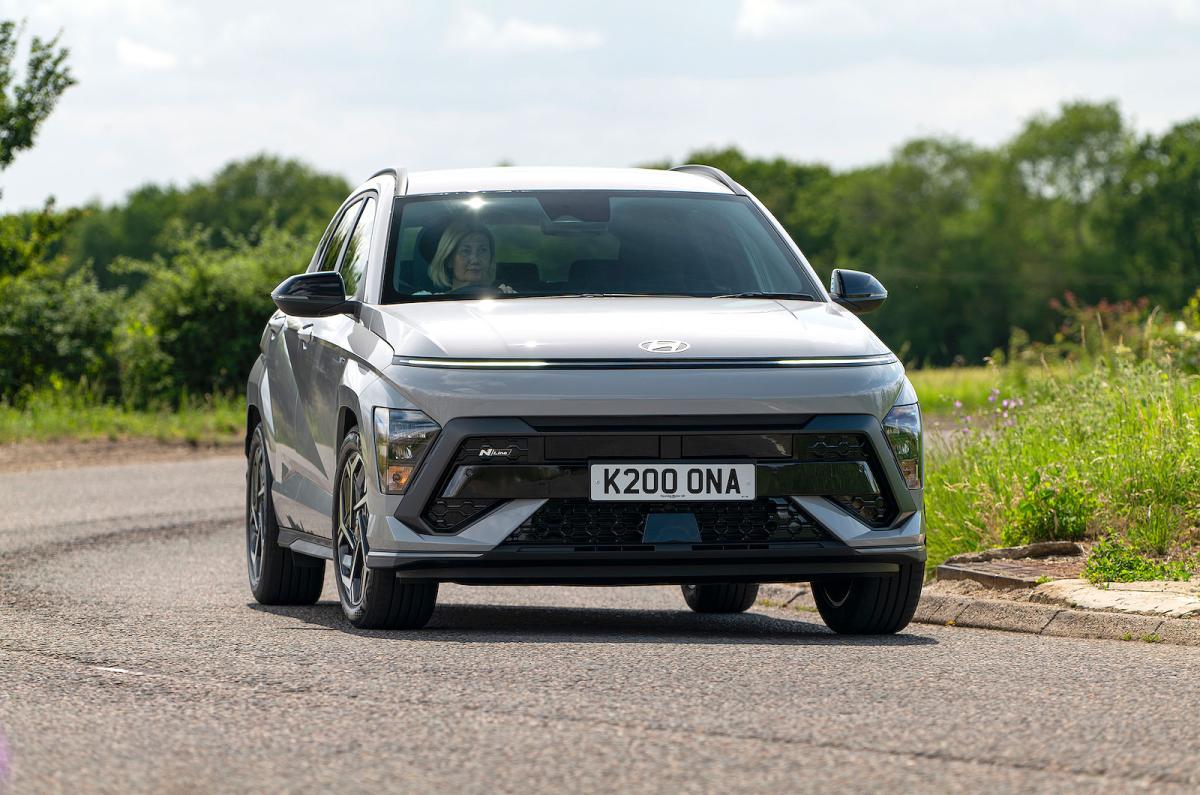
- Hyundai Kona front driving
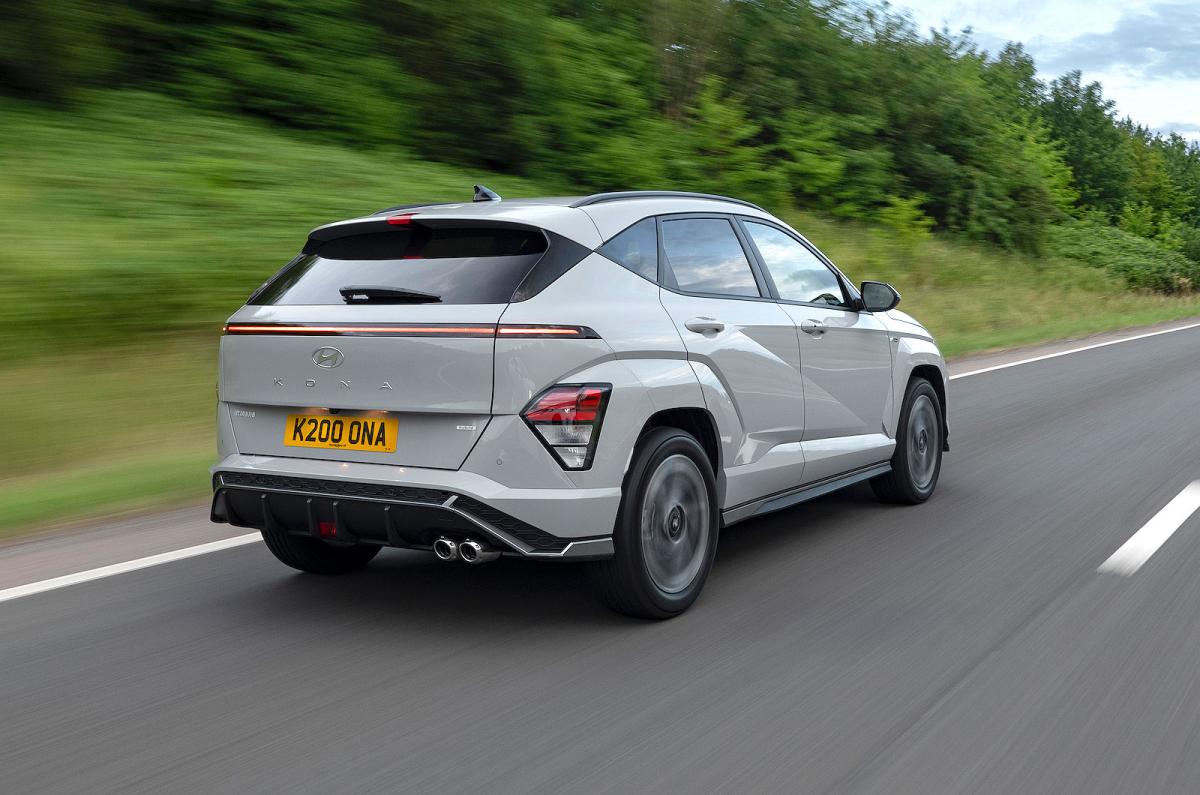
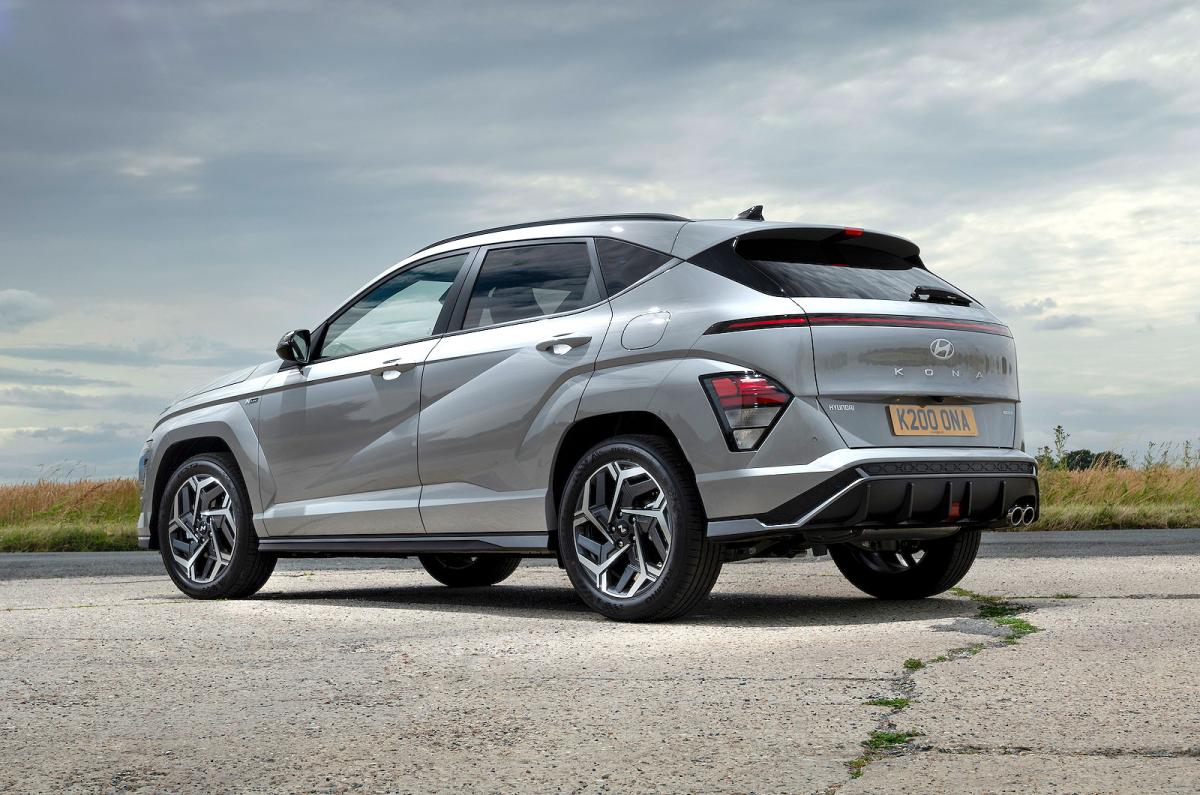
- Hyundai Kona rear right driving
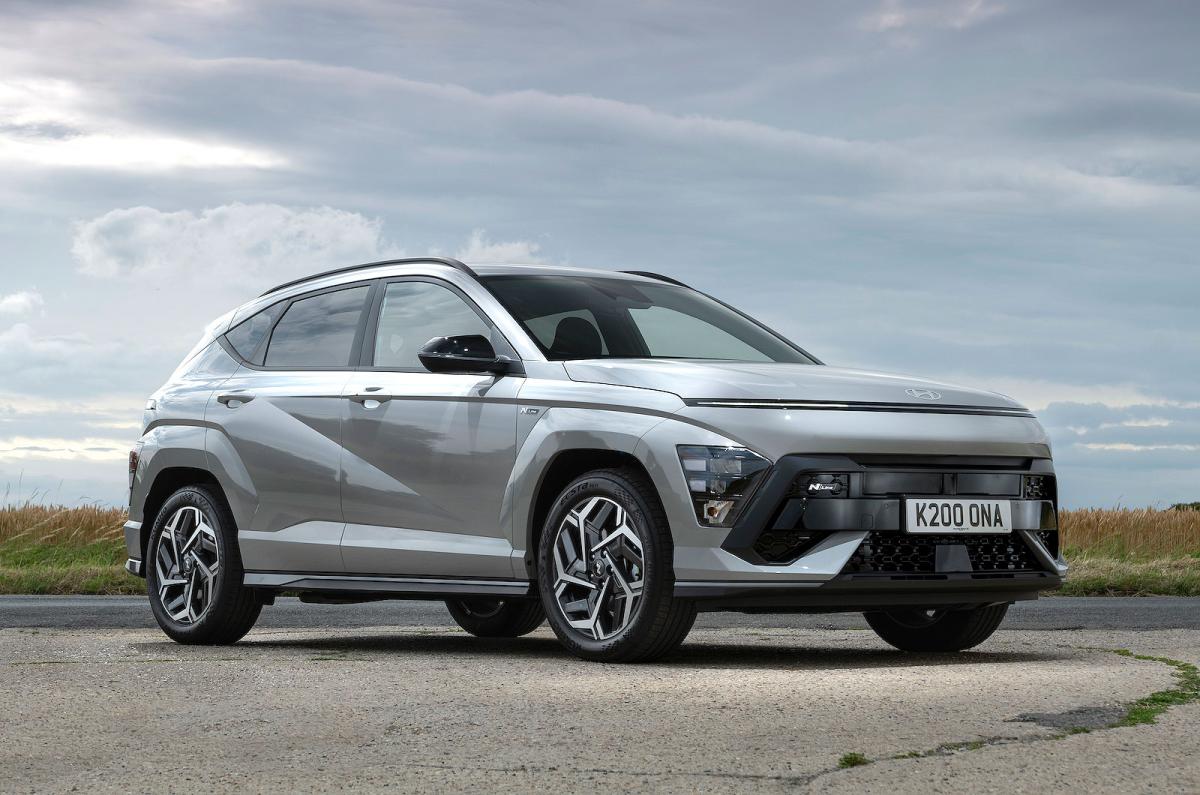
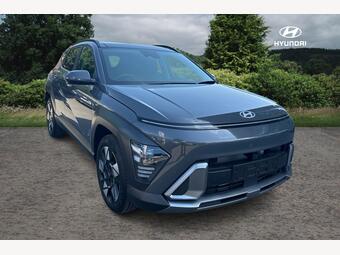
- Hyundai Kona front right static
- Hyundai Kona rear left static
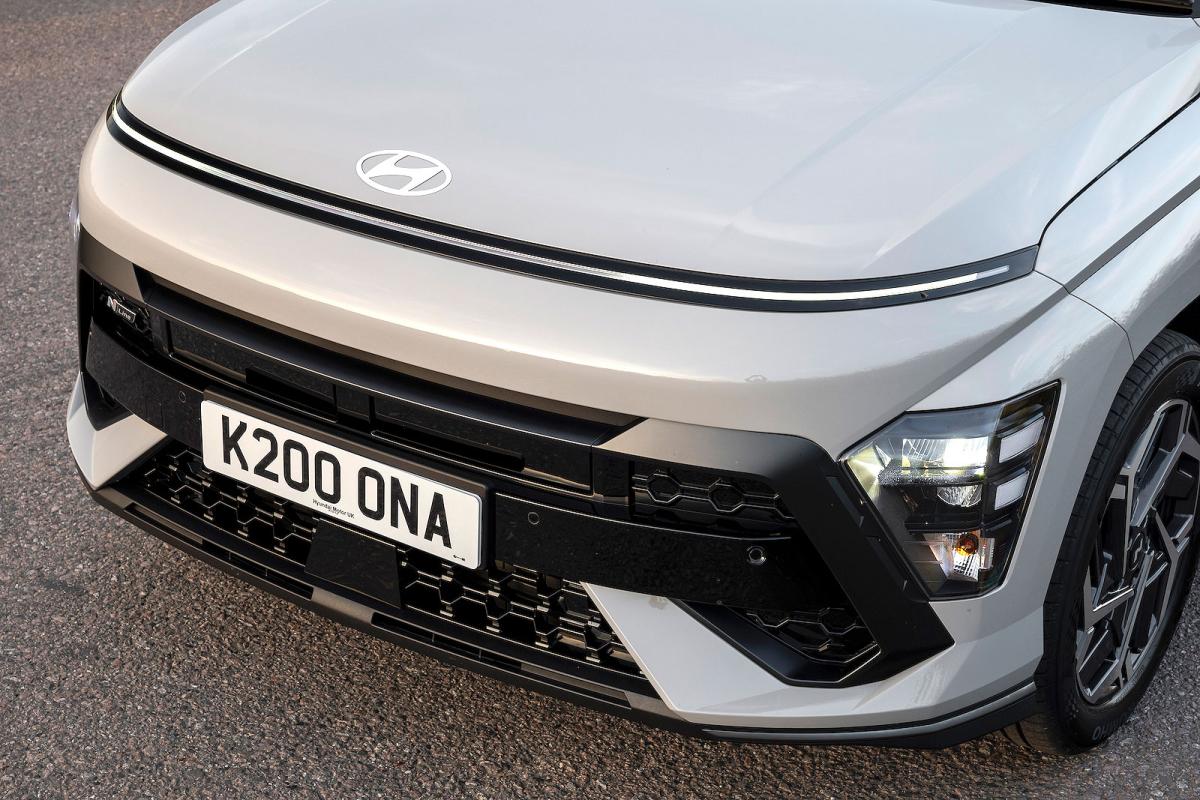
- Hyundai Kona headlights
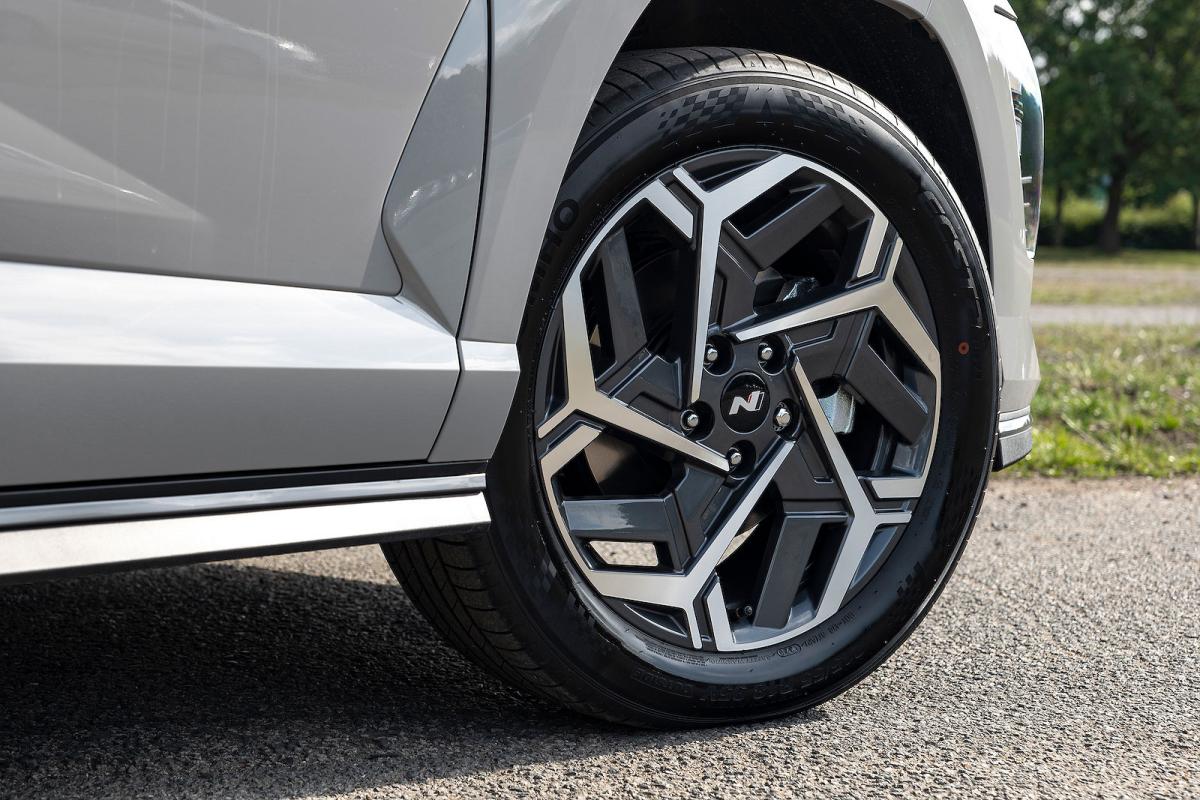
- Hyundai Kona alloy wheel
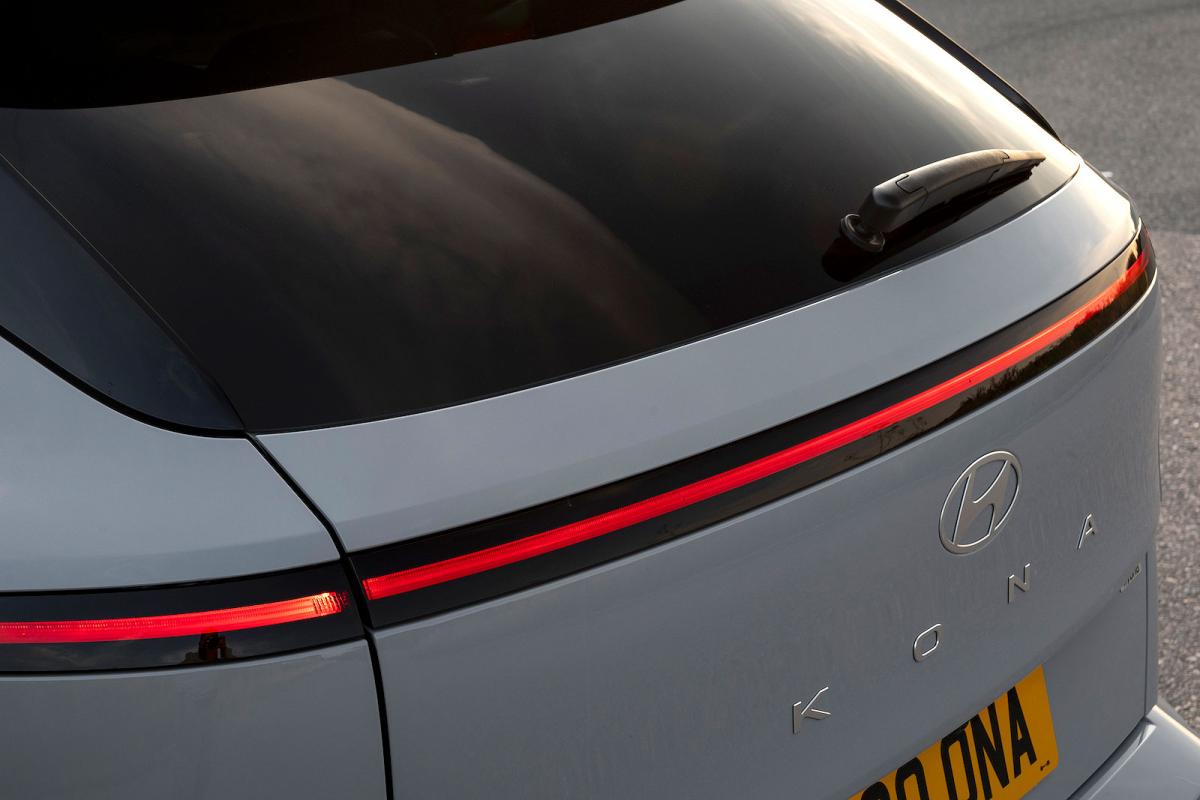
- Hyundai Kona rear lights
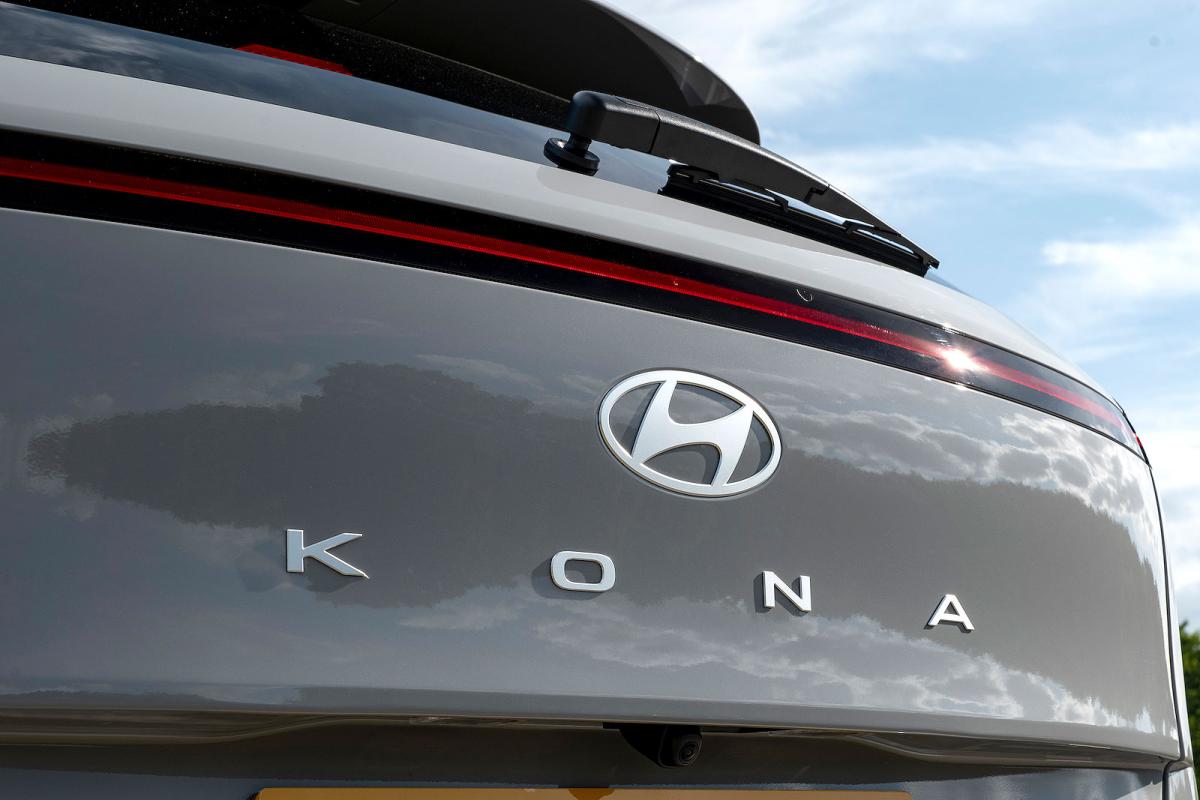
- Hyundai Kona rear badge
- Hyundai Kona front seats
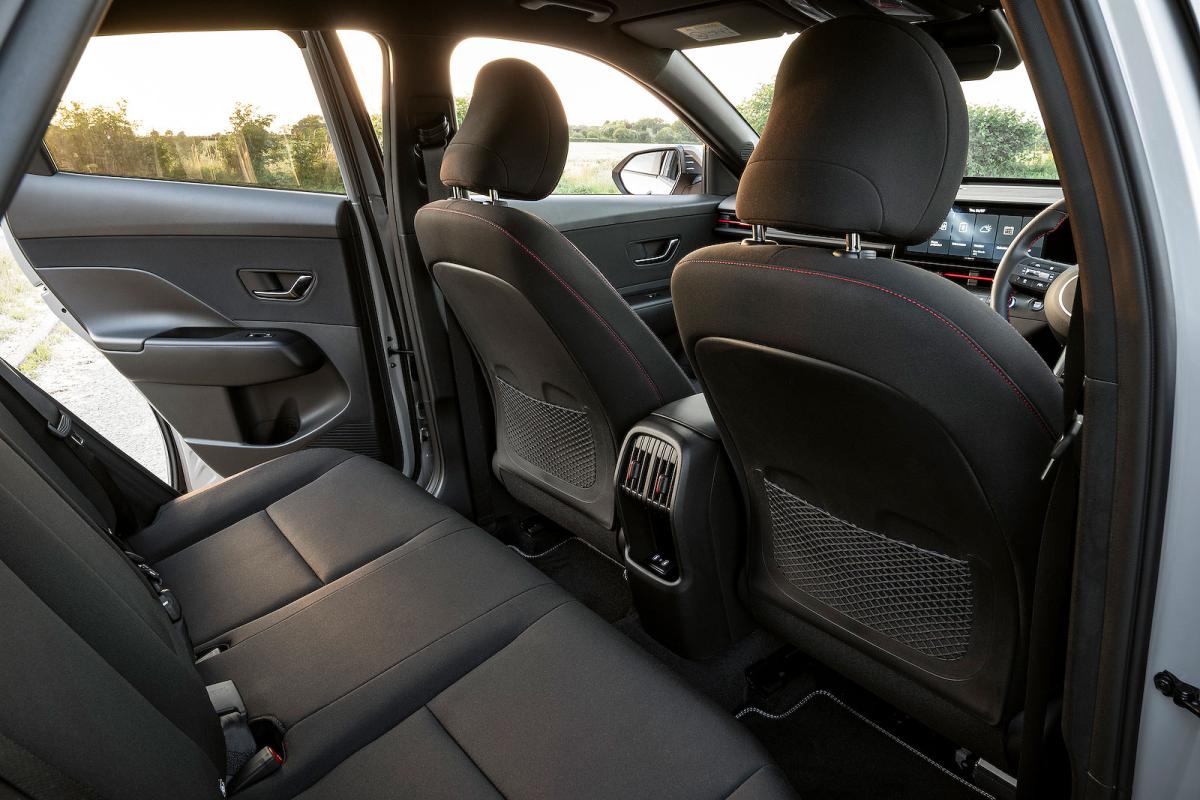
- Hyundai Kona back seats
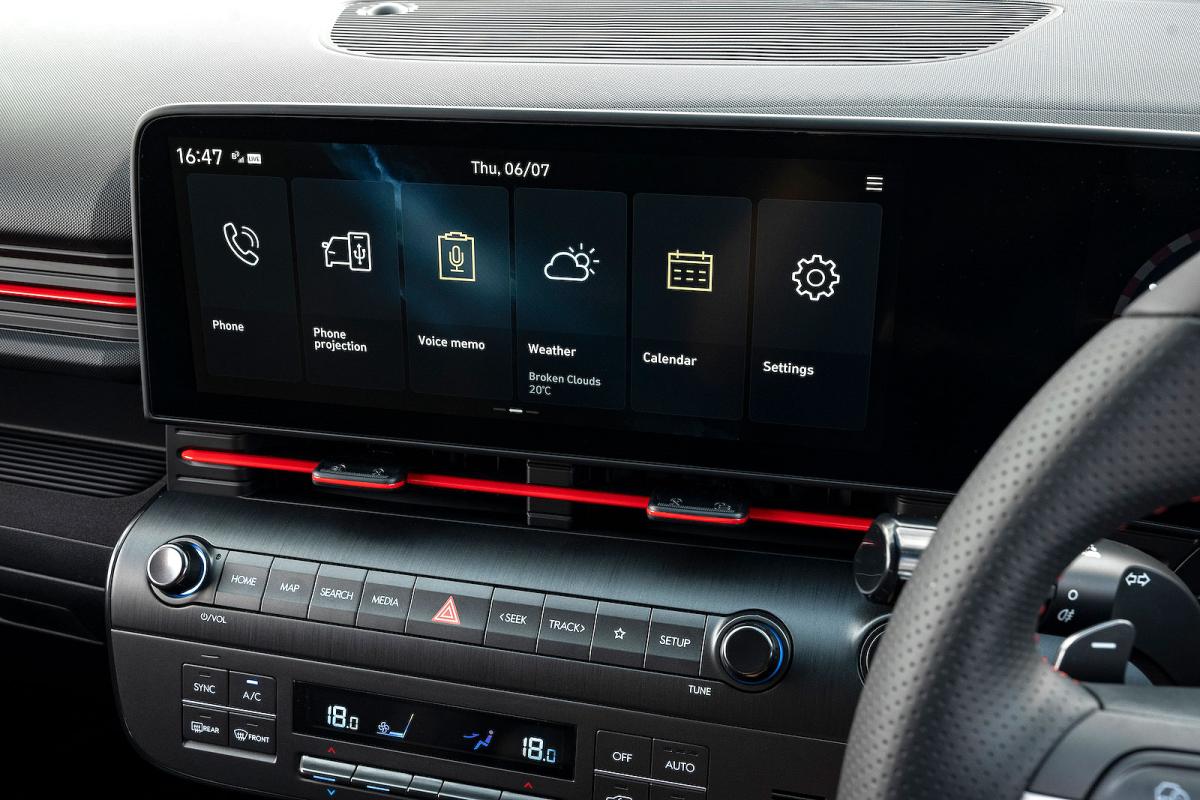
- Hyundai Kona infotainment touchscreen
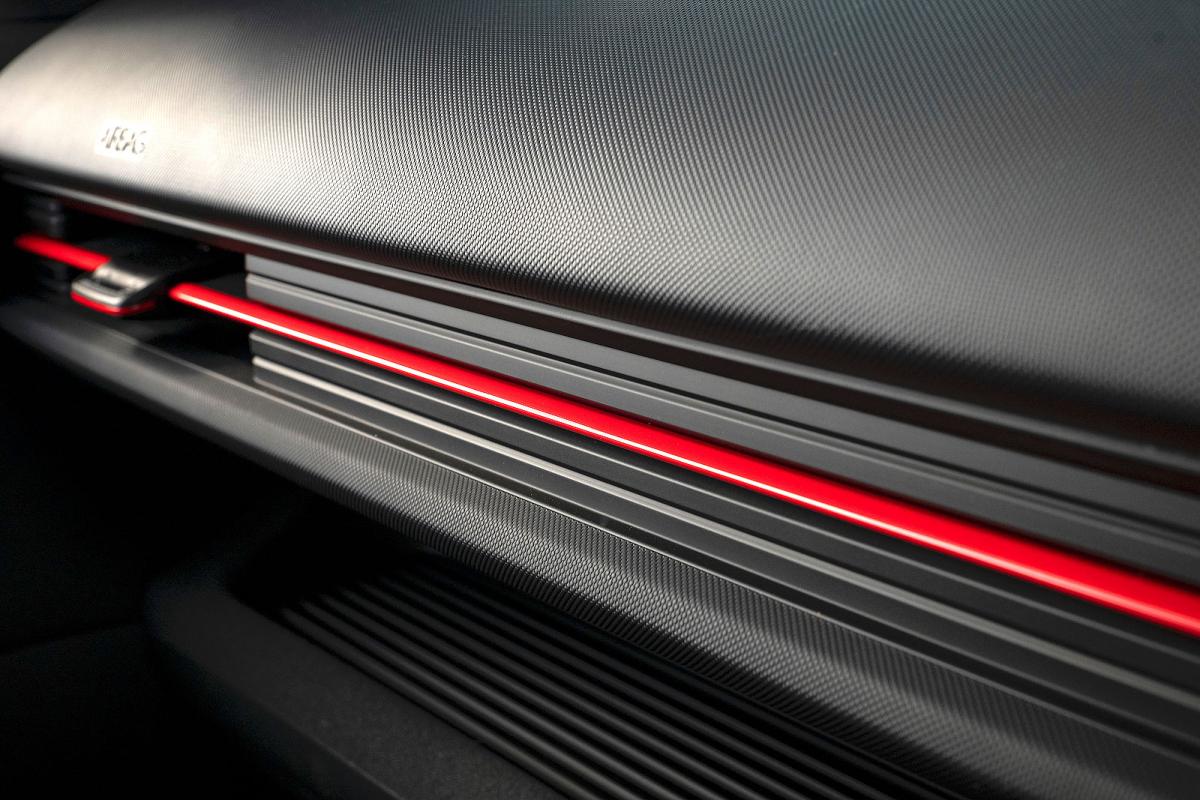
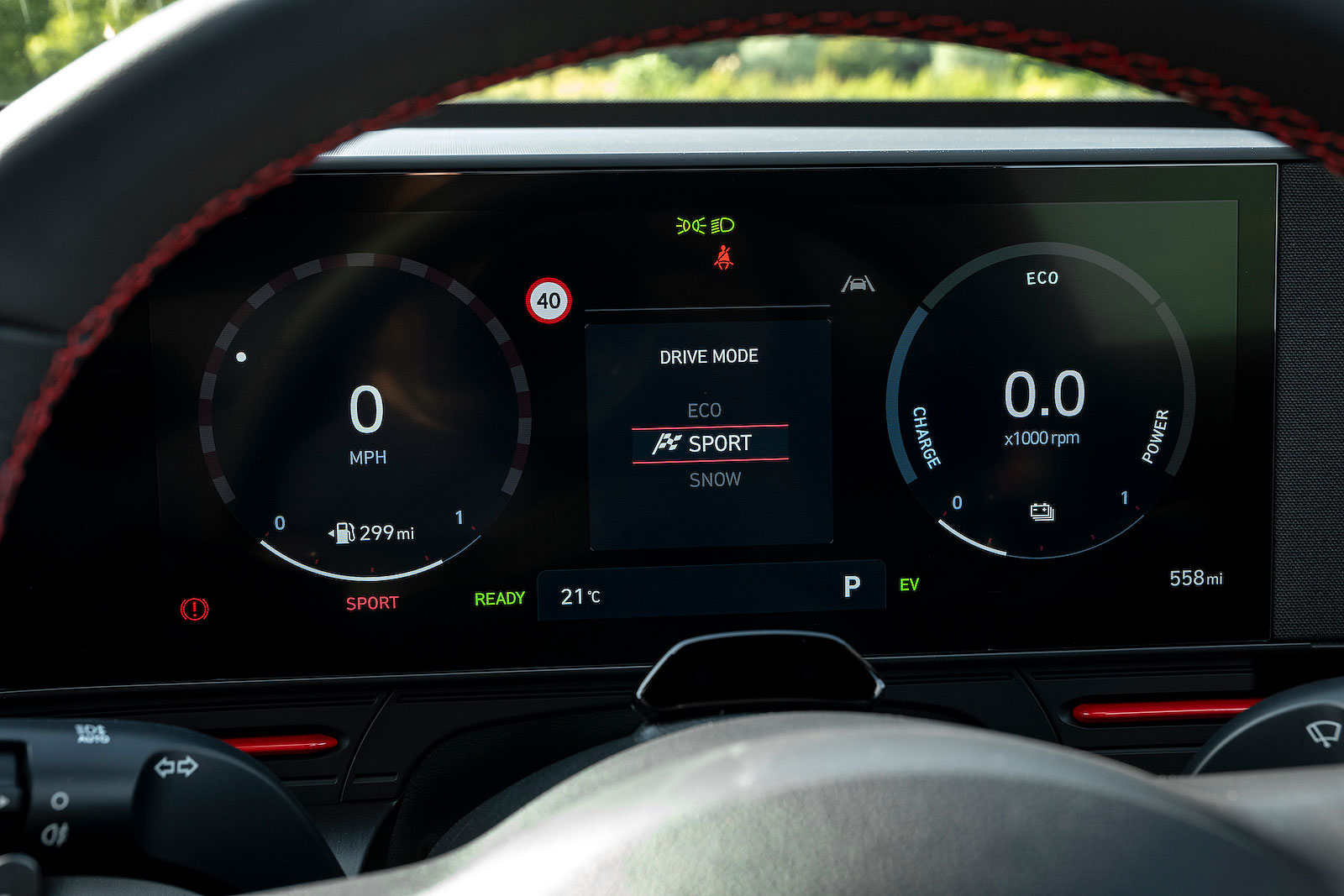
- Hyundai Kona dashboard detail
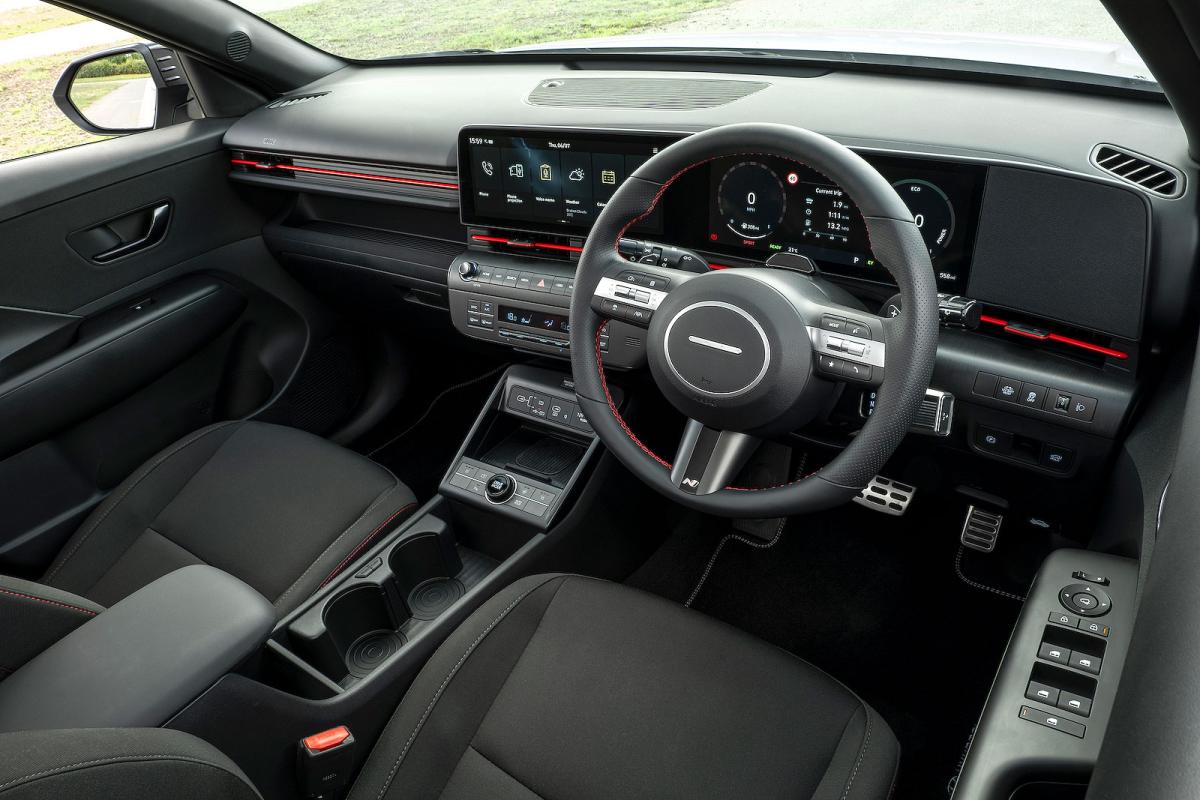
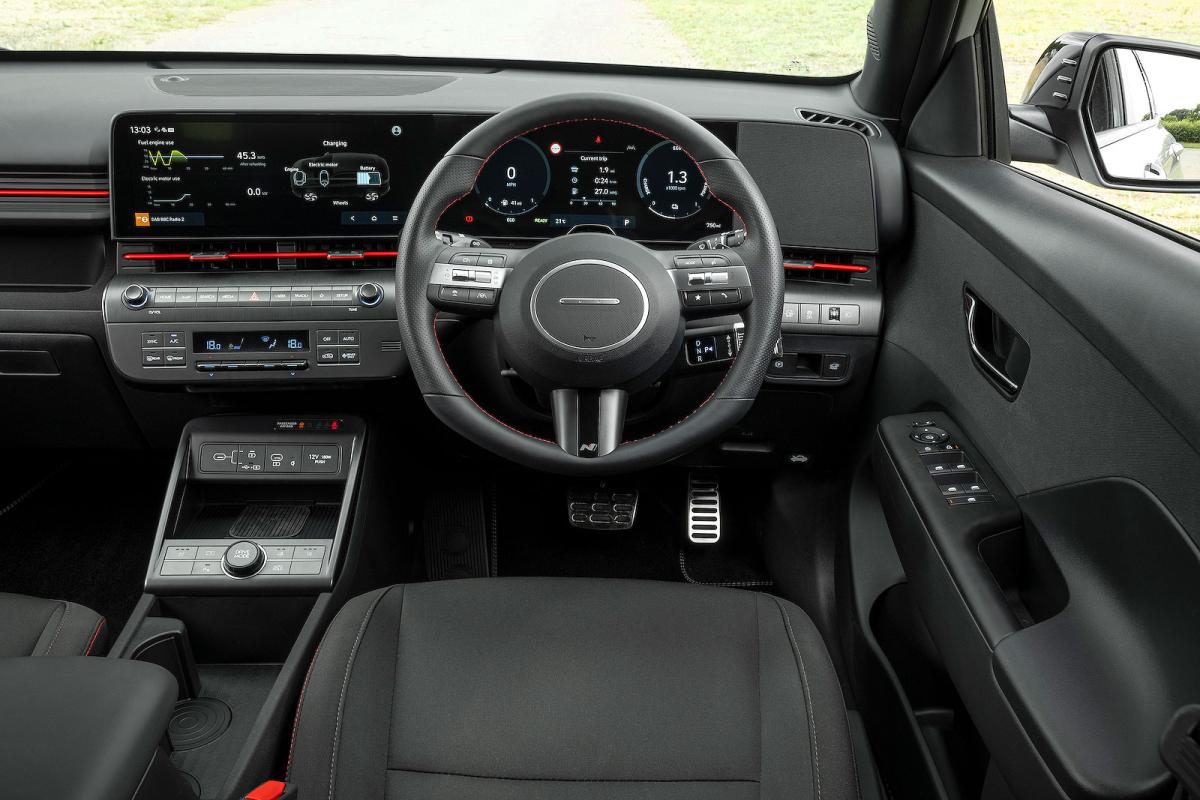
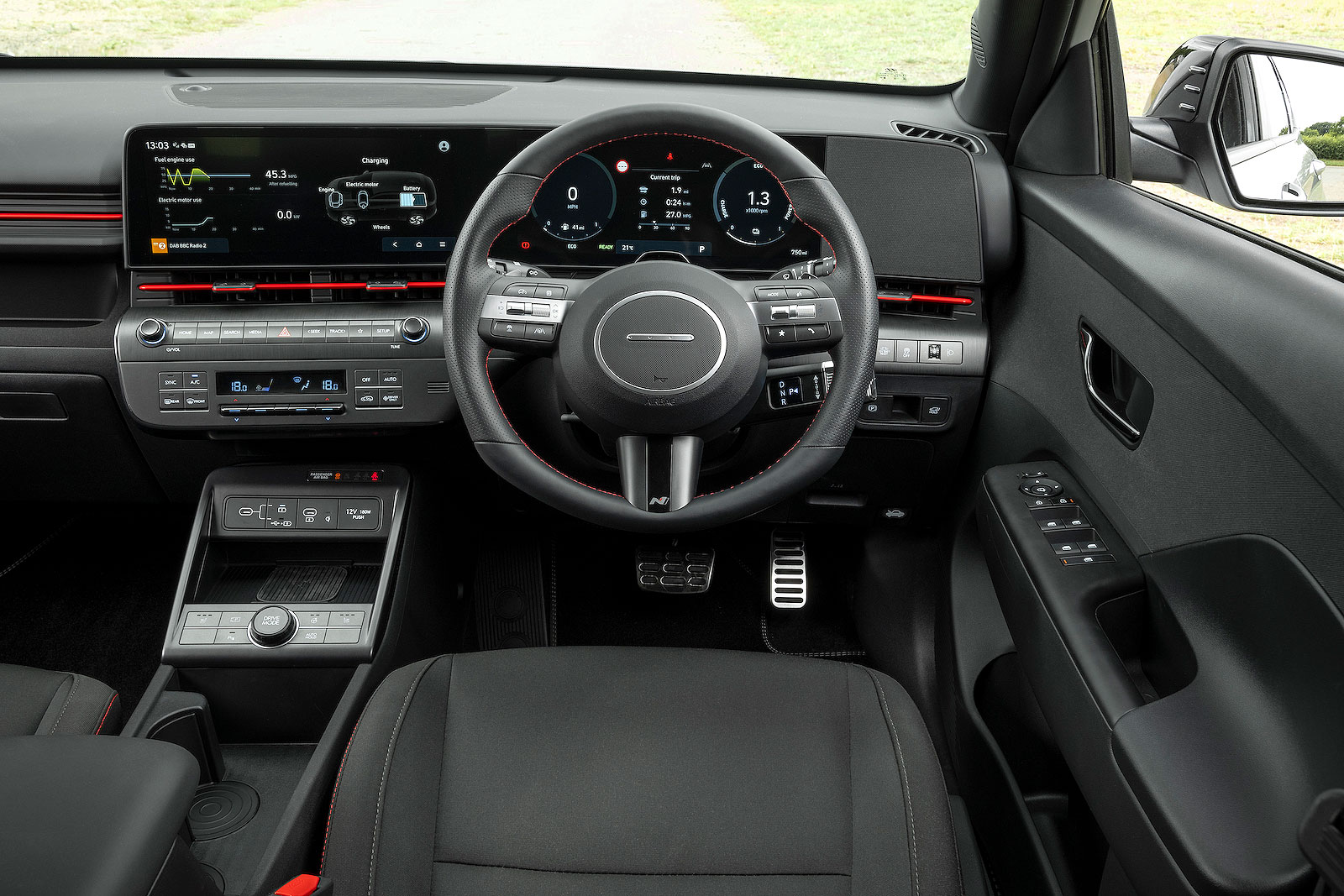
- Hyundai Kona dashboard
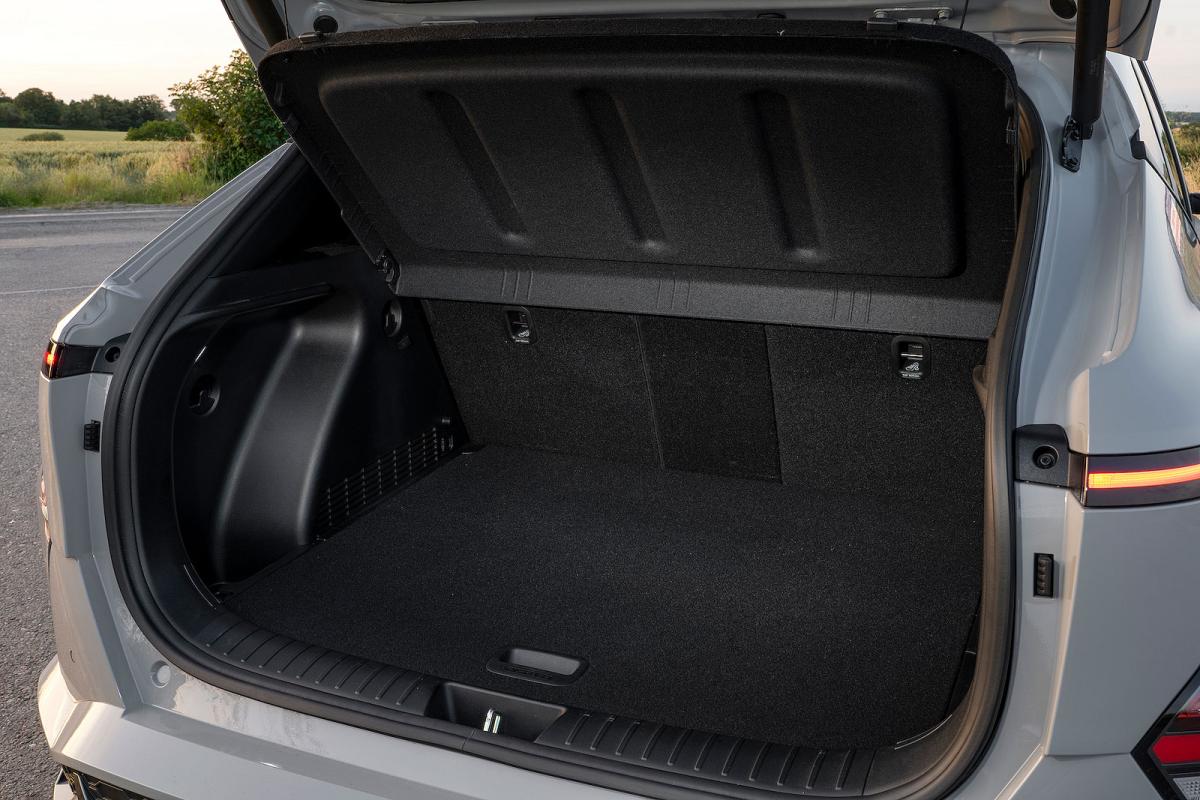
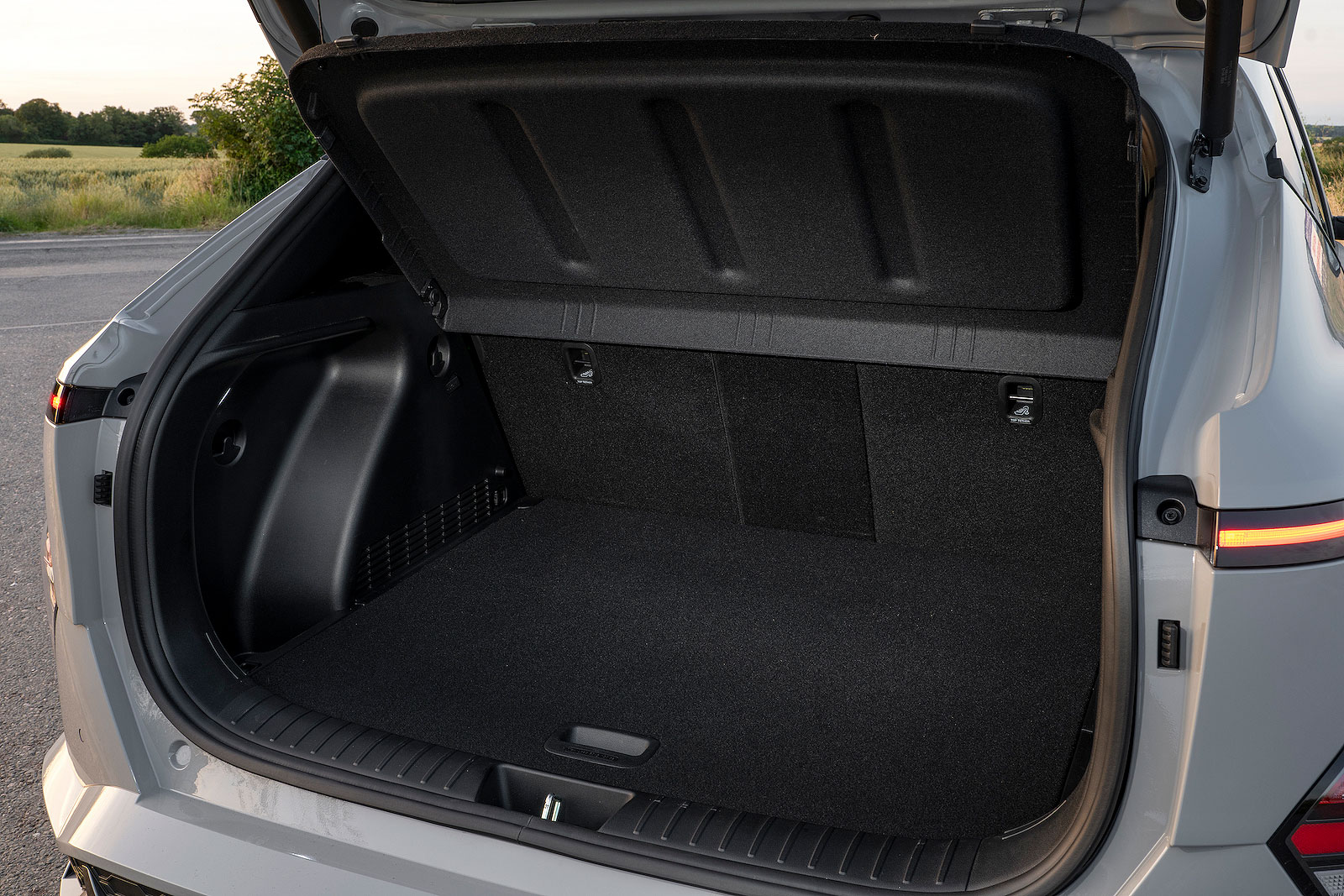
- Hyundai Kona boot
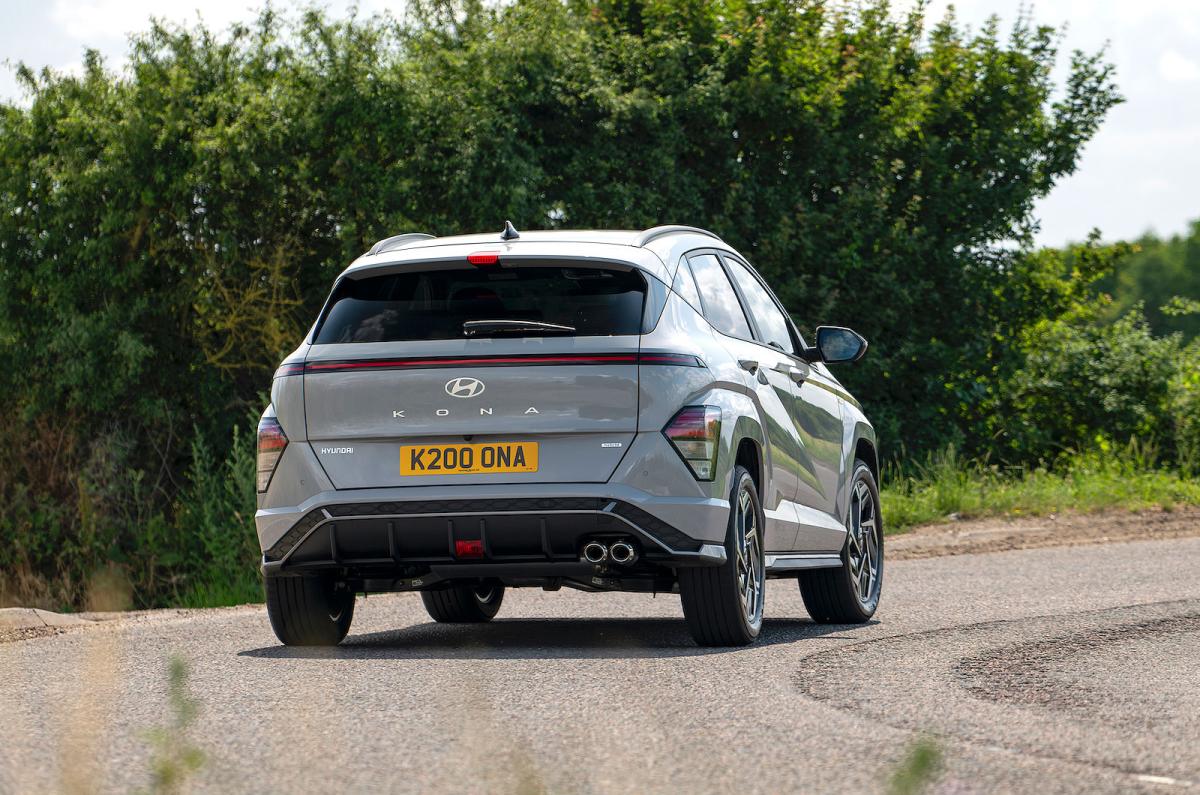
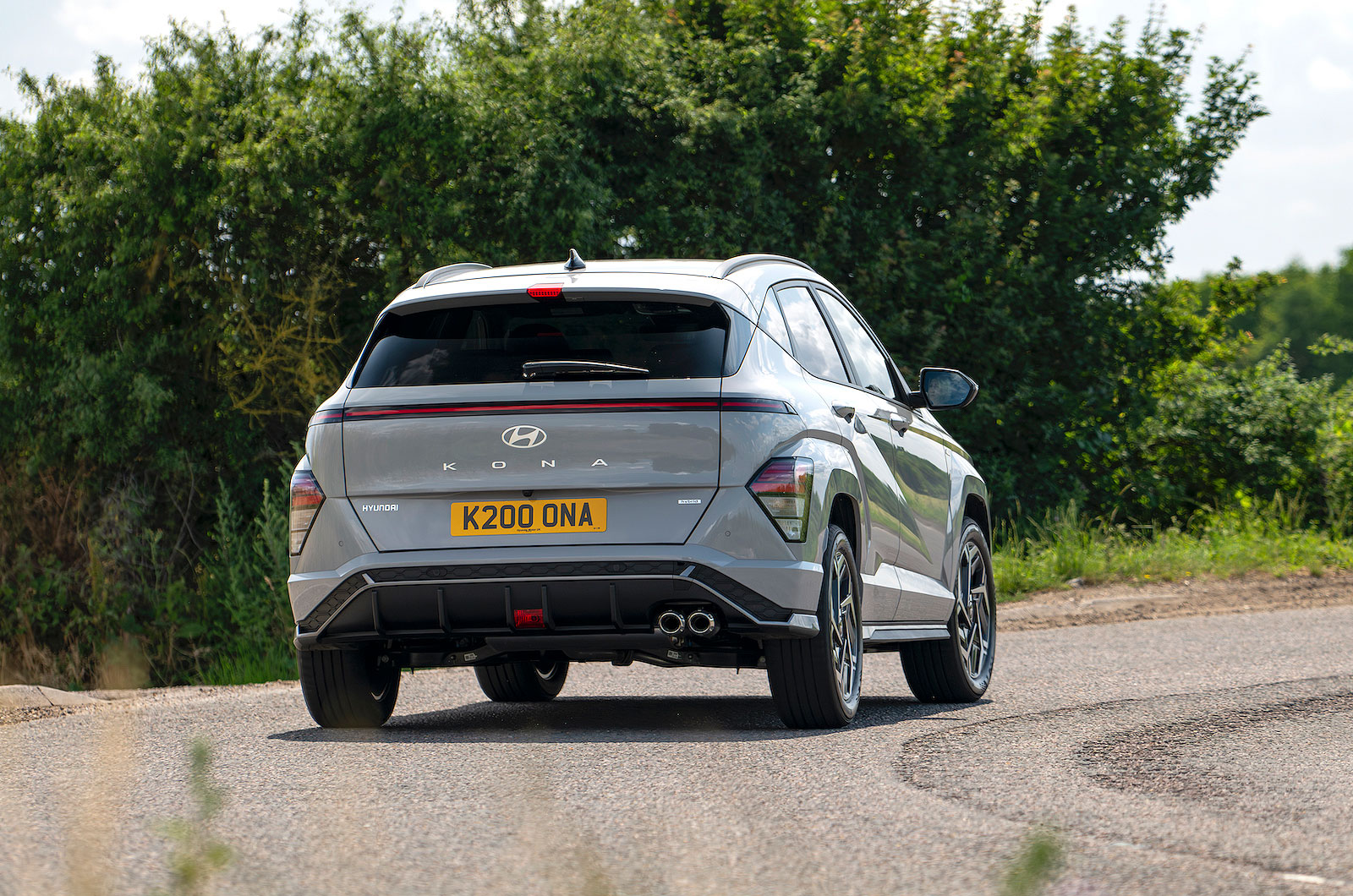
- Hyundai Kona rear cornering


What is What Car? best price?
The What Car? best price shows you the cheapest way to buy your new car, whether it's by choosing an in-stock car through our partner Autotrader or placing a factory order.
Available now from: £24,284
RRP from: £27,290
About our price indicator
What Car? indicative Personal lease example (subject to status)
1.6 h-GDi N Line SUV 5dr Petrol Hybrid DCT Euro 6 (s/s) (138 ps)
| Expected annual mileage | 5000 |
| Term months | 24 |
| Deposit months | 12 |
| Monthly payment | £190.22 |
| Initial payment | £2,282.64 |
Step-by-step
Leasing works a bit like a long-term rental. You drive it, but you don’t own it.
- Choose your car, pick your terms and apply for lease credit online
- Pay monthly rental payments for your chosen term length
- Drive it, enjoy it, then give it back at the end
What you get
When you lease with Autotrader you get all of this:
- Full manufacturer’s warranty
- Road tax and roadside assistance included
- No admin fees
- Free returns within 30 days*

- Lower total monthly cost than PCP/HP
- No balloon payments
- Road tax included
Figures for 65.4kWh Advance Auto 5dr
Introduction
They say variety is the spice of life, and it looks like the Hyundai Kona really took that to heart: this small SUV is available in petrol, hybrid and electric form, so there’s a Kona for pretty much anyone.
In this review we’re focusing on the petrol and hybrid versions – to read about the all-electric Kona see our Hyundai Kona Electric review. The Kona is closely related to the Kia Niro, although their engine ranges differ slightly and the Niro is larger – we class it as a family SUV.
What is What Car? best price?
The What Car? best price shows you the cheapest way to buy your new car, whether it's by choosing an in-stock car through our partner Autotrader or placing a factory order.
Available now from: £24,284
RRP from: £27,290
About our price indicator
What Car? indicative Personal lease example (subject to status)
1.6 h-GDi N Line SUV 5dr Petrol Hybrid DCT Euro 6 (s/s) (138 ps)
| Expected annual mileage | 5000 |
| Term months | 24 |
| Deposit months | 12 |
| Monthly payment | £190.22 |
| Initial payment | £2,282.64 |
Step-by-step
Leasing works a bit like a long-term rental. You drive it, but you don’t own it.
- Choose your car, pick your terms and apply for lease credit online
- Pay monthly rental payments for your chosen term length
- Drive it, enjoy it, then give it back at the end
What you get
When you lease with Autotrader you get all of this:
- Full manufacturer’s warranty
- Road tax and roadside assistance included
- No admin fees
- Free returns within 30 days*
- Lower total monthly cost than PCP/HP
- No balloon payments
- Road tax included
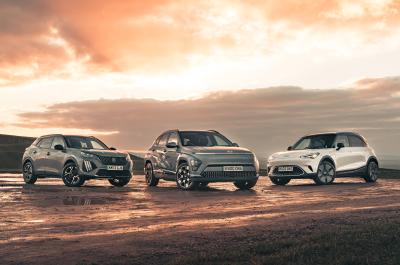
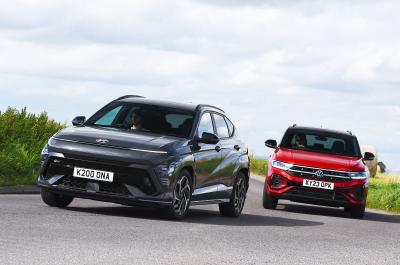
The Kona’s looks are bold and distinctive – some might say divisive next to the Niro. But we’re not here to pass judgement on a car’s looks. Read on to find out what the Kona is like to drive and live with, and how it compares with the best small SUVs, including the Ford Puma, Seat Arona, Skoda Kamiq and Volkswagen T-Roc.
What’s new
- April 2023: Kona on sale. Choice of turbocharged 1.0-litre (119bhp) and 1.6-litre (195bhp) petrol engines (both with six-speed manual or seven-speed dual clutch auto gearboxes), or 139bhp 1.6 hybrid. Advance, N Line, N Line S and Ultimate trims
- March 2023: Second-generation Kona debuts in petrol and hybrid forms
The What Car? Reliability Survey is live, tell us about your car now


Our pick
Pros
- Low CO2 emissions (Hybrid)
- Generous standard kit
- Strikes a fine balance between comfort and handling
Cons
- None of the engines offers class-leading performance
- Boot could be bigger
- Depreciates faster than rivals
Our pick
Trims available
Performance & drive
What it's like to drive, and how quiet it is
Strengths
- Little wind and road noise
- Well-controlled, comfortable ride
- Surefooted handling
Weaknesses
- Lacklustre performance
- Not as fun to drive as some rivals
- 1.0T 100 petrol is a bit gruff at low revs
The entry-level engine in the Hyundai Kona is a three-cylinder petrol called the 1.0T 100PS. It has a modest 99bhp and officially gets from 0-62mph in 13.3 seconds – making it quite a bit slower than an entry-level Ford Puma or VW T-Roc – but it can pull away promptly from junctions and hit 70mph on a motorway sliproad. It comes with a light, precise six-speed manual gearbox.
If you upgrade to the 136bhp 1.6T 138PS petrol you get a choice between the six-speed manual or a seven-speed dual-clutch automatic gearbox. Performance is a bit brisker, but with a 0-62mph time of 10.2 seconds it’s still shy of the pace offered by equivalent rivals. A T-Roc 1.5 TSI 150, for example, takes 8.8 seconds.
Finally there’s the regular hybrid version, the 1.6 Hybrid 129PS, which combines a 1.6-litre petrol engine with an electric motor delivering a total of 127bhp. That’s enough for 0-62mph in 12 seconds – again, not great relative to most other small SUVs.
The Kona’s ride is a strong point. It’s not ultra-soft but still manages to take the sting out of most road imperfections, up to and including large potholes. The car feels planted and composed, with little head toss over patchy surfaces.
That said, being slightly firmer than the best-riding cars in the class, including the T-Roc, the Kona doesn’t waft you over speed bumps in quite the same polished fashion. The hybrid and, to a lesser extent, the top-spec petrol version suffer from another negative due to their extra weight: a fidgety sensation at higher speeds.
If you want a small SUV with really dynamic handling there are better options than the Kona. We’d suggest looking at the Audi Q2 and Ford Puma – they're our top picks for pin-sharp steering and agile cornering. Still, the Kona is no barge in comparison with those two.
Around town the steering is light and quick, making the Kona feel nimble. As you pick up pace it controls body lean well, staying more upright through twists and turns than a Citroën C3 Aircross or Renault Captur. And as you go quicker the steering weights up intuitively and feels accurate as you wind on some lock, giving you plenty of confidence to tackle a challenging section of road.
So what separates the Kona from the best-handling cars in the class? Well, while it’s safe, surefooted and predictable to drive, it’s not exactly huge fun.
At low revs, the Kona’s thrummy 1.0T 100 three-cylinder engine transmits some vibration into the interior – you feel a slight buzzing through the steering wheel and pedals – but the 1.6T and Kona Hybrid suffer from no such thing.
At motorway speeds the Kona produces very little wind and road noise, matching the quietest cars in the class, such as the T-Roc, for peace and quiet. There’s very little suspension noise on rough roads, and the brakes are easy to modulate.
“I found the Kona’s polished ride and quiet cruising manner a real boon for long-distance trips.” – John Howell, Reviewer
Tips & Advice
Interior
The interior layout, fit and finish
Strengths
- Lots of physical buttons
- Sturdy interior construction
- Plenty of parking aids
Weaknesses
- Lots of scratchy plastics inside
- So-so over-the-shoulder visibility
The Hyundai Kona’s driver's seat places you a few centimetres higher up than you sit in a Seat Arona or Skoda Kamiq so it's appealing if you like a raised-up SUV feel. What's more, the driving position is fundamentally sound – the pedals line up well with steering wheel, and the wheel itself has plenty of adjustment.
We found the driver’s seat really comfortable and supportive, and it’s great that all versions come with adjustable lumbar support. It means that even on long drives there should be no unwanted twinges. If you go for N-Line S or Ultimate trim you get full electric seat adjustment too.
There’s more good news: it’s really simple to control all the Kona’s features. That's because instead of following the trend for cramming everything on to a touchscreen it has easy-to-use buttons for lots of the settings.
Seeing out of the front and sides of the Kona isn't too difficult thanks to its relatively slim pillars and tall windows. That's really helpful when you're pulling out of T-junctions or on to roundabouts.
When you look back over your shoulder it's a different story – the Kona’s broad rear pillars and small rear screen restrict your view. That said, it’s no worse than a VW T-Roc in that respect.
Happily, front and rear parking sensors, and a reversing camera are standard across the range. Opting for N Line S trim upgrades that to a 360-degree camera. You get bright LED headlights as standard on all versions.
Every Kona comes with a 12.3in infotainment touchscreen, DAB radio, Bluetooth and built-in sat-nav. The screen is high-definition with sharp graphics and the software responds quickly to your request.
It’s also easy to skip between the main menus using the physical shortcut buttons below the screen. We much prefer them to the touch-sensitive controls in the T-Roc, but when it comes to operating the screen’s other functions, a physical rotary controller like the one in the Mini Countryman would be less distracting to use when you're driving.
All Konas come with wireless Android Auto and Apple CarPlay smartphone mirroring and two USB-C ports in the front and rear. N Line adds a wireless charging pad, and if you move up to N Line S or above you’ll get an upgraded Bose stereo with seven speakers. Its sound quality won't blow you away, but it lets you crank up the volume without too much distortion.
The Kona is a step behind, say, the Skoda Kamiq for interior quality, with plenty of hard scratchy plastics dominating the dashboard and insides of the doors. Indeed, most rival small SUVs are better when it comes to their interior materials, with more soft-touch surfaces to lift the mood and add some plushness.
The Kona is at least well put together. It feels sturdy throughout and all the buttons, switches and knobs feel well engineered and satisfying to use.
“It’s a real breath of fresh air to find all the simple, physical controls in the Kona. It made life so much easier when I was making changes on the move.” – John Howell, Reviewer
Passenger & boot space
How it copes with people and clutter
Strengths
- Lots of front space
- Generous rear-seat space
- Versatile 40/20/40-split rear seats
Weaknesses
- Most rivals have bigger boots
Even if you’re over 6ft tall, you’ll find that there’s loads of head and leg room, in the front of the Hyundai Kona. Meanwhile, it’s plenty wide enough to ensure you won’t be rubbing shoulders with your front passenger.
Storage space includes door bins big enough for a couple of small water bottles, a couple of cupholders between the seats and a large hidden cubby below the front centre armrest. A tray in front of the gearlever becomes the wireless phone-charging pad on N Line S and Ultimate trims.
It’s in the rear that the Kona really impresses. It has loads of rear leg room for a small SUV and head room is good too. It’s on a par with the class best – including the VW T-Roc – and beats the Ford Puma. Even the middle seat is not too cramped, although whoever sits there will have to straddle the small central floor tunnel.
Storage options are pretty standard, including a couple of reasonable-sized door bins and two cupholders built into the rear armrest.
The front passenger gets a manually height adjustable seat, which is upgraded to full electric seat adjustment if you go for N Line S trim or above.
In the back you get versatile 40/20/40 split-folding rear seats in all but the entry-level Advance trim. They allow you to slide longer items through from the boot while still having two outer rear seats for passengers. Most rivals come with a less flexible 60/40 split.
However, unlike the VW T-Cross the Kona doesn't have sliding back seats, so you don't have the option of expanding the boot space by reducing space in the back.
The Kona has 466 litres of boot space, which is less than average for its class. We managed to squeeze in five carry-on suitcases and a couple of soft bags below the parcel shelf. That matches the Seat Arona but falls short of the T-Roc, which took seven cases.
At least the Kona's boot has a relatively wide opening and its split-folding rear seats lie almost flat when folded down. Unlike with some hybrid versions of cars, there's no boot space penalty if you choose the Kona Hybrid.
“I’m 6ft 3in and had no problem with space in the front of the Kona. People could still fit in the back behind my driving position.” – John Howell, Reviewer
Tips & Advice
Buying & owning
Everyday costs, plus how reliable and safe it is
Strengths
- Lots of standard equipment
- Hyundai's good reliability record
- Sensibly priced
Weaknesses
- Depreciates faster than rivals
The Kona's entry-level Advance trim comes with lots of standard equipment, including 17in alloy wheels (18in on the Hybrid), power-folding wing mirrors, an auto-dimming rear-view mirror, auto lights and wipers, keyless entry, dual-zone climate control and cruise control (adaptive cruise on Hybrid and automatic models). That’s on top of touchscreen infotainment, LED headlights, front and rear parking sensors and a rear-view camera.
We'd stick with Advance, but it's also worth considering N Line trim. Along with sportier looks, you get 18in alloys, privacy glass, heat-reflective glass, a heated steering wheel, heated front and rear seats, aluminium pedals, ambient interior lighting, a powered tailgate and wireless phone-charging.
Ways to buy
N Line S is starting to look a bit too pricey, but adds Alcantara and leather seat trim, electric seats, ventilated front seats, blind-spot monitoring and an upgraded Bose stereo. Top-spec Ultimate trim has full-leather seats and a sunroof.
Like for like, the Hyundai Kona petrol models are a much cheaper cash buy than the VW T-Roc but cost slightly more than the equivalent Ford Puma or Skoda Kamiq. The Kona Hybrid, on the other hand, is quite a bit pricier, but even then it’s about the same price as a mid-spec T-Roc Style.
It’s not all good news. The Kona is predicted to depreciate quicker than its rivals, so even the T-Roc could end up costing you less a few years down the line. That also applies if you’re buying on a PCP finance deal, because a car’s resale value plays into how much you’ll pay per month.
The official combined fuel economy for the 1.0T 100 petrol is around 47mpg, which is similar to the entry-level T-Roc 1.0 TSI. The 1.6T 136 engine drops the average down to around 42mpg. The hybrid model is the best of the lot, with a figure of more than 61mpg and the lowest CO2 emissions.
That makes the Hybrid the most economical choice as a company car but for even lower BIK tax bills you'll want the Hyundai Kona Electric.
Hyundai did well in our 2024 What Car? Reliability Survey, finishing in tenth place out of the 31 manufacturers included. That places it above Ford, Kia and VW.
For more peace of mind, all versions come with Hyundai’s impressive five-year unlimited-mileage warranty as standard. The battery in the hybrid model is covered for three years after that.
The Kona was awarded four stars out of five by Euro NCAP when it was tested for safety in 2023. That's not terrible, and it did well for Adult Occupant and Child Occupant protection, but there are plenty of cars with five-star safety ratings.
Automatic emergency braking (AEB) comes as standard on all versions of the Kona, and it recognises pedestrians and cyclists as well as other cars.
Lane-keeping assistance is standard across the range, as is a driver fatigue monitor. However, the only way to get rear cross traffic alert or blind-spot monitoring is by going for N Line S or Ultimate trim (those features aren't available as options on cheaper models).
"I'm really impressed with the amount of equipment you get in the entry-level Kona. I can't see any reason to upgrade to a pricier version." – John Howell, Reviewer
For all the latest reviews, advice and new car deals, sign up to the What Car? newsletter here
Tips & Advice
Similarly priced cars


If you're interested in finding a Hyundai Kona Electric, or any of the other small suv cars mentioned here, head over to our Cars available now pages to find new cars listed for sale at great prices.
FAQs
Hyundai KONA specifications
Our pick
RRP price range
MPG range across all versions
Available fuel types (which is best for you? )
Available colours
Number of engines (see all)
Number of trims (see all)
Company car tax at 20% (min/max)
Company car tax at 40% (min/max)
What is What Car? best price?
The What Car? best price shows you the cheapest way to buy your new car, whether it's by choosing an in-stock car through our partner Autotrader or placing a factory order.
Available now from: £24,284
RRP from: £27,290
About our price indicator
What Car? indicative Personal lease example (subject to status)
1.6 h-GDi N Line SUV 5dr Petrol Hybrid DCT Euro 6 (s/s) (138 ps)
| Expected annual mileage | 5000 |
| Term months | 24 |
| Deposit months | 12 |
| Monthly payment | £190.22 |
| Initial payment | £2,282.64 |
Step-by-step
Leasing works a bit like a long-term rental. You drive it, but you don’t own it.
- Choose your car, pick your terms and apply for lease credit online
- Pay monthly rental payments for your chosen term length
- Drive it, enjoy it, then give it back at the end
What you get
When you lease with Autotrader you get all of this:
- Full manufacturer’s warranty
- Road tax and roadside assistance included
- No admin fees
- Free returns within 30 days*
- Lower total monthly cost than PCP/HP
- No balloon payments
- Road tax included
Cars available now

About the writer