New Ford Transit Connect review
Category: Small Van
The Transit Connect is an impressive small van with a wide range of engines and configurations


What Car? says...
It’s not often that a vehicle model is so iconic that it spawns a family of versions sharing a name – but the Ford Transit Connect is part of one such dynasty.
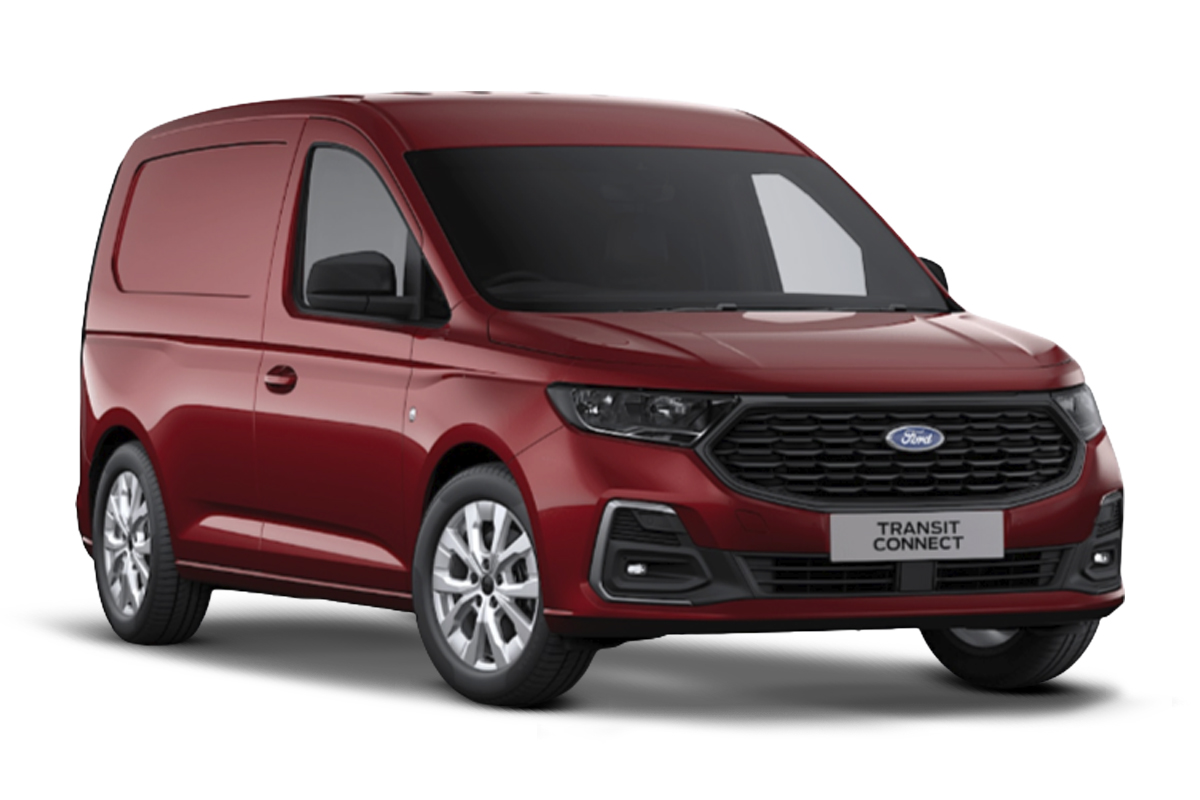
The Transit Connect van is the second-smallest spin-off from the Ford Transit – although this time round it's built by Volkswagen and is, under the skin, virtually identical to the VW Caddy Cargo. Not that you’d notice: each has its own distinct looks.
For the owner-operator, there’s a side benefit because the Transit Connect shares its underpinnings with the VW Golf. So, as with the Golf and Caddy Cargo, there's a good choice of engines – including a petrol plug-in hybrid – and you can have a manual or automatic gearbox and four-wheel drive.
The choice doesn't end there. There's a Transit Connect Active with more rugged looks, plus a FlexCab model with a moveable bulkhead and three fold-down seats in the back.
All that sounds great, but is it enough to help the Ford Transit Connect win out in the very competitive small van class, where you'll find a whole fleet of rivals, ranging from the Citroën Berlingo Van and Peugeot Partner to the Mercedes Citan and Renault Kangoo?

Performance & drive
What it’s like to drive, and how quiet it is
Strengths
- +Comfortable to drive
- +Car-like steering
- +Fast charging for a PHEV van
Weaknesses
- -Road noise
- -Manual models require frequent gearshifts
- -No electric version planned
Being car-like to drive has long been an impressive accolade for any van, but the Ford Transit Connect goes one step further – by sharing underpinnings with the Seat Leon and VW Golf. And for a van, it drives really rather well.
The steering is responsive and precise – although for the avoidance of doubt a Golf is better in both regards. It soaks up bumps and potholes well, and there’s surprisingly little body roll, both of which are helped by the adoption of more sophisticated coil spring rear suspension. With that technology, its ride should be good regardless of the load weight in the back.
Buyers can choose between a pair of 2.0-litre diesel engines, producing either 101 or 120bhp, or a petrol plug-in hybrid (PHEV). No electric version of the Transit Connect is planned – the closest you'll find in the Ford range is the Ford E-Transit Courier.
The PHEV uses a 1.5-litre petrol engine paired with an electric motor and a 19.7kWh (usable capacity) battery pack, delivering 148bhp. It favours battery power, officially promising up to 73 miles of range before the petrol engine kicks in.
Performance is solid if unremarkable, with the electric motor powerful enough to make getting off the line pretty sharp, but you won’t be racing hot hatchbacks from the lights. Driven gently, it’ll stay in EV mode right up to motorway speeds.
Once the battery is depleted, it relies on the petrol engine alone, but, unusually for a PHEV, it can be plugged into a rapid charger to top up at up to 50kW in less than 30 minutes.
The diesel engines are a little grumbly when starting, but are refined elsewhere and provide plenty of punch on the move, although you’ll need to change down a gear more frequently when overtaking in the 101bhp version.
All models have front-wheel drive as standard, but the 120bhp diesel engine is also available with four-wheel drive. Your choice of gearbox is governed by which engine you choose. The 101bhp diesel comes with a six-speed manual gearbox while the 120bhp version and the PHEV have a seven-speed automatic.
The manual has a positive action, and the automatic gearbox delivers quick, snappy shifts, although it can be jerky at low speeds. Even so, it should make stop-start urban deliveries that little bit easier.
There’s a touch more road noise than you might expect, so it’s a good thing those extra gears help to reduce engine noise.
“On narrow urban streets, the Transit Connect felt smaller and more wieldy than I would’ve expected. Good news for delivery work and trades.” – Stuart Milne, Digital Editor

Interior
The interior layout, fit and finish
Strengths
- +Smart interior
- +Feels solidly built
- +Comfortable behind the wheel
Weaknesses
- -Infotainment isn’t the best
- -No standard-fit armrest
- -Piano-black trim is not that practical
While you’ll be hard pressed to spot the similarities between the Ford Transit Connect and the VW Caddy Cargo from the outside, there are far more recognisable bits inside.
That’s good news, because both share a modern look and a high-quality feel – although the piano-black trim is likely to quickly succumb to fingerprints and scratches in daily use, and it has a habit of reflecting bright sunlight.
The Transit Connect's infotainment system is a lightly revised version of the Caddy's set-up. It’s a little laggy in operations and slightly clunky to use, especially because there are no physical controls for the temperature, meaning you’ll need to battle with fiddly touch-sensitive sliders instead.
That could be a particular irritation for drivers who wear gloves, and those who frequently have greasy or grubby hands will quickly dirty the controls. At least Ford has retained physical buttons for the audio volume on the steering wheel and some air-con settings on the centre console.
All versions of the Transit Connect come with a DAB radio, voice control and sat-nav, plus Android Auto and Apple CarPlay smartphone mirroring. However, while there are a couple of USB-C ports, there are no USB-A sockets, meaning you'll need to buy an adaptor to connect some devices.
Like the Caddy – but unlike the Renault Kangoo – all Transit Connects come with a digital information display, which shows a range of features, including the sat-nav. It’s crisp and easy to operate with the steering wheel-mounted buttons.
It’s not hard to get comfy behind the wheel, because the seats provide a wide range of adjustment and have adjustable lumbar support. The steering wheel has a good range of movement for reach and rake on all models. It’s a shame, then, that armrests are only available in option packs, which also include more supportive seats (accredited by Germany’s Healthy Back Campaign).
“I love the row of big, physical buttons above the centre console to max the air-con. That’ll be handy when the weather is particularly hot or cold.” – Stuart Milne, Digital Editor

Passenger & boot space
How it copes with people and clutter
Strengths
- +Many different versions available
- +FlexCab provides greater versatility
Weaknesses
- -Stellantis rivals have more carrying capacity
- -Glovebox is only average
As you might expect from Ford, the Transit Connect is available in a wide range of body styles. You get standard and long-wheelbase models, both available with fixed or moveable bulkheads.
The moveable bulkhead version is called the FlexCab, and allows you to choose between two seats with more cargo space, or three extra drop-down seats for extra passenger capacity.
In any configuration, there’s space for a Euro pallet, making the Transit Connect a usefully functional van. All models measure 2100mm wide (including door mirrors), making the Transit Connect wieldy on narrow streets. The short-wheelbase model is 4500mm long, providing a load space measuring 1797mm long, 1628mm wide and 1272mm tall.
Long-wheelbase versions are stretched to an overall length of 4853mm. The load space is 2150mm long, and the width and height are virtually identical to the shorter model. FlexCab versions can vary the load space by 516mm depending on the position of the bulkhead.
All of that adds up to a total volume of 3.1m3 for the short-wheelbase and 3.7m3 for the longer van. As you'd expect, those figures match the closely related VW Caddy Cargo.
However, you get more storage space in the equivalent Renault Kangoo and all models in the Stellantis small-van quartet (the Citroën Berlingo Van, the Peugeot Partner, the Toyota Proace City and the Vauxhall Combo Cargo).
The Transit Connect has, depending on engine and wheelbase length, a payload capacity ranging from 706 to 793kg, which is more than almost any version of the Caddy Cargo – although it’s worth remembering that versions of the Berlingo, Partner, Proace City and Combo Cargo can carry more than a tonne.
The PHEV gives up a little payload to accommodate the battery pack, losing around 30kg compared with a Transit Connect with the automatic gearbox. At best, you’ll get 739kg in the load area.
There’s no shortage of tie-down points in the load area, and the 12-volt power supply is useful too. We found the load area well lit, and the doors are easy to open and shut.
The short-wheelbase version has a single 703mm kerbside side door, while the long-wheelbase gets two side doors measuring 846mm. The doors can be glazed as an option, as can the rear cargo door and bulkhead.
As for towing ability, most versions of the Transit Connect can pull a 1,500kg braked trailer (750kg unbraked), which is competitive in the small van class.
There’s a decent amount of storage in the passenger compartment, including a large shelf above the windscreen with slits to make it easier to see from the front seats what’s in there.
You'll find more storage on top of the dashboard, plus large door pockets and a hidden storage cubby in the centre console. There are handy coat hooks on the bulkhead, but we found the glovebox a bit small.
“Glazed side doors might make it easier to pull out of junctions at oblique angles, although I didn’t find it any less tricky than in other small vans.” – Stuart Milne, Digital Editor

Buying & owning
Everyday costs, plus how reliable and safe it is
Strengths
- +Plenty of standard kit
- +Impressive option packs
- +Good safety kit
Weaknesses
- -FlexCab upgrades are expensive
- -Active models isn’t great value
The Ford Transit Connect is cheaper to buy than its small van “twin", the VW Caddy Cargo. You’ll also pay less to jump from the short to long-wheelbase Transit Connect than you would with the Caddy Cargo, but there’s a significant jump in price for the FlexCab versions.
It’s also worth bearing in mind that some equivalent versions of the Citroën Berlingo Van and the mechanically identical Peugeot Partner cost less.
Official fuel economy figures of between 48.8 and 52.1mpg put diesel-powered versions of the Transit Connect roughly on par with the Renault Kangoo and other small vans.
The plug-in hybrid (PHEV) delivers official fuel economy figures of up to a whopping 586.3mpg. In the midst of a cold spell, our PHEV van returned an overall figure of 53.7mpg, but that included plenty of motorway miles. Once the battery is depleted, the van relies on its petrol engine, and that means economy drops to around 30mpg.
With the average van covering around 50 miles a day, it would be entirely possible to go a week without using a drop of petrol; that’s only achievable if you charge up the PHEV battery whenever it runs down, of course.
There are three trims available for the Transit Custom, starting with entry-level Trend – which we think is the best choice. It comes with traffic-sign recognition, front and rear parking sensors, a 10.0in infotainment touchscreen, a 10.25in digital driver's display, sat-nav and dual-zone air-conditioning.
Limited adds some exterior and interior styling tweaks, a handy fold-flat passenger seat that doubles as a work surface, wireless phone-charging, adaptive cruise control (on automatics only), blind-spot assist and a rear-view camera.
Active models look a little more rugged, but aside from anti-dazzle adaptive LED headlights, the FlexCab-only model is pricey and tricky to recommend.
Options worth considering are the more supportive seats, glazed rear and side doors and tow bars (with or without a system to help when you're reversing). If you’re interested in the Active version, it’s also worth looking at the well-priced Driver Assistance Pack, which includes intelligent cruise control, lane-change assistance and self-parking.
Ford has partnered with security firm TVL to provide a range of factory-fitted security features, which will grow to include deadlocks, reinforcing panels and anti-drill locks. You get a Thatcham-rated alarm and immobiliser as standard.
“I think the standard three years or 60,000 miles warranty is rather average, although it can be extended to four years or 100,000 miles.” – Stuart Milne, Digital Editor
Buy it if...
- You want a small van that corners like a car
- You're looking for a plug-in hybrid van with fast charging and a long official range
- A long list of standard kit is important to you
Don't buy it if...
- You need an electric van
- A large payload capacity is a key priority for you
- You value a lengthy warranty as standard
For all the latest reviews, advice and new car deals, sign up to the What Car? newsletter here

FAQs
The Transit Connect is a small van that sits between the Ford Transit Courier and the Ford Transit Custom in Ford's van range. Its rivals include the closely related VW Caddy, several Stellantis models (including the Citroën Berlingo Van) plus the Nissan Townstar and Renault Kangoo.
According to official figures, the Transit Connects powered by a diesel engine should get around 50mph while petrol-powered versions will return around 42mpg. Meanwhile, the petrol plug-in hybrid (PHEV) can in theory manage more than 500mpg, but you'll need to plug it in to charge up regularly to get near that.
Yes – the latest Transit Connect uses VW Caddy Cargo underpinnings and is built by Volkswagen. Its part of a partnership between the two car makers, which has also led to the Ford Ranger and VW Amarok being closely related.
The Transit Connect provides enough power for most drivers’ needs, although the 102bhp version does require frequent gear changes when climbing hills or carrying heavy loads.
The Nissan Townstar is a similar size to the Ford Transit Connect and is mechanically identical to the Mercedes Citan and Renault Kangoo. There are electric van versions of those rivals, but not the Transit Connect, although it is available as a plug-in hybrid with an official electric-only range of more than 70 miles.
| RRP price range | £30,724 - £39,939 |
|---|---|
| Number of trims (see all) | 2 |
| Number of engines (see all) | 2 |
| Available fuel types (which is best for you?) | diesel, petrol plug-in hybrid |
| MPG range across all versions | 49.9 - 157.4 |
| Available doors options | 5 |

