Fiat E-Scudo review
The E-Scudo has had a light refresh but still can't match the abilities of the best medium electric vans


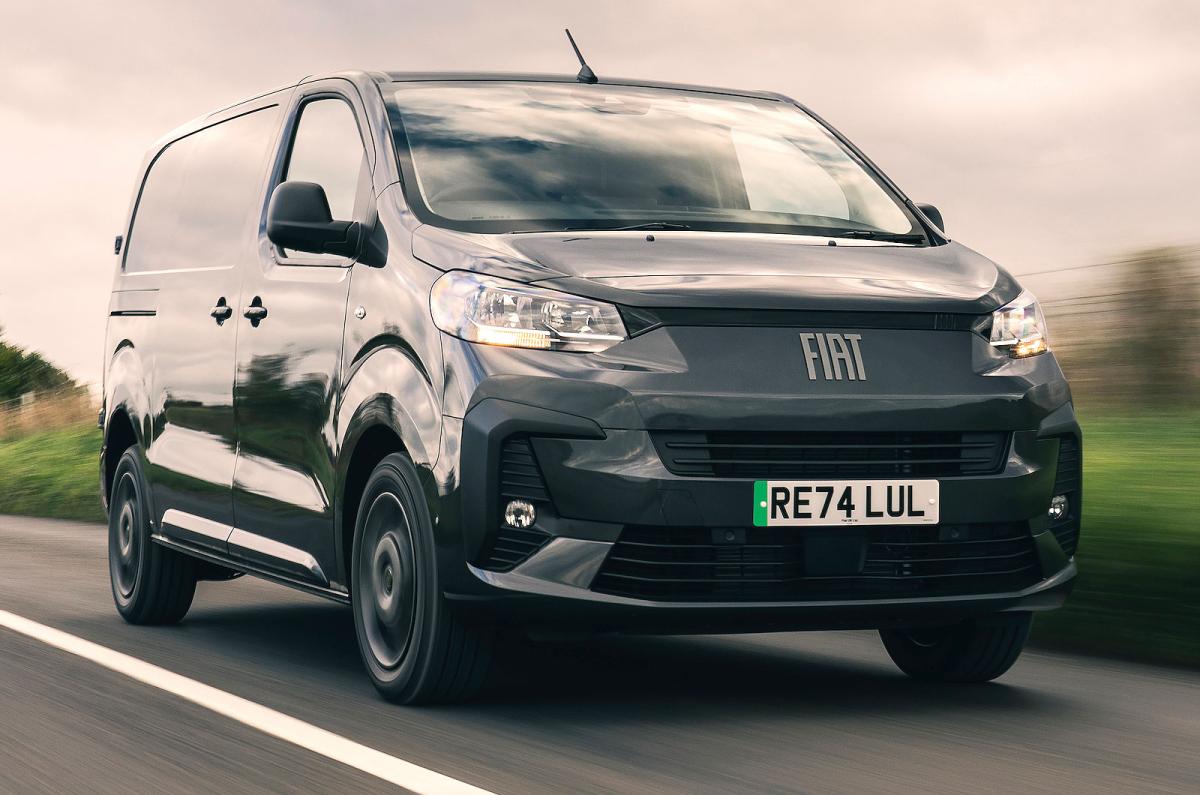
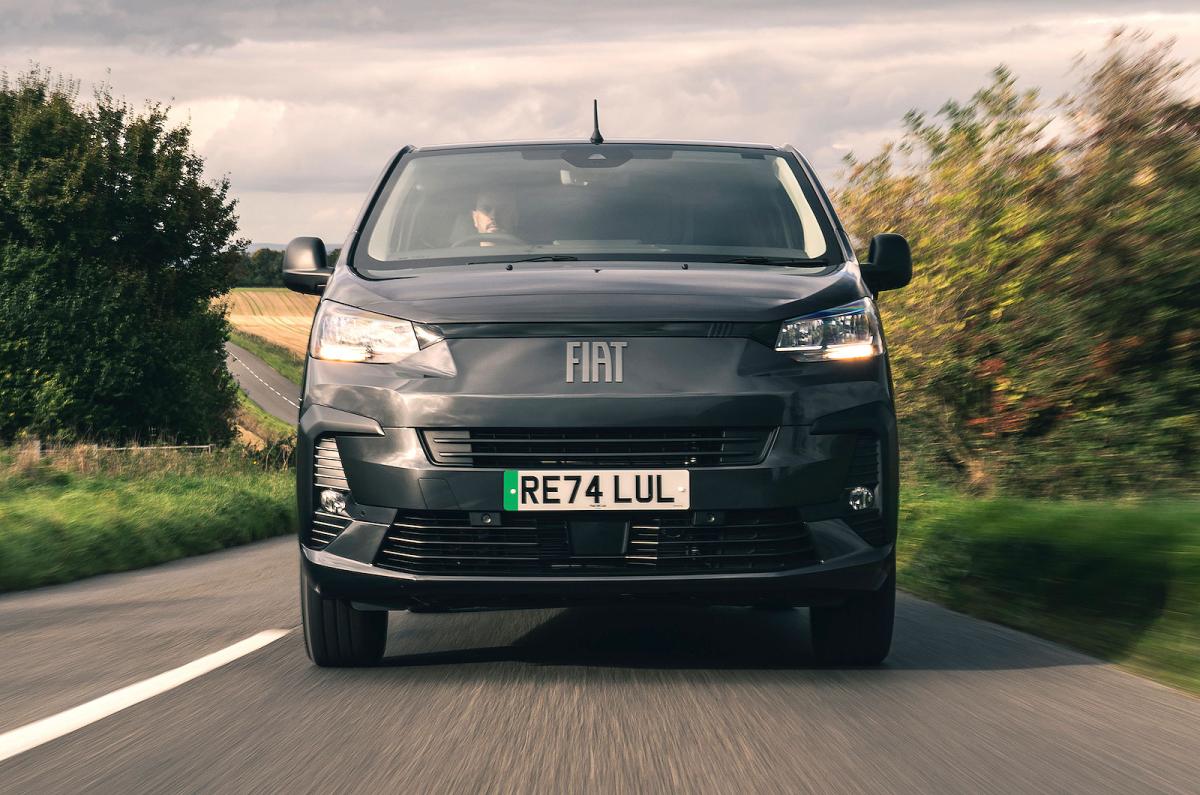
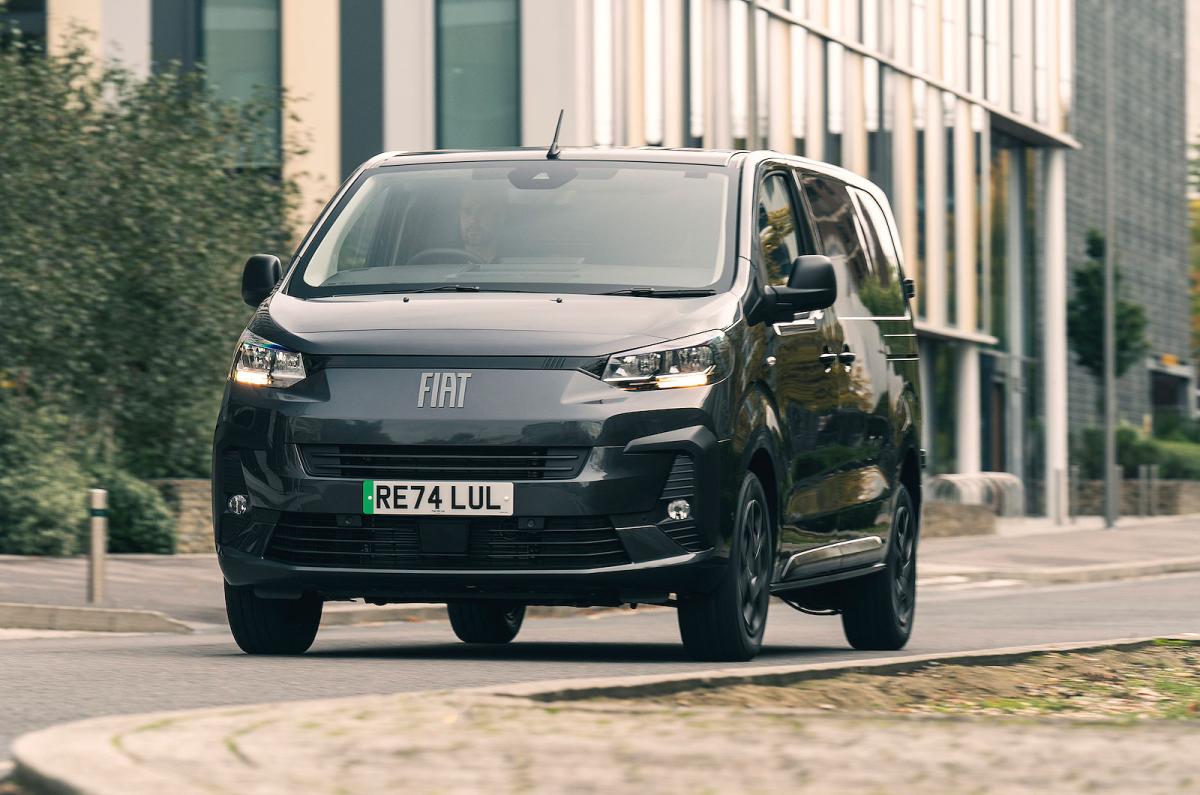
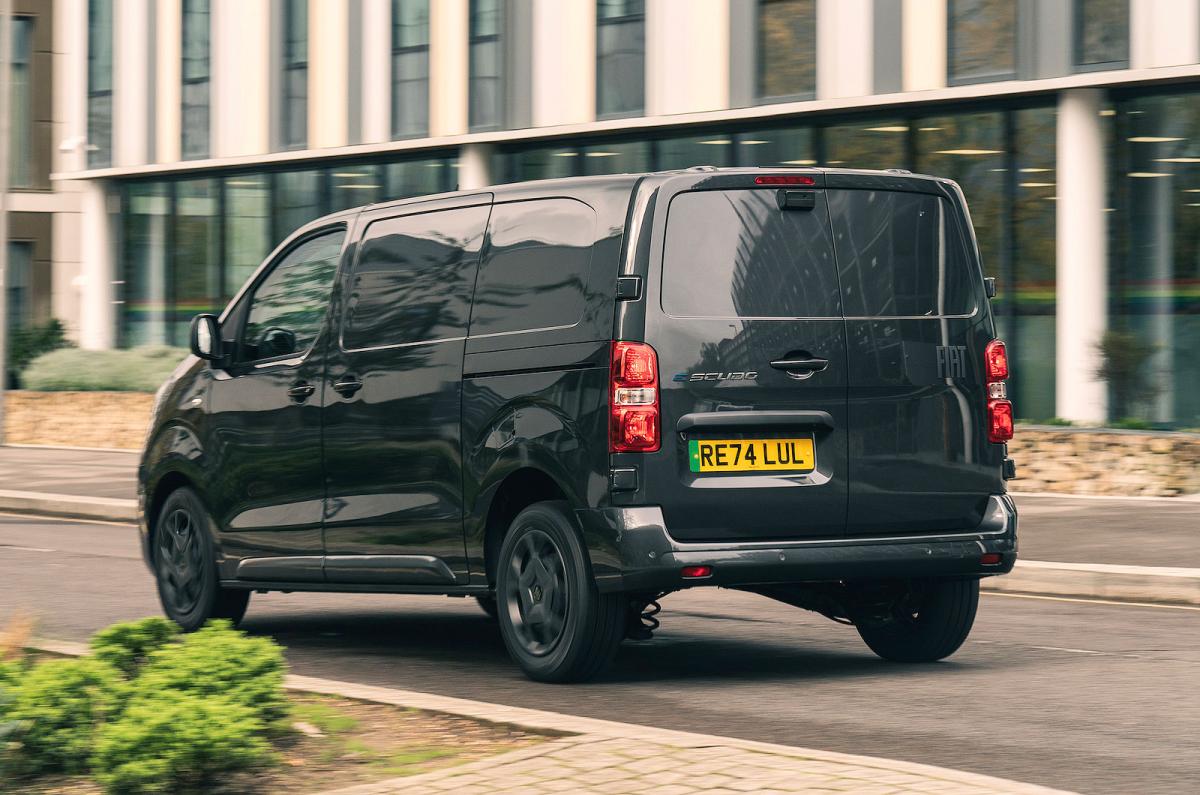
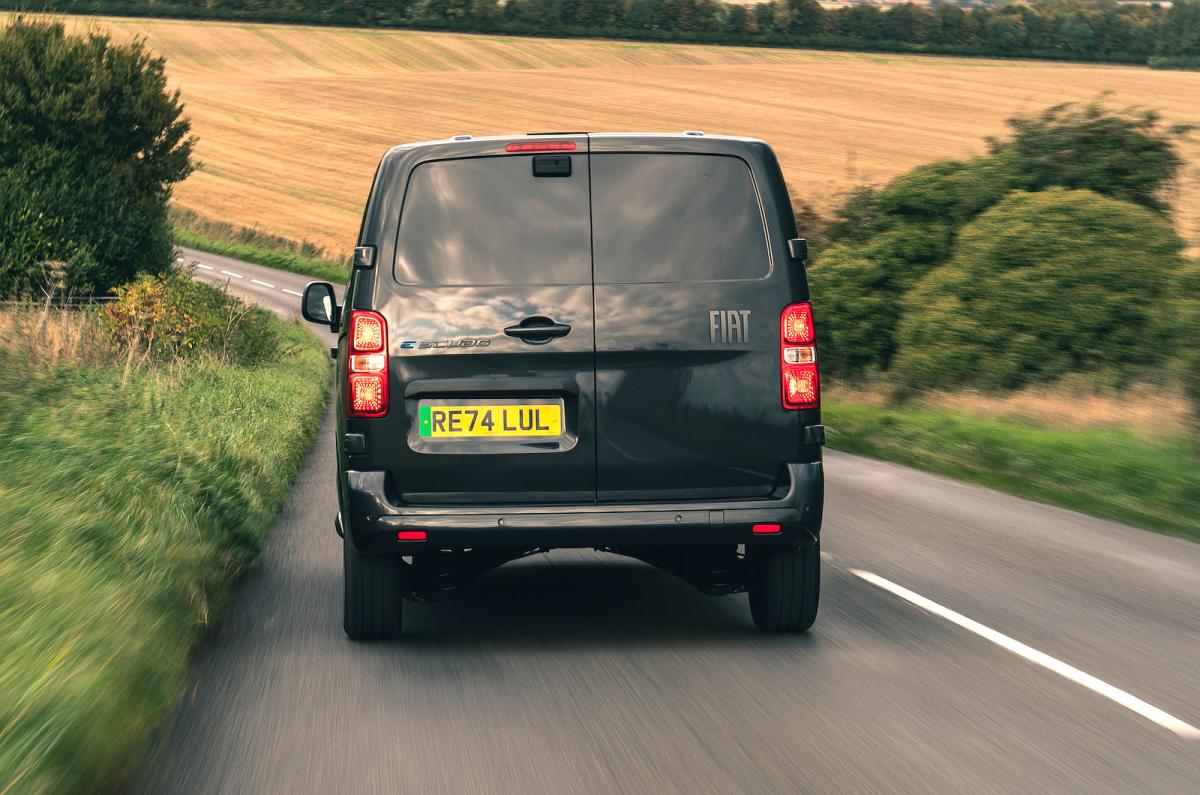
- Fiat E-Scudo front right driving
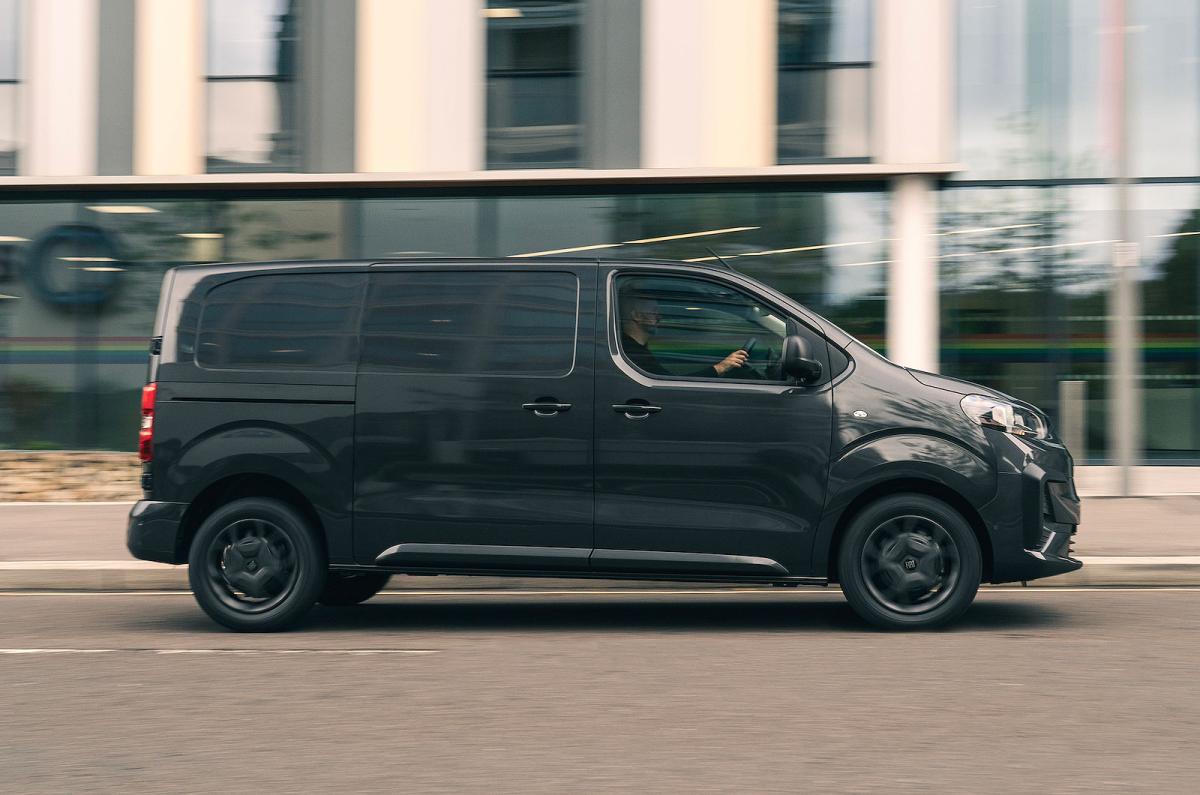
- Fiat E-Scudo right driving
- Fiat E-Scudo front driving
- Fiat E-Scudo front left driving
- Fiat E-Scudo rear left driving
- Fiat E-Scudo rear driving
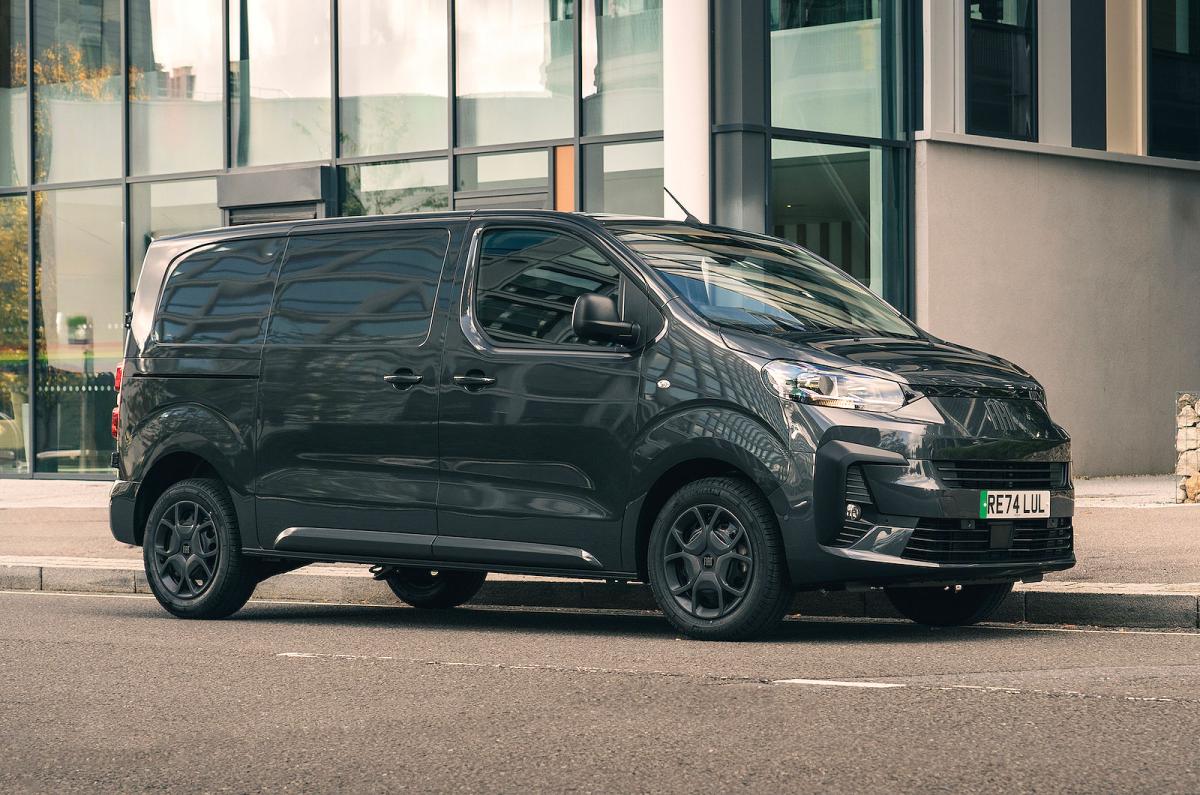
- Fiat E-Scudo front right static
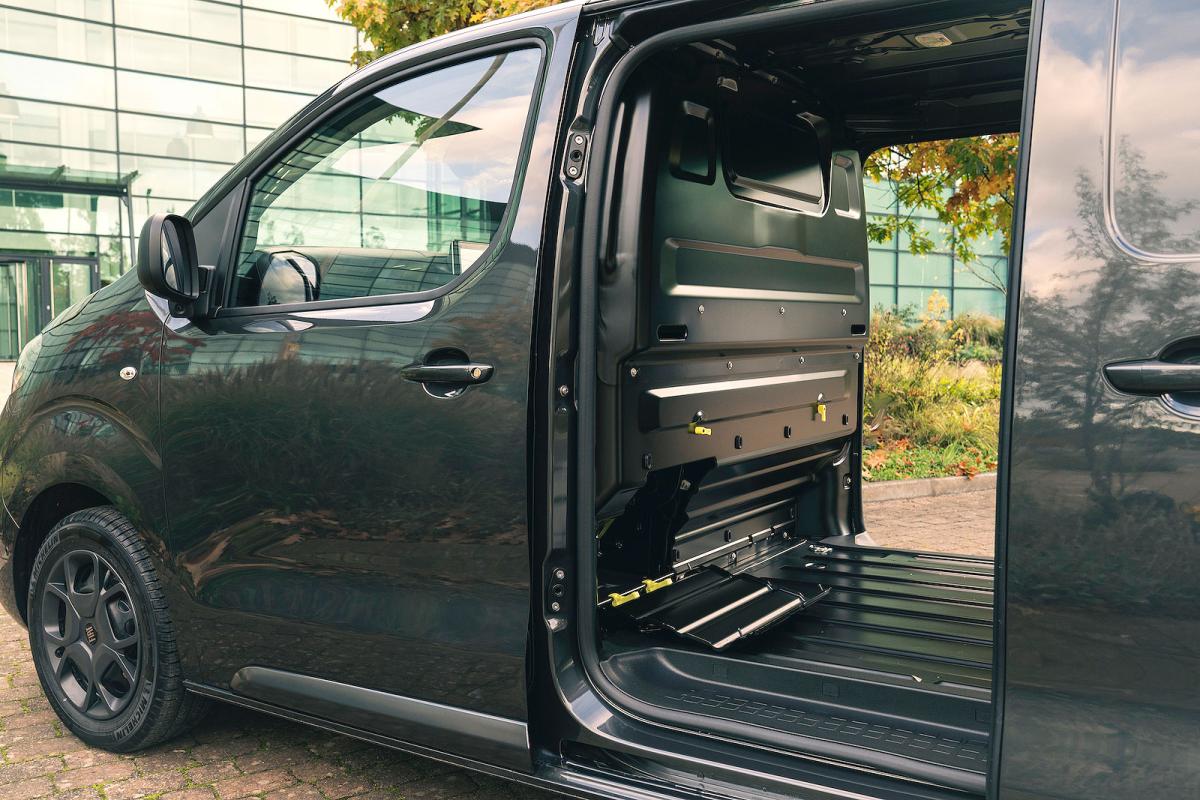
- Fiat E-Scudo side door
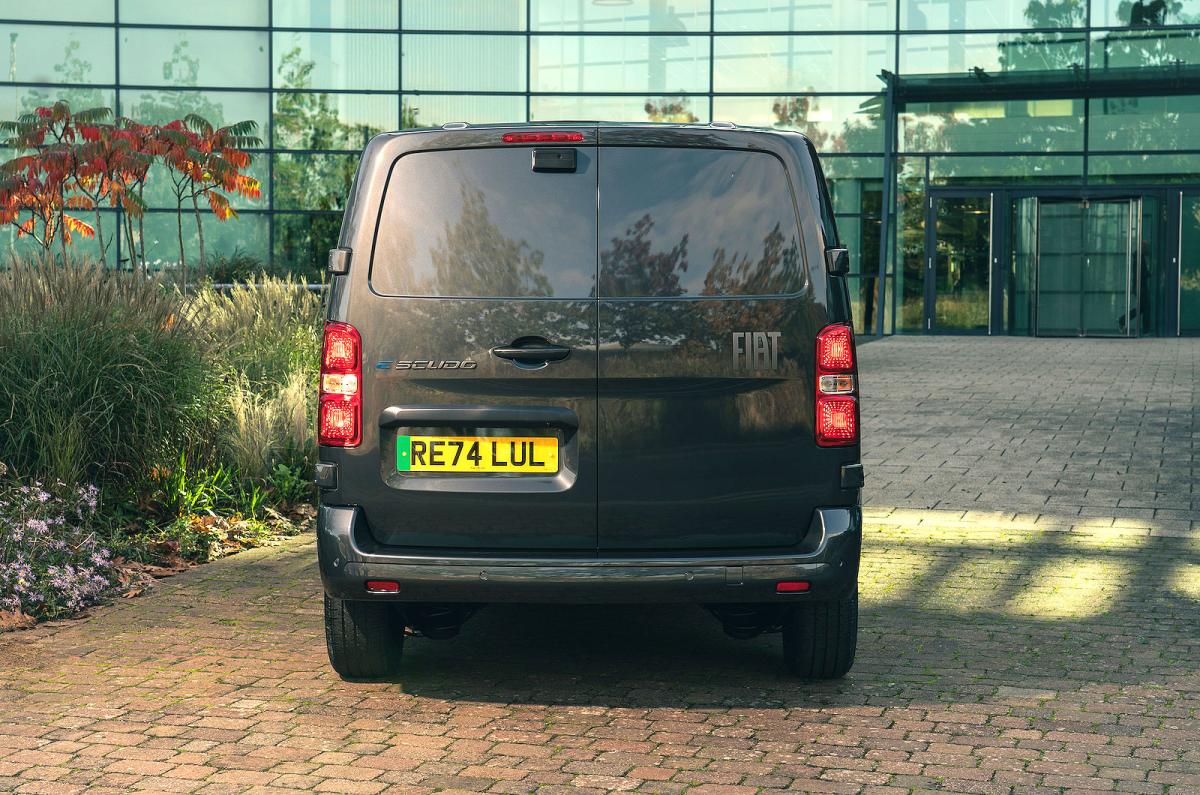
- Fiat E-Scudo rear static
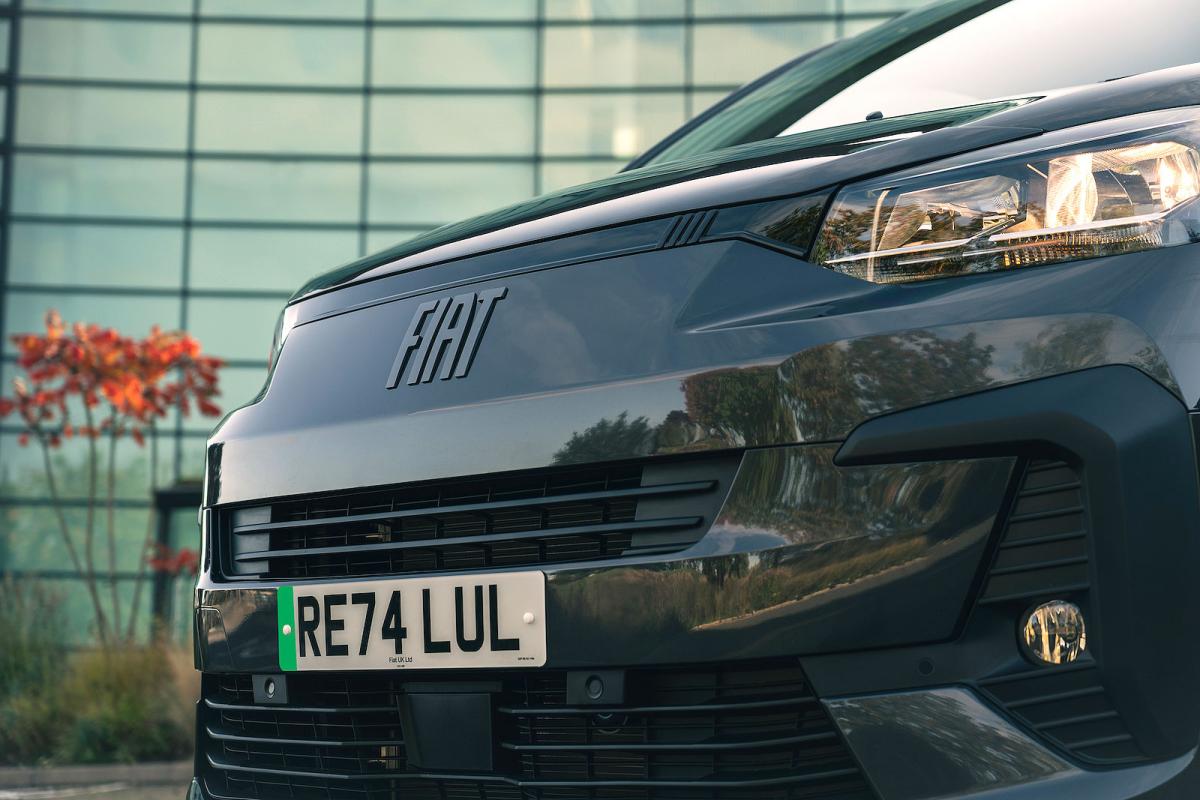
- Fiat E-Scudo front detail
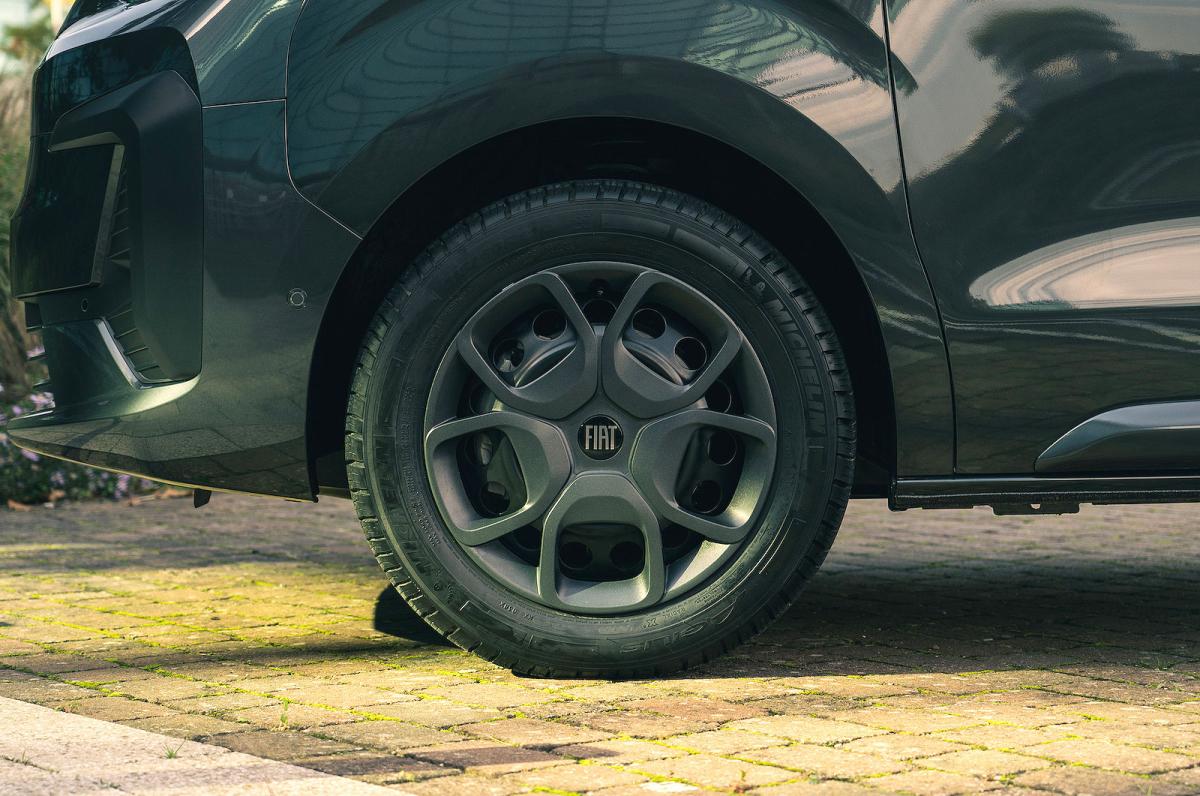
- Fiat E-Scudo alloy wheel
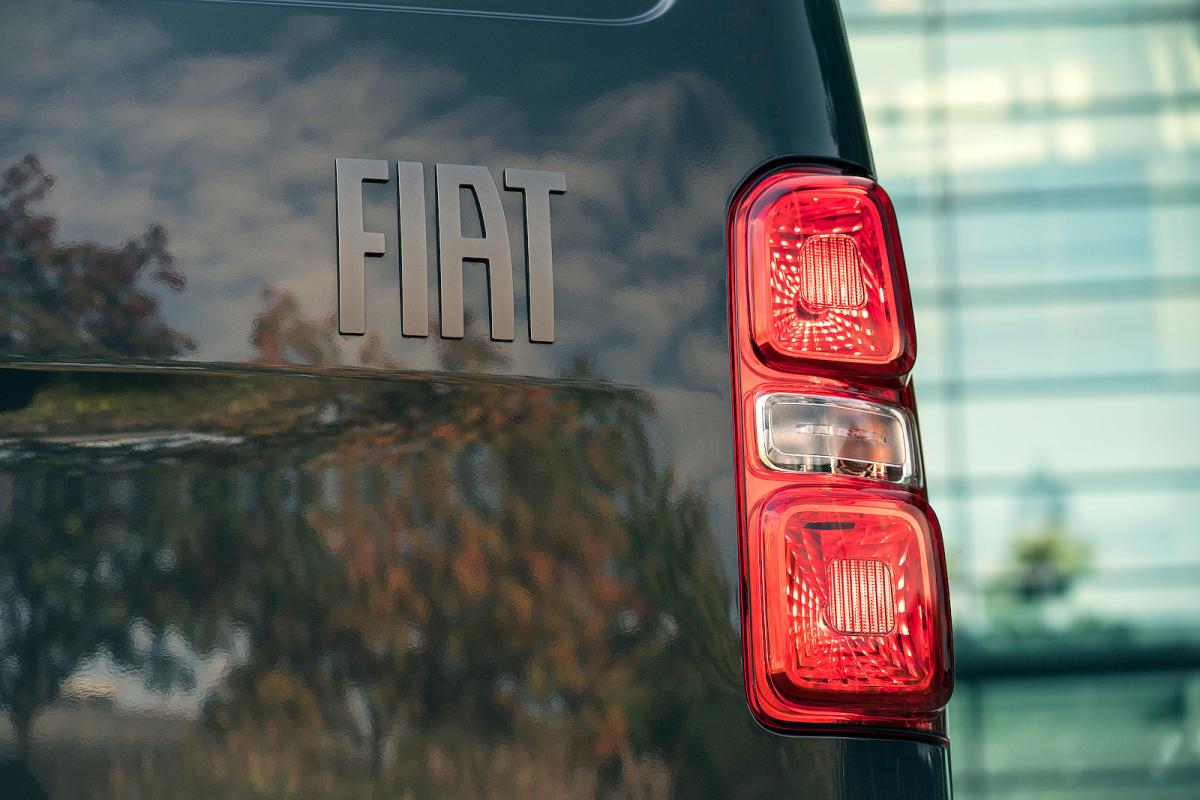
- Fiat E-Scudo rear lights
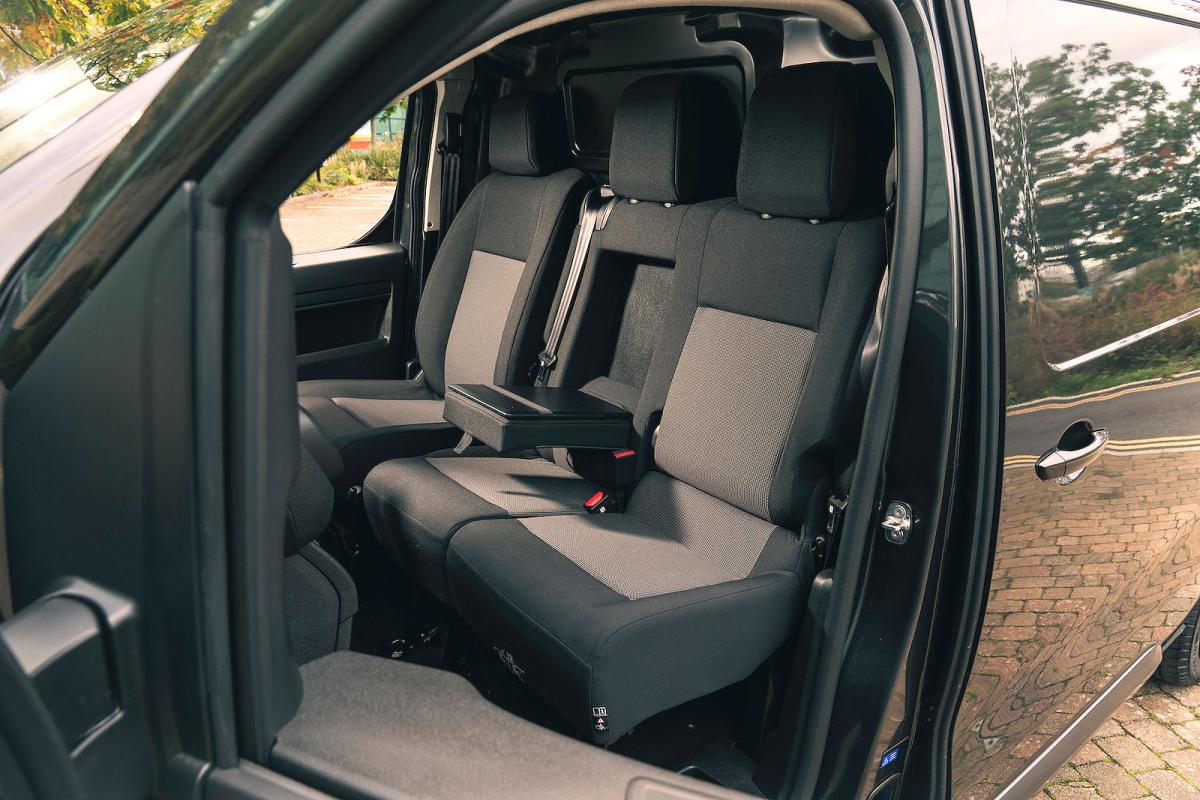
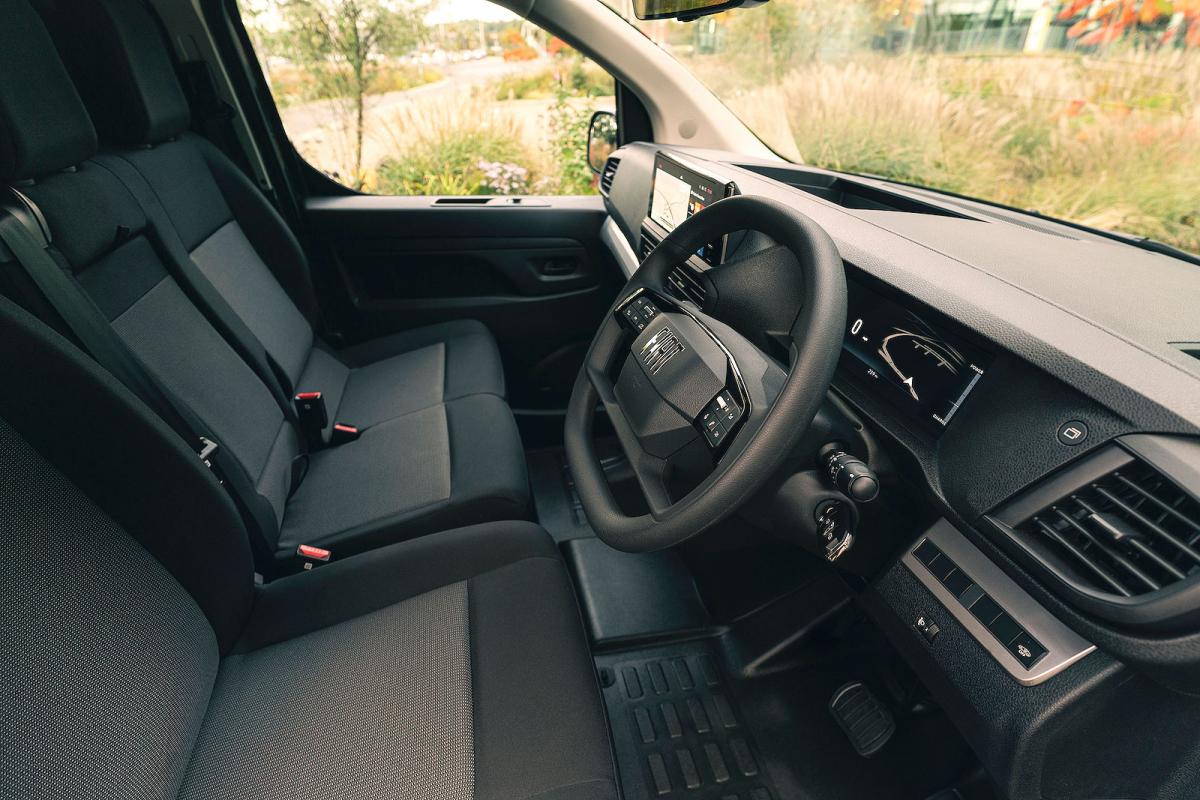
- Fiat E-Scudo seats
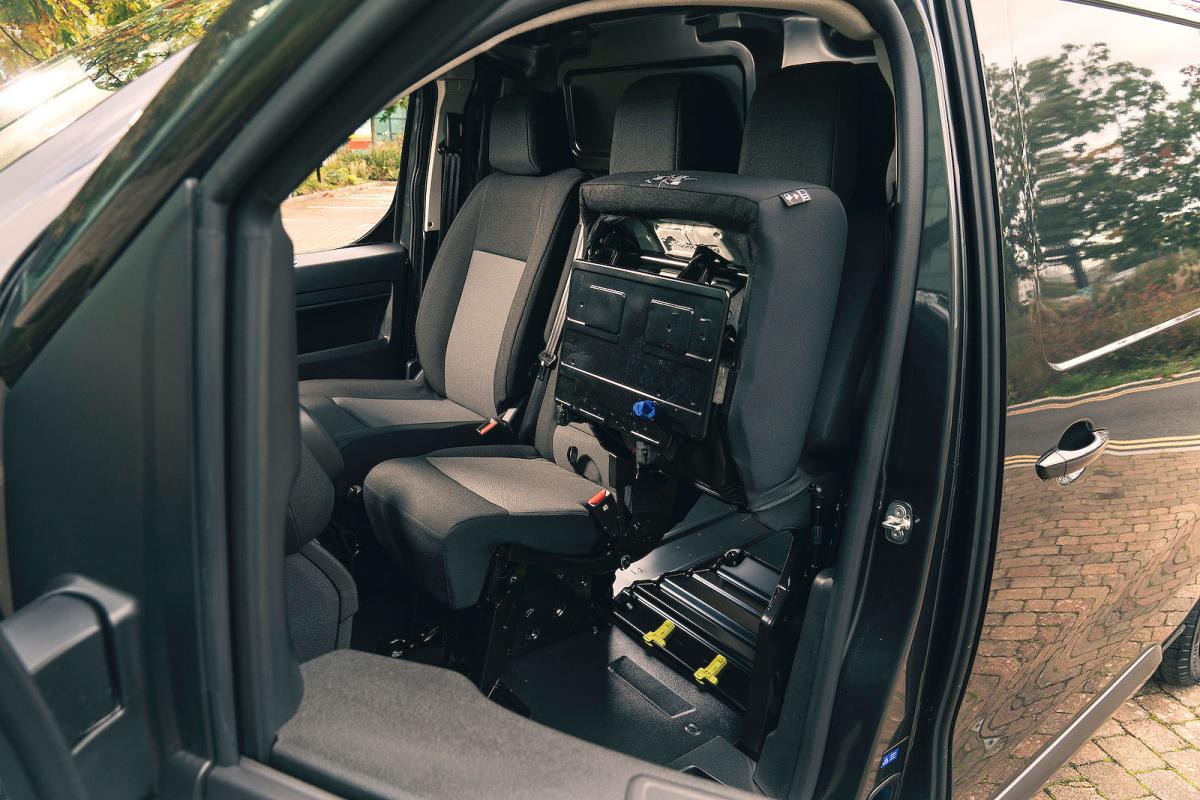
- Fiat E-Scudo load-through hatch
- Fiat E-Scudo steering wheel and screens
- Fiat E-Scudo infotainment touchscreen
- Fiat E-Scudo dashboard storage
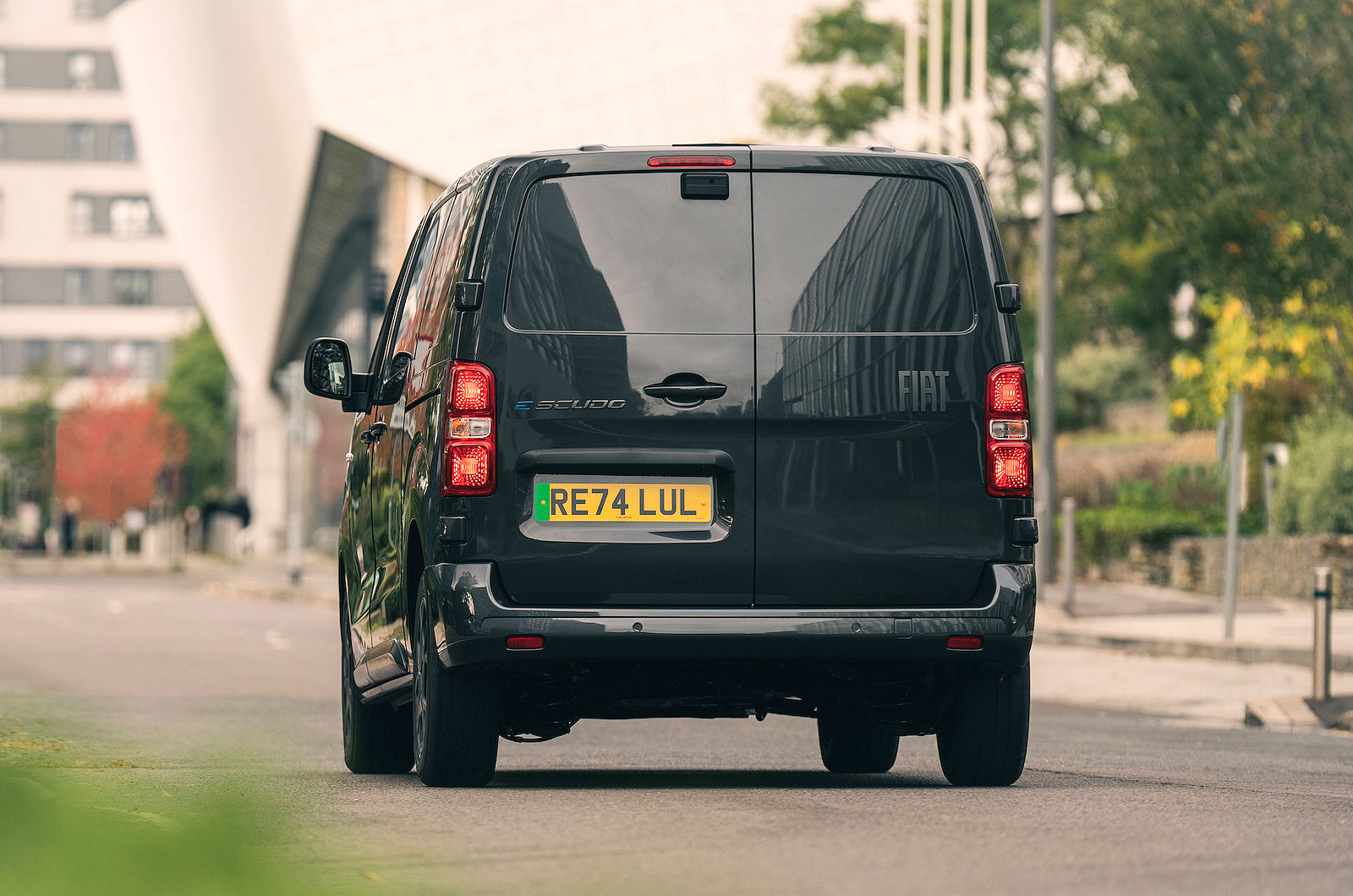
- Fiat E-Scudo rear driving
- Fiat E-Scudo dashboard
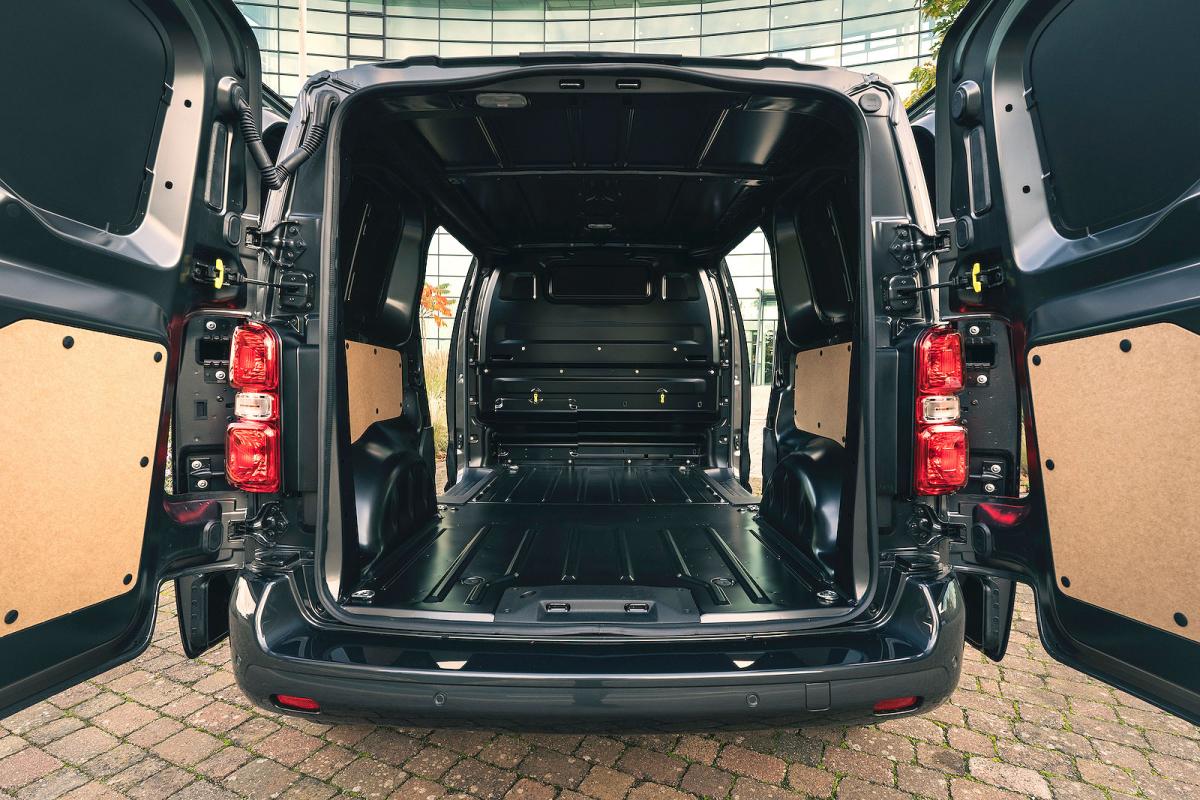
- Fiat E-Scudo load bay
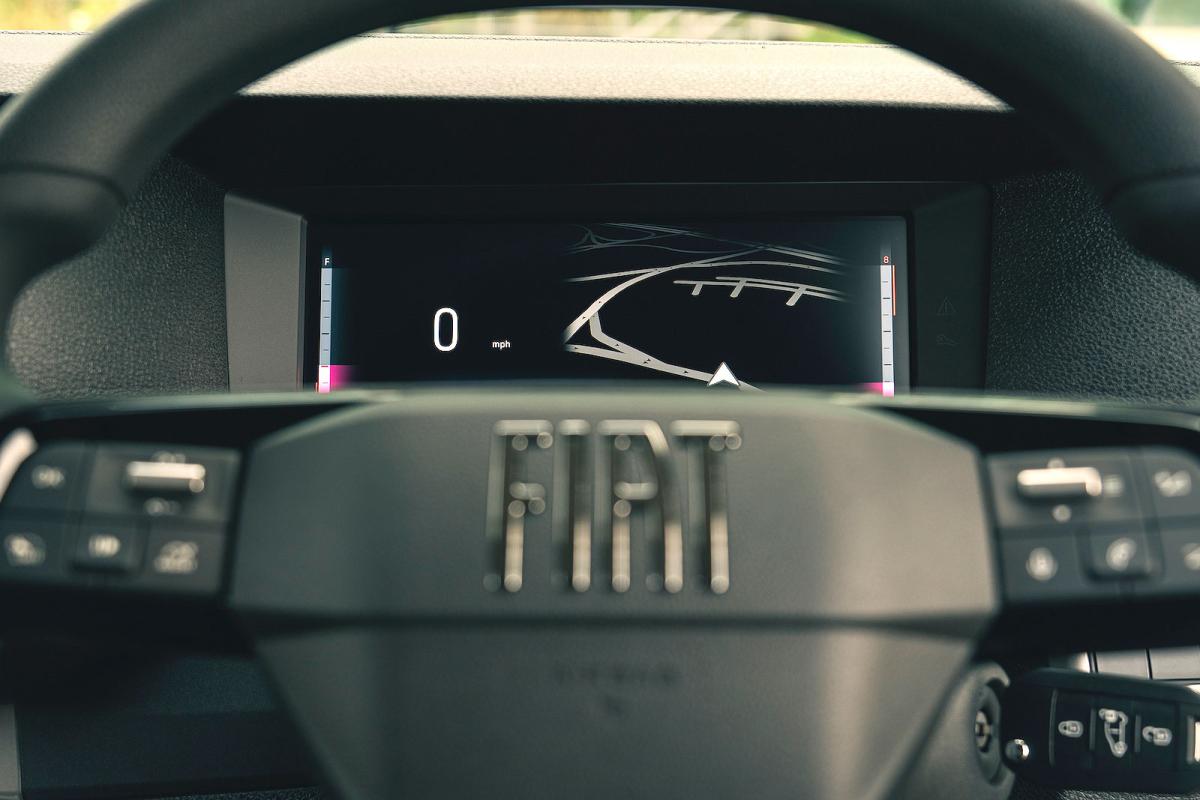
- Fiat E-Scudo driver display


What is What Car? best price?
The What Car? best price shows you the cheapest way to buy your new car, whether it's by choosing an in-stock car through our partner Autotrader or placing a factory order.
RRP from: £46,121
Introduction
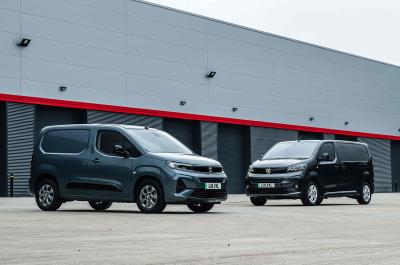
It might not look it at first glance but the Fiat E-Scudo electric van has more in common with its Peugeot, Citroen and Vauxhall rivals than many people realise.
All four sit on the same Stellantis K0 platform, and share the same battery, motor, drivetrain and cab design. The Toyota Proace Electric joins them thanks to a licensing agreement that sees it built on the same production line. In truth, the E-Scudo is Italian by badge alone.
What is What Car? best price?
The What Car? best price shows you the cheapest way to buy your new car, whether it's by choosing an in-stock car through our partner Autotrader or placing a factory order.
RRP from: £46,121
Its latest update brings subtle changes to the nose, freshens up the interior and drops the smaller 50kWh battery, leaving just one 75kWh battery pack option. There’s nothing radical here and nothing wild added in the recent changes, which means Fiat is asking the E-Scudo to remain competitive nine years after the van first entered service.
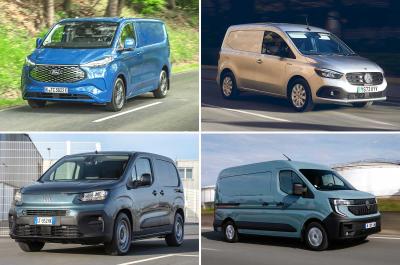
So does it do enough in the face of stiff competition from rival medium electric vans, including the Ford E-Transit Custom, Maxus eDeliver 7, Renault Trafic E-Tech and Volkswagen e-Transporter?
And does the Fiat E-Scudo have any unique character or is it simply badge-engineering done blandly? Let's find out...


Pros
- Revised cab is a step forward
- Cargo volume is competitive
- Quiet, comfortable driving experience
Cons
- Towing and payload limits not that great
- Compact cab is tight for space
- Offset driving position is irritating
Performance & drive
What it's like to drive, and how quiet it is
Strengths
- Instant torque suits city routes
- Composed ride
- Surprisingly agile
Weaknesses
- Performance fades quickly
- Eco mode limits power
The Fiat E-Scudo shares its mechanical bits with the Citroën ë-Dispatch, Peugeot e-Expert and Vauxhall Vivaro Electric, and has the same 75kWh battery pack (of which 68kWh is usable) delivering electrons to an electric motor generating 136bhp and 192lb-ft of torque.
Three driving modes adjust the available power and torque. Normal mode limits you to 107bhp and Eco cuts that to just 79bhp. Only Power mode unleashes the full 134bhp, and that comes at the expense of range. Acceleration from 0-62mph takes a fairly sedate 14.3 seconds.
The instant responses make the E-Scudo perfectly suited to urban environments. It feels punchy off the line and composed at low speeds, but the power quickly drops away as speeds increase or when facing steeper hills. Heavier payloads only exaggerate this, although there’s not much of a noticeable performance drop off when lightly loaded.
The E-Scudo is based on car underpinnings and shares components with, for example, the Peugeot e-3008 and Vauxhall Grandland Electric. That helps deliver a stable, confident ride and more comfort than you might expect. Steering is light and predictable, body roll is kept under control, and the low centre of gravity from the battery placement enhances cornering stability.
The regenerative braking is adjustable using steering-wheel paddles with three levels available. The strongest setting isn’t true one-pedal driving but it’s great for town use and can extend the range slightly while easing brake wear, although its effects are a little inconsistent.
Official WLTP range of 219 miles is promised, depending on the exact spec and options fitted, and what driving mode you’re in.
That’s bang in the middle of the market, bettering the Mercedes e-Vito (162 miles), Renault Trafic E-Tech (186) and VW e-Transporter (192), and falling behind the Maxus eDeliver 7 (230). In mixed real-world conditions, with a 250kg payload and a combination of town and rural driving, we achieved 2.4 miles per kWh – a usable range of roughly 160 to 165 miles.
“Forget Italian sports car handling, this is a bog-standard van. But I found that it handles surprisingly deftly and remains comfortable.” – Phil Huff, Van Reviewer
Tips & Advice
Interior
The interior layout, fit and finish
Strengths
- Enlarged infotainment screen is an improvement
- Durable plastics and robust build quality
- Handy smartphone integration and storage
Weaknesses
- Offset seating remains a pain – literally
- Middle passenger leg room is poor
- Limited in-cab storage and usability
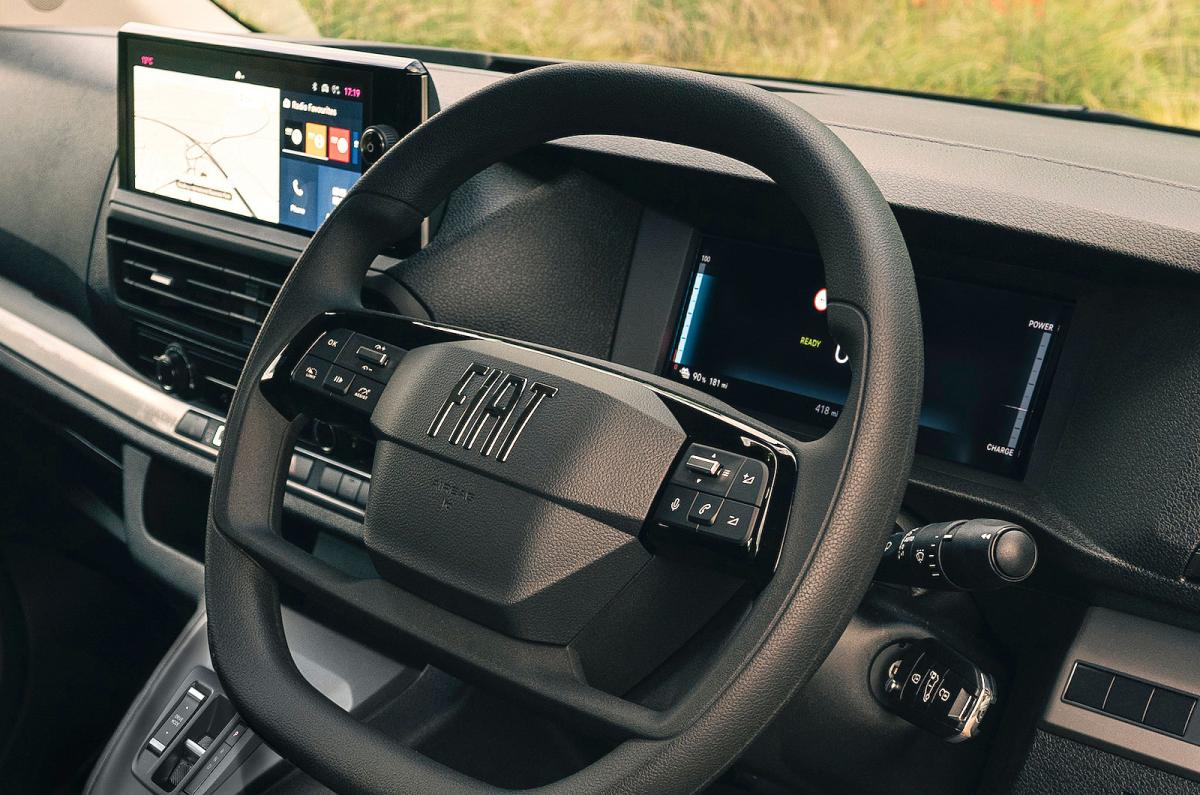
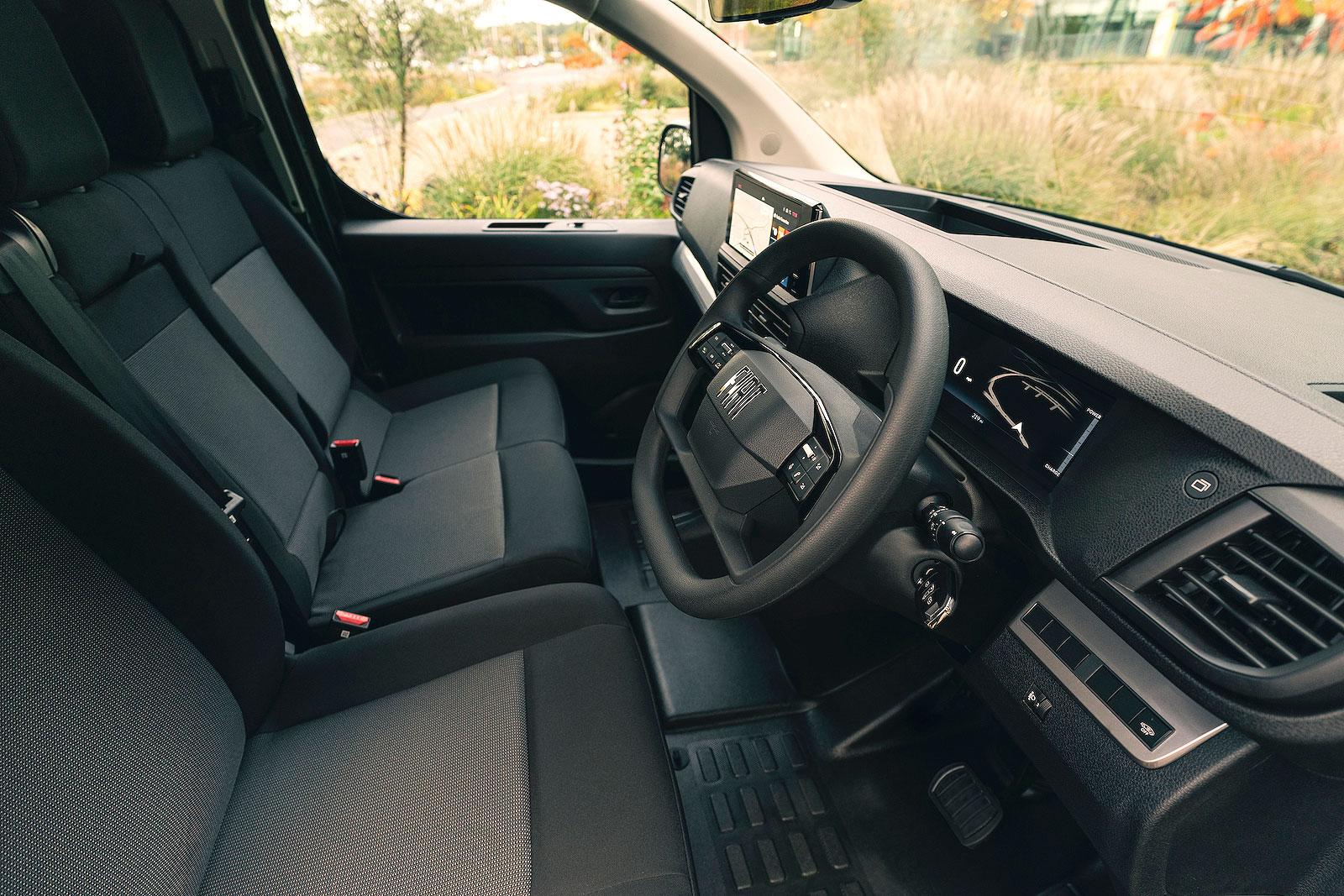
The Fiat E-Scudo’s cab is much more modern than the version it replaces, thanks to a revised dashboard layout, updated screens and improved connectivity, but it’s still a long way from being cutting-edge.
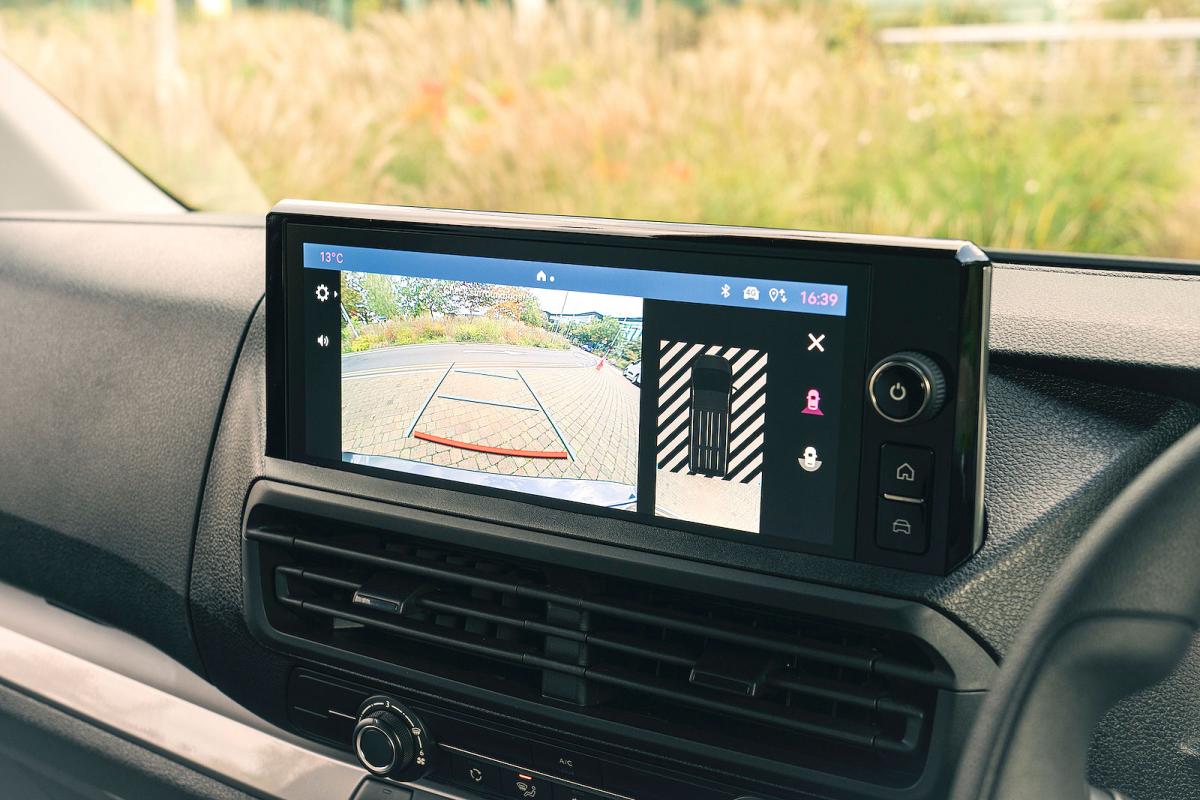
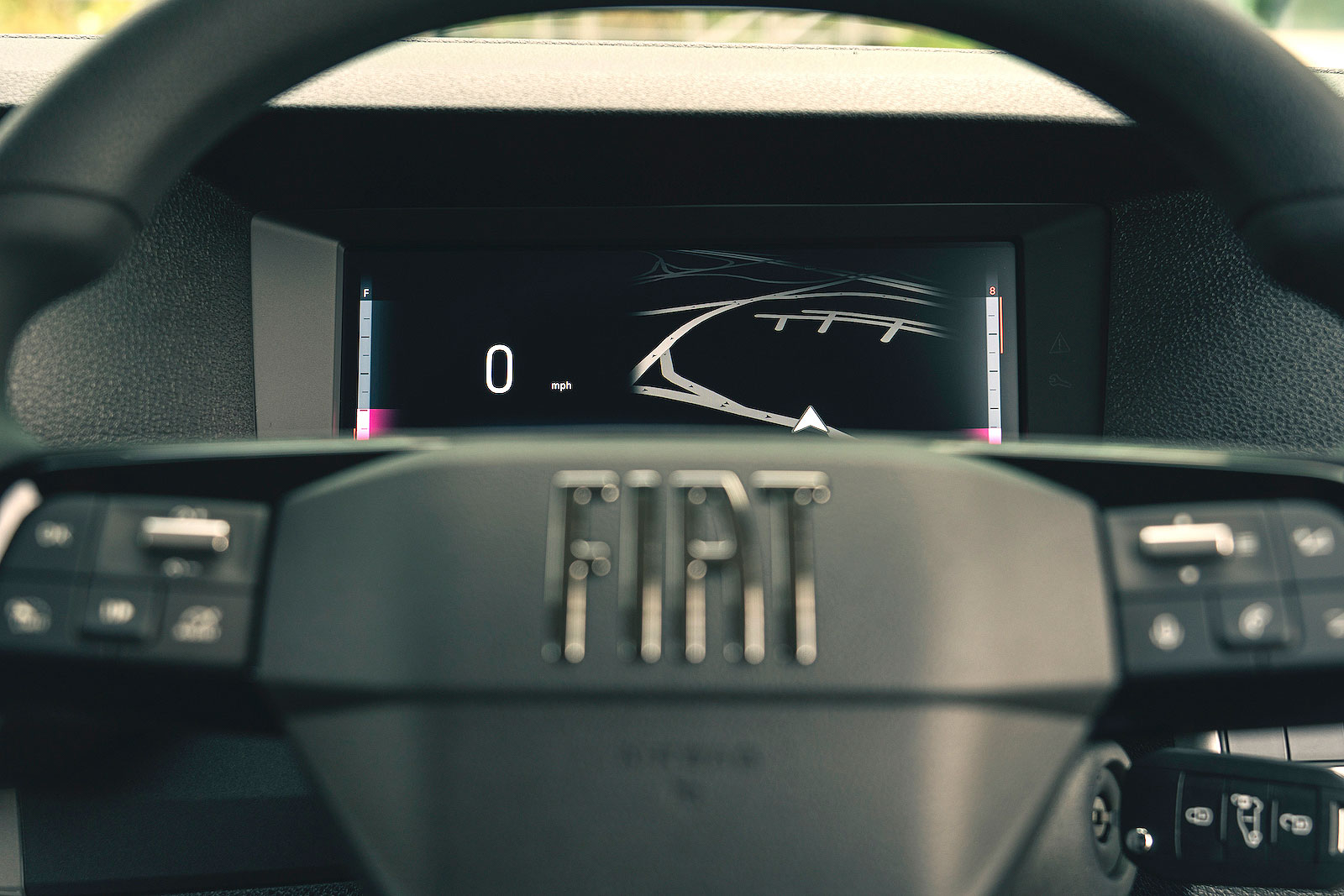
Dominating the new-look dash is a 10in infotainment screen with Android Auto and Apple CarPlay smartphone mirroring – something you’ll be thankful for because the built-in software is dated and slow to react. There’s no navigation on the entry-level model, so you’ll be plugging in your phone for that anyway (the higher-spec Primo trim adds navigation).
A small shelf below the screen includes a well-placed USB port and a non-slip phone tray, which is a small touch but a useful one that solves an old frustration.
It’s a significant improvement on the previous set-up and finally brings the E-Scudo in line with what buyers expect as a minimum from a modern van.
Less welcome is the unchanged driving position. The pedals and steering wheel are still slightly offset, a quirk of the original design that’s yet to be resolved. It’s manageable for short trips but longer drives result in an awkward twist through the back and shoulders. A reach-and-rake adjustable wheel, lumbar support and a six-way seat do help a little, but not enough.
Cab space is on the tight side. Three adults will feel squeezed, especially the middle passenger, whose leg room is compromised by a dashboard moulding that no longer houses a gear lever but still protrudes into the cabin. Even without that, space is tight, probably down in part to the limitations of the E-Scudo’s loosely car-derived underpinnings.
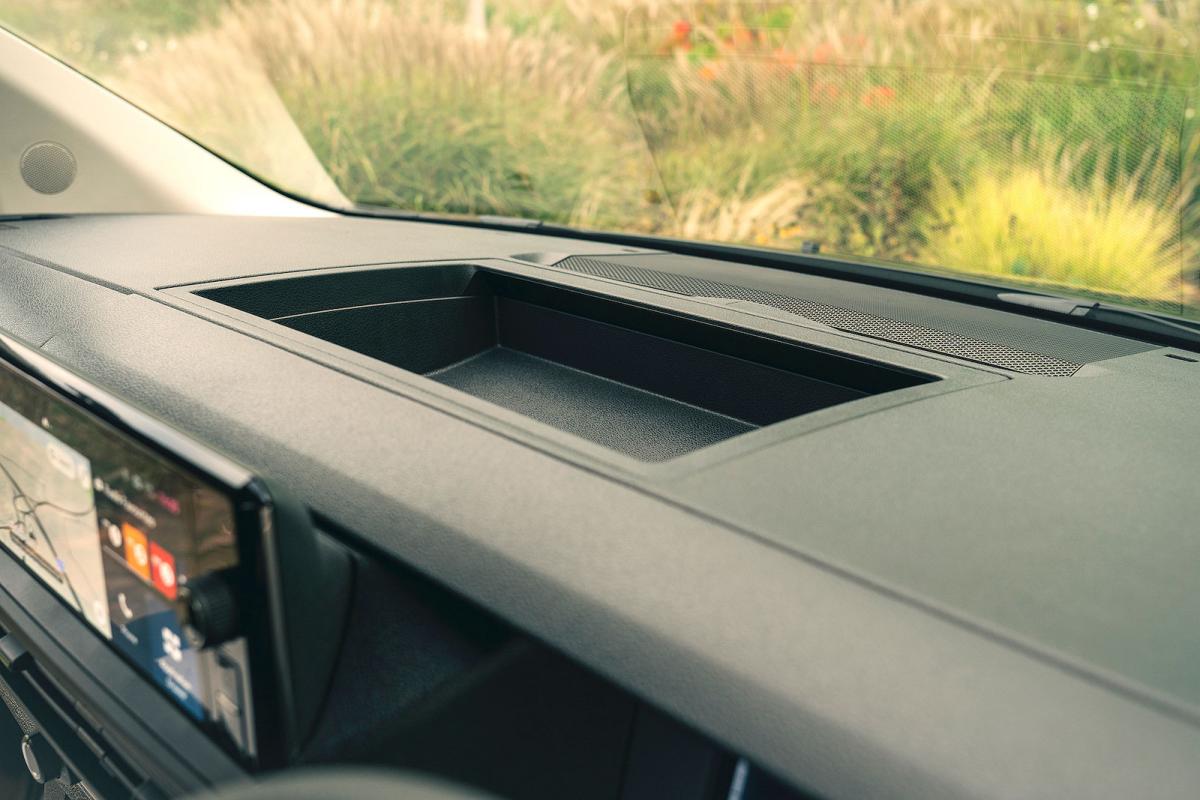
Likewise, storage is adequate rather than generous. The glovebox is shallow and split, the door bins are small, and there are few places to stash paperwork or coffee cups. There are (oddly square) cup holders but they’re located a long stretch away on top of the dashboard.
By comparison, the Ford e-Transit Custom and even the aging Trafic E-Tech offer better cabin ergonomics and more usable cubbies.
“I'd compare the E-Scudo's interior to a microwave: it’s bland but gets the job done perfectly adequately.” – Phil Huff, Van Reviewer
Passenger & boot space
How it copes with people and clutter
Strengths
- Dual side doors standard across the range
- Low height suits urban sites and car parks
- Load-through flap offers useful extra load length
Weaknesses
- Load volume and payload now lag behind rivals
- No high-roof variant available
- Towing limited to 1000kg
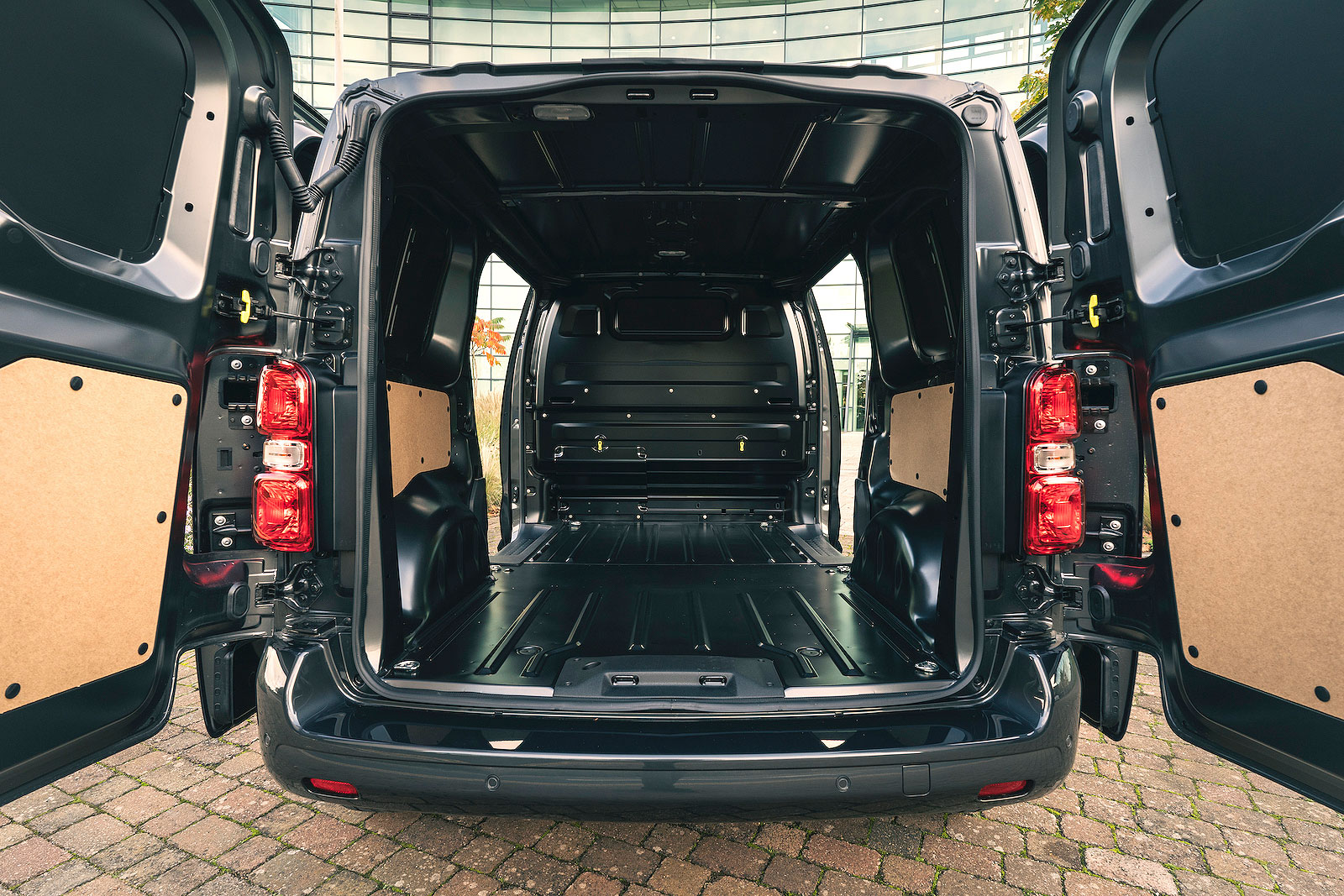
The Fiat E-Scudo is available in two lengths: L1 (standard) and L2 (long). Both use the same low roof height, which keeps the overall height under 2m and allows access to most multi-storey car parks and other height-restricted areas. However, the absence of a high-roof option means cargo height is limited compared with some medium-sized electric vans.
Load volumes are 5.3m3 for the L1 and 6.1m3 for the L2, which is competitive but not class-leading. The Ford E-Transit Custom and VW e-Transporter reach as far as 6.8m3, while the eDeliver 7 offers up to 8.7m3 of load volume. If you’re shifting bulky items or fitting out as a camper or mobile workshop, that extra space might matter.
Payload is capped at 1001kg across the panel-van range, which puts the E-Scudo behind newer rivals. The e-Transit Custom manages up to 1135kg, and the Renault Trafic E-Tech stretches to 1222kg. It’s far more capable than a Mercedes eVito though: that’s limited to 794kg. For towing, the E-Scudo is rated at 1000kg, which is enough for a light trailer but half the e-Transit Custom’s 2000kg capability.
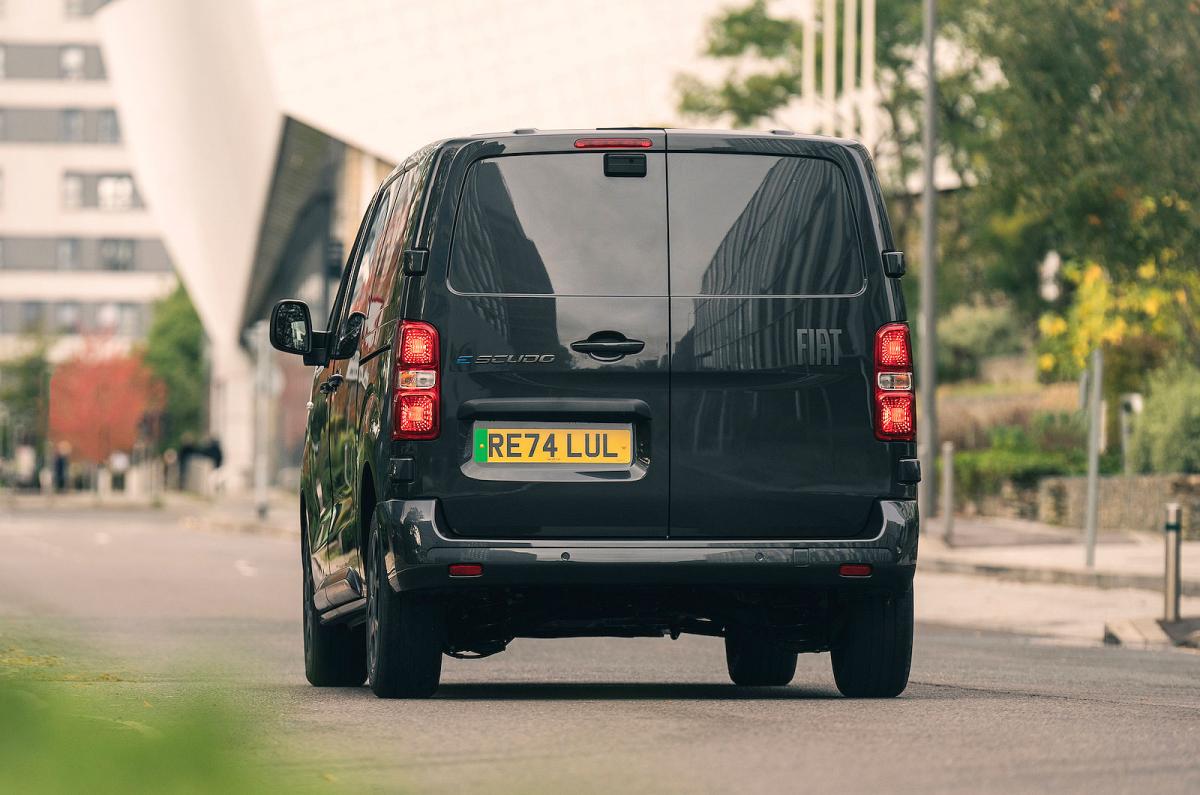
The E-Scudo gets twin sliding side doors to ease access to the load box, which is one more door than you’ll find on an E-Transit Custom. Pallet loading with a forklift is simple because the rear barn doors open to 180 degrees.
A handy feature is the load-through bulkhead, which is standard on Primo trim. That allows long thin objects up to 4m long to slide into the cab through a flap behind the folding passenger seat. It’s a clever solution, although you do lose use of the seat.
The six-seat E-Scudo Crew Van trades cargo capacity for extra seats, dropping by 2.1m3 while losing a little under 100kg of payload.
Buying & owning
Everyday costs, plus how reliable and safe it is
Strengths
- Competitive starting price
- Two-year service intervals great for urban users
- Faster charging than some rivals
Weaknesses
- Three-year warranty is behind best-in-class
- Lower resale values mean costlier lease deals
Fiat pitches the E-Scudo competitively, with prices starting from around £42,000 plus VAT, with the long-wheelbase version adding just £800.
Step up to the plusher Primo spec and you’ll add around £2,500 to the price, but we feel that’s a price worth paying for the extra practical and comfort features included. Across each trim level, it undercuts the Ford E-Transit Custom and Maxus eDeliver 7.
Ways to buy
The Government’s Plug-in Van Grant lops another £5,000 off the list price too, as it does for all of the E-Scudo’s rivals.
Fiat’s trims mirror those of its Stellantis siblings. The entry-level unnamed model (it’s badged just E-Scudo) includes air-conditioning, cruise control, rear parking sensors and the new infotainment system.
The top-spec Primo model adds sat-nav, Dynamic Surround View (a digital rear-view mirror with a live feed from both behind and down the side of the van), body-coloured trim and the useful load-through bulkhead with a fold-flat passenger seat.
Running costs are another win. You’ll save on fuel, ULEZ charges and congestion charges. Servicing intervals are set at every two years or 25,000 miles, following an initial 12-month check-up.
Charging is straightforward. A standard 11kW AC onboard charger suits home use, but fleet depots might prefer the optional high-voltage unit for 30% faster top-ups. A full charge from empty takes just over 11 hours on a normal home EV charger.
On the road, the E-Scudo supports rapid DC charging at a maximum rate of 100kW – faster than a Renault Trafic E-Tech but slower than an E-Transit Custom – allowing a 5% to 80% charge in around 45 minutes under perfect conditions.
The biggest downside is warranty cover. Like Peugeot and Vauxhall, Fiat offers just a three-year, 100,000-mile warranty. That pales next to the five-year cover from Volkswagen for the e-Transporter (which includes five years of servicing and even MoTs) or the 10-year Relax warranty available on the Toyota Proace Electric.
For owner-operators who plan to keep their van for well beyond a four-year lease cycle, that could be a dealbreaker. At least Fiat’s provision is more comprehensive than Ford’s miserly three-year, 60,000-mile offering.
Fiat’s smaller dealer network in the UK means after-sales support isn’t as widespread as for a Peugeot or Vauxhall, although a Vauxhall dealer will likely be happy to work on the E-Scudo.
“Toyota and, to a lesser extent, Volkswagen have blown the Stellantis quartet out of the water with tier warranty cover. I'd say that's perfect if you’re an owner-operator or small business looking for predictable costs and longer cover.”– Phil Huff, Van Reviewer
For all the latest reviews, advice and new car deals, sign up to the What Car? newsletter here
Tips & Advice
Similarly priced cars


If you're interested in finding a Fiat E-Scudo, or any of the other electric van cars mentioned here, head over to our Cars available now pages to find new cars listed for sale at great prices.
FAQs
Fiat E-Scudo specifications
RRP price range
Battery range (miles)
Available fuel types (which is best for you? )
Available colours
Number of engines (see all)
Number of trims (see all)
What is What Car? best price?
The What Car? best price shows you the cheapest way to buy your new car, whether it's by choosing an in-stock car through our partner Autotrader or placing a factory order.
RRP from: £46,121
About the writer