Volkswagen Golf review
Category: Family car
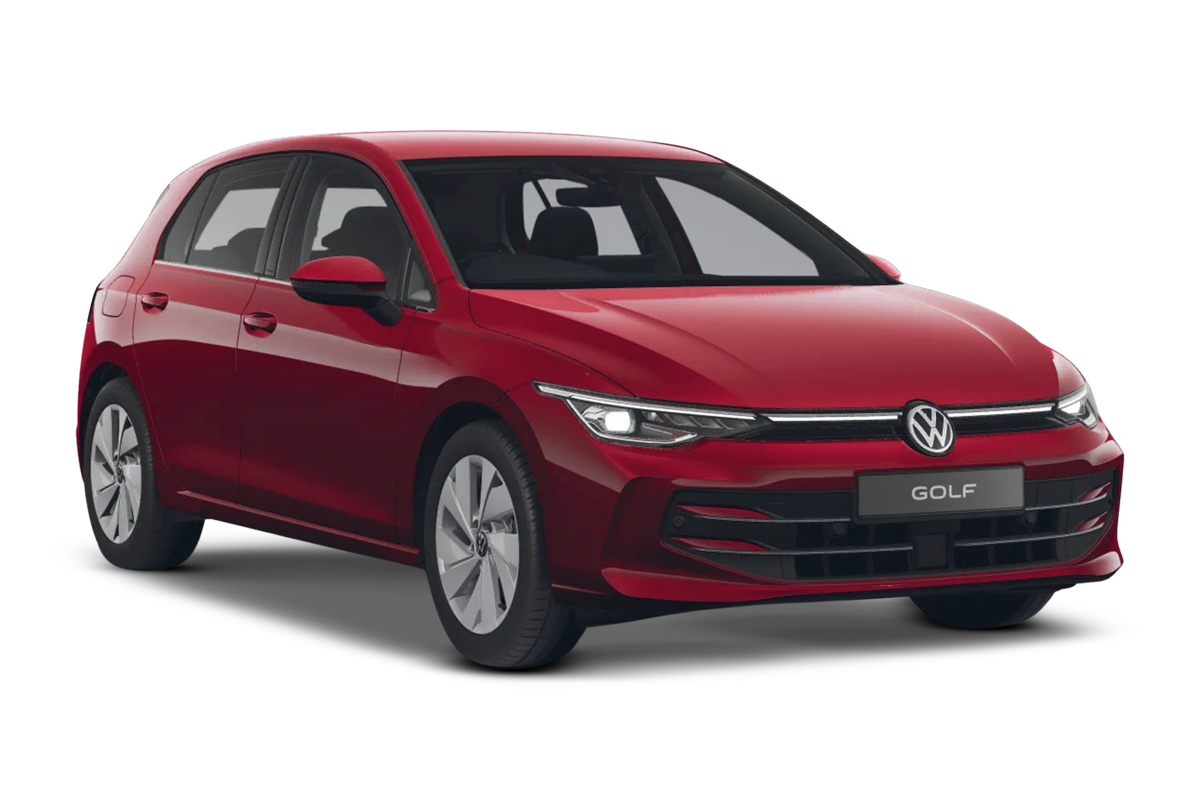
The VW Golf gets much-improved infotainment system and remains a good-to-drive family car


What Car? says...
There are household names and then there’s the Volkswagen Golf. Indeed, it’s been so popular for so long that it’s almost guaranteed you know someone who owns one.
The key to this family car's success is arguably its ability to defy class boundaries, managing to look just as at home among premium models such as the BMW 1 Series and Mercedes A-Class as it does with mainstream rivals including the Seat Leon. All that is especially impressive when you consider that the Golf has managed to do it for eight generations.
VW Golf video review
A mid-life update to the Golf Mk 8 has kept things largely the same, but includes changes to the infotainment system designed to address criticism of its lack of user-friendliness. Meanwhile, the eHybrid plug-in hybrid (PHEV) version received a big battery upgrade, allowing it to go up against other eco-friendly hatchbacks, including the Peugeot 308 PHEV and the Toyota Prius.
So has Volkswagen done enough to ensure the latest Golf deserves a place among the best family cars? Read on to find out…

What’s new?
- January 2025: What Car? names Golf GTI its Best Hot Hatch for Everyday Usability
- April 2024: revised Golf Mk8 goes on sale in UK, and features Chat GPT integration as well as redesigned headlights and a new multi-function steering wheel
- October 2020: Golf GTD goes on sale and records a 0-62mph time of 7.1 seconds and the ability to travel 600 miles on a tank of diesel
- February 2020: eight-generation Golf revealed at Frankfurt motor show
Performance & drive
What it’s like to drive, and how quiet it is
Strengths
- +Good engines
- +Comfortable ride around town
- +Refined petrol engines
Weaknesses
- -Hesitant automatic gearbox
- -Not as agile as a Seat Leon
- -Some road and wind noise at motorway speeds
Engine, 0-60mph and gearbox
You get plenty of engine choices for the VW Golf, starting with the 114bhp 1.5 TSI 115 and 148bhp 1.5 TSI 150 petrols. The TSI 115 keeps the cost down but it's worth paying more for the TSI 150 because it pulls harder when getting to motorway speeds and overtaking (0-62mph takes 8.6secs).
Company car drivers will find the 1.5 TSI eHybrid PHEV most appealing. With a 0-62mph time of 6.9secs, it proved to be as quick as a Toyota Prius in our tests when driven in hybrid mode, using both the engine and electric motor to get up to speed.
The Golf eHybrid is more effortless to drive than the Prius when you’re running on battery power alone but the latter is less lethargic when the hybrid battery has run out of charge. The eHybrid covered 73 miles (the official range is 88 miles) on electricity alone when we tested it, beating all PHEV rivals.
Diesel fans will enjoy how strong the entry-level Golf 2.0 TDI 115 feels at low revs. It’s by no means fast but its linear power delivery makes for relaxed progress. The more powerful 2.0 TDI 150 should be more than quick enough for everyday driving.
Suspension and ride comfort
On its standard suspension, the Golf rides potholes and ridges around town pretty adeptly, and with similar ease to the Mercedes A-Class. As speeds increase, it becomes a little more unsettled over minor imperfections and doesn’t quite match the body control of the firmer BMW 1 Series.
Opting for one of the 150 engines gives you a more sophisticated rear suspension set-up that makes the ride less fidgety, while R-Line gets lowered sports suspension that’s noticeably firmer but still perfectly acceptable. The heavier eHybrid is comfortable by the standards of PHEV hatchbacks, soaking up most bumps fairly well, with just the occasional thump when tackling sharper ruts. A Prius is more settled though.
The Golf has another trick up its sleeve. If you option the Dynamic Chassis Control (DCC) adaptive suspension, you get a Comfort mode that makes the Golf one of the smoothest-riding family cars you can get. There's a bit of float over dips and crests but you can dial that out by switching to the slightly stiffer Normal setting.

Handling
The Golf’s light steering is great for town driving but some might prefer a bit more heft and directness for faster, twistier roads. R-Line trim adds dynamic steering and a Driver Profile Selection system (both are optional with other trims) but even then the Golf’s steering still isn't as sweetly calibrated or as alert and responsive as with the 1 Series.
The Golf eHybrid PHEV offers more outright grip than a Prius, but the laidback response and weighting of the controls does mean it’s less engaging to drive.
If a sharper experience is what you’re wanting, you should consider the closely-related Seat Leon because it's more agile and fun, with less body lean during cornering than the Golf. The Golf R-Line (not to be confused with the VW Golf R hot hatch) has lowered sports suspension, making it keener to change direction and reducing body lean, but it’s still not as sharp as the Leon.
The optional DCC suspension lets you stiffen the set-up on demand. If that’s still not sporty enough, the Golf GTI should scratch the itch for anyone chasing hot-hatch performance.
Noise and vibration
No matter which of the Golf's 1.5 TSI petrol engines you go for (including the eTSI 150), they only really make themselves noticeable when you work them hard, and the 2.0 TDI diesels are not much louder. In fact, they’re among the smoothest diesel engines in the family car class.
Compared with the Prius, the eHybrid’s engine sounds coarse and more boomy under acceleration, while a bit more road and suspension noise means it’s not quite as hushed as a cruiser. However, neither is loud enough for it to be a nuisance. Whichever Golf you’re in, you’ll notice a fair amount of wind and road noise at 70mph.
The manual gearbox (fitted to the 1.5 TSI 115 and 2.0 TDI 115) has a defined clutch biting point and the gear lever is precise enough to find your route to all six gears easily. The seven-speed automatic gearbox (fitted with all other engines) is great when you’re on the move, but frustratingly hesitant to pull away from the line and slow to kick down through the gears when you want a sudden burst of acceleration.
In the eHybrid, regenerative braking is standard to help top up the battery under deceleration, with the strongest setting able to slow the car down to a walking pace, but not to a complete halt. You can adjust how strong the effect is, but having to do so using the infotainment touchscreen is quite clunky. The brakes themselves are strong, but the pedal response is vague and grabby, so coming to a halt can be tricky.
“The VW Golf is still a great choice as a family hatchback, and feels laidback and composed to drive. It’s not trying to be sporty or too soft. It’s just about right." – George Hill, Staff Writer
Interior
The interior layout, fit and finish
Strengths
- +Comfortable driving position
- +Much improved infotainment system
Weaknesses
- -Interior quality could be better
- -Compromised over-the-shoulder visibility
Driving position and dashboard
It’s easy to find a comfortable driving position in the VW Golf, thanks to its seat and steering wheel having plenty of adjustment. The seats are comfortable, too, with plenty of shoulder support, but some might find the standard-fit adjustable lumbar support doesn’t extend quite far enough.
Most of the dashboard controls have been loaded onto the infotainment screen, with a few fiddly touch-sensitive sliders on the dashboard for changing the stereo volume and temperature. A 2024 update added backlighting for the sliders, making it easier to change settings at night, but they're still distracting and frustrating to use.
Mercifully, the touch-sensitive buttons and sliders on the steering wheel have been shelved in favour of physical ones. They’re far better and allow you to easily interact with the standard-fit 10.25in digital instrument cluster’s various configurations. Better still, the conventional arrangement of viewing the display through the steering wheel makes it easier to read than in a Peugeot 308 or Toyota Prius.
Visibility, parking sensors and cameras
The Golf's large windscreen and side windows give you good visibility at junctions, although you might have to crane your neck at roundabouts for a clear view around the front pillars.
Likewise, the pillars at the back of the car are large enough to obscure what's lurking behind you when you're looking over your shoulder – although not nearly as much as they do in the Mazda 3. Fortunately, front and rear parking sensors are standard on all trims, and a rear-view camera is standard from Match trim and up.
Even the entry-level Life trim comes with powerful LED headlights, and those can be upgraded to the same LED Plus headlights fitted to Style that can direct light around corners. Alternatively, matrix LED headlights are optional on all models (they’re standard with Black Edition trim), allowing you to leave full beam on without dazzling other road users.

Sat nav and infotainment
Every Golf comes with a 12.9in infotainment touchscreen that’s mounted high up so you don't have to look too far from the road to use it. The graphics are sharp and there are lots of helpful standard features, including wireless phone-charging, sat-nav, Bluetooth, and Android Auto and Apple CarPlay smartphone integration.
Thanks to a recent mid-life facelift, the Golf now comes with the latest VW operating system, which is a vast improvement on the old system. It’s far more intuitive than in the previous Golf, with menus that make sense and the ability to add custom shortcuts at the top of the screen, making it easier to get to the parts of the system you use most.
The Golf’s standard six-speaker stereo will be fine for most buyers and sounds decent, but music lovers will want to go for the optional nine-speaker Harman Kardon system.
Quality
At first glance, the interior of the VW Golf looks smart, crisp and modern. There are even some soft-touch surfaces on the upper parts of the dashboard and the tops of the front doors.
Look a little deeper and you’ll start to find lots of harder and scratchier plastics, especially in the rear. When you consider the Golf is usually a paragon of quality, that’s disappointing.
It's not as classy inside as a Mercedes A-Class and nor is it bolted together as well as the BMW 1 Series, while the Mazda 3 has a better finish. It’s not all bad news, though: the Golf still ranks above some mainstream family cars on quality, including the Skoda Scala.
“I'd go for the Golf's Style trim or higher if you want a more upmarket feel, with a wider range of materials used on the doors and seats.” – Lawrence Cheung, New Cars Editor
Passenger & boot space
How it copes with people and clutter
Strengths
- +Lots of interior space
- +Plenty of front storage
- +Decent boot space
Weaknesses
- -Tight for three rear passengers
- -Some rivals are even more practical
Front space
The VW Golf has plenty of head room to suit even exceedingly tall occupants, and its front seats go back far enough to accommodate those with long legs. It's wide in the front, too, so you won’t be clashing elbows with your passenger.
The front door pockets are each big enough for a 500ml bottle of water and there are two cupholders in the centre console. In front of the gear lever there’s a handy tray for your phone that includes wireless charging on all versions.
You’ll also find a storage bin under the front centre armrest, plus there's a decent-sized, air-conditioned glovebox.
Rear space
The Golf’s interior dimensions allow a pair of six-footers to sit relatively comfortably in the back. Head room is very generous, but leg room isn’t outstanding – if the front seat occupants slide their seats fully back, taller folk in the rear won't have much space in front of their knees.
Shoulder room becomes tight when a third rear passenger is introduced, and the raised section of floor that runs along the centre of the car steals some foot space from the middle passenger.
Still, the Golf is marginally more accommodating in the back than a BMW 1 Series, Mercedes A-Class, Peugeot 308 or Toyota Prius – although you’ll find lots more room in certain alternatives, such as the slightly cheaper Skoda Octavia.

Seat folding and flexibility
The Golf's rear seats don't do anything clever, such as sliding or reclining. As with most family hatchbacks, you can fold down the 60/40 split seatbacks (the A-Class gets a more flexible 40/20/40 arrangement) by pulling levers next to the outer rear head restraints.
Once dropped, the seatbacks lie virtually flat. There’s also a ski hatch, which keeps the outer rear seats in play while allowing you to carry longer loads.
Boot space
There’s room in the Golf's boot for the weekly food shop and you can just about squeeze in a small set of golf clubs or a fold-up baby buggy. However, boot space is only average for the class: five carry-on suitcases will fit below the parcel shelf of all versions, which is the same as the Toyota Prius, though the Skoda Scala can carry seven.
Most Golfs have a 381-litre boot, which is about average by the standards of the family car class. You get quite a lot less space (273 litres) if you go for the 1.5 TSI eHybrid PHEV because the batteries take up the underfloor storage area.
All Golfs except the eHybrid have a height-adjustable boot floor. That lets you create two separate compartments and, when raised, irons out the step that's otherwise created when the rear seats are folded down. With the floor on its highest setting, there’s barely any lip to negotiate when you're lifting heavy items in and out.
"The VW Golf is not the biggest family hatchback but there’s a good balance of space overall. I can sit behind my seating position more comfortably than in a Peugeot 308 or Vauxhall Astra." – Dan Jones, Senior Reviewer
Buying & owning
Everyday costs, plus how reliable and safe it is
Strengths
- +Competitively priced
- +Good safety rating
- +Efficient engines
Weaknesses
- -Reliability record isn’t great
- -So-so warranty
Costs, insurance groups, MPG and CO2
The VW Golf slots roughly in the middle of the family car class on price. For a cash buyer, it’s pricier than a Seat Leon or Skoda Scala, around the same price as a Skoda Octavia but cheaper than most of its other rivals, including the Audi A3, the BMW 1 Series and the Mercedes A-Class.
All the petrol engines offer competitive fuel economy, with the entry-level 1.5 TSI 115 managing up to 53.6mpg and the more powerful TSI 150 up to 52mpg. If you often travel long distances, the TDI diesels will likely appeal, with a combined economy figure north of 60mpg.
The eTSI mild-hybrid isn’t as impressive as you might expect when compared with the TSI 115, managing 54.8mpg. The eHybrid is very efficient if you keep the battery charged and is also the one to go for as a company car. That’s because its long electric range and low official CO2 emissions place it in a lower BIK tax bracket. For private buyers, the eHybrid costs more to run over three years, chiefly because it will lose its value more quickly.
Equipment, options and extras
We think the Golf's entry-level Life trim is probably all you need, but it’s only available with the 1.5 TSI 115 engine. As such, we’d pay a little extra and upgrade to Match trim, because it gives you more engine choices and 17in alloy wheels, keyless entry and start, adaptive cruise control, tinted rear windows, an auto-dimming rearview mirror and the bits we’ve already mentioned.
Stepping up to Style changes some of the styling details and adds sports seats in the front, three-zone climate control and upgraded LED-plus headlights.
R-Line sets its sights on being sportier than the other trims, with slicker styling and premium sports seats, on top of the other performance upgrades. Top-spec Black Edition is more about styling than anything, with 18in alloys, black detailing across the car and a new illuminated VW badge sitting on the nose.

Reliability
The Golf didn't do well in our 2025 What Car? Reliability Survey, while Volkswagen as a brand came 24th place out of 30 manufacturers. That’s a tie with Ford, but below Audi, BMW, Mazda, Seat and Skoda.
Like most VW car models, the Golf comes with a three-year/60,000-mile warranty and one year’s roadside assistance. That's not exceptional these days, falling behind the five-year warranty from Hyundai, seven years from Kia and 10 years offered by Toyota, providing you keep up with the service schedule.
Safety and security
Every Golf comes with automatic emergency braking (AEB), lane-keeping assistance, a driver fatigue monitor, traffic-sign recognition and something called Car2X. All cars fitted with Car2X share information on traffic conditions and any hazards within a radius of 800 metres so you can be sent an early warning of any dangers that lie ahead.
The Golf achieved a five-star Euro NCAP safety rating with excellent category scores that all but matched the best cars in the class. It scored similarly to the Mercedes A-Class, but that was tested under less demanding rules than the Golf (which was tested in 2025) and its rating has since expired.
‘The Golf's Winter Pack is worth considering. It adds heated front seats and a heated steering wheel for relatively little." – Lawrence Cheung, New Cars Editor
Buy it if…
- You want an efficient family car with strong engine choices
- Comfortable ride is important to you
- You want a premium-feeling family car for less money
Don’t buy it if…
- Reliability is a big concern of yours
- You need the most practical family car possible
- You’re after a really agile family car
For all the latest reviews, advice and new car deals, sign up to the What Car? newsletter here
FAQs
If you want an efficient, practical, well-equipped and comfortable family car, the Golf is definitely a great choice – and a 2024 update has allayed some of our criticisms of the infotainment system.
The VW Golf isn’t going anywhere, the moment at least. Due to ongoing rules demanding electrification, the Golf will likely disappear as a combustion-powered car in the future, with its name used on a new electric car (EV) instead.
We think the Match trim and 1.5 TSI 150 petrol engine makes the most sense, because it keeps the price down, gives you a strong engine and plenty of kit. Company car drivers will want to go for the eHybrid plug-in hybrid (PHEV), though.
Yes, and you won’t be short of choice. Our favourite is the 1.5 TSI 150, but you can choose from multiple petrol, diesel and plug-in hybrid engines, as well as a mild hybrid.
| RRP price range | £28,895 - £48,170 |
|---|---|
| Number of trims (see all) | 11 |
| Number of engines (see all) | 5 |
| Available fuel types (which is best for you?) | petrol hybrid, petrol plug-in hybrid, petrol, diesel |
| MPG range across all versions | 34.4 - 256.8 |
| Available doors options | 5 |
| Company car tax at 20% (min/max) | £1,558 / £1,856 |
| Company car tax at 40% (min/max) | £3,117 / £3,711 |

