DS No7 review
The DS No7 looks great and is comfortable, but it's expensive


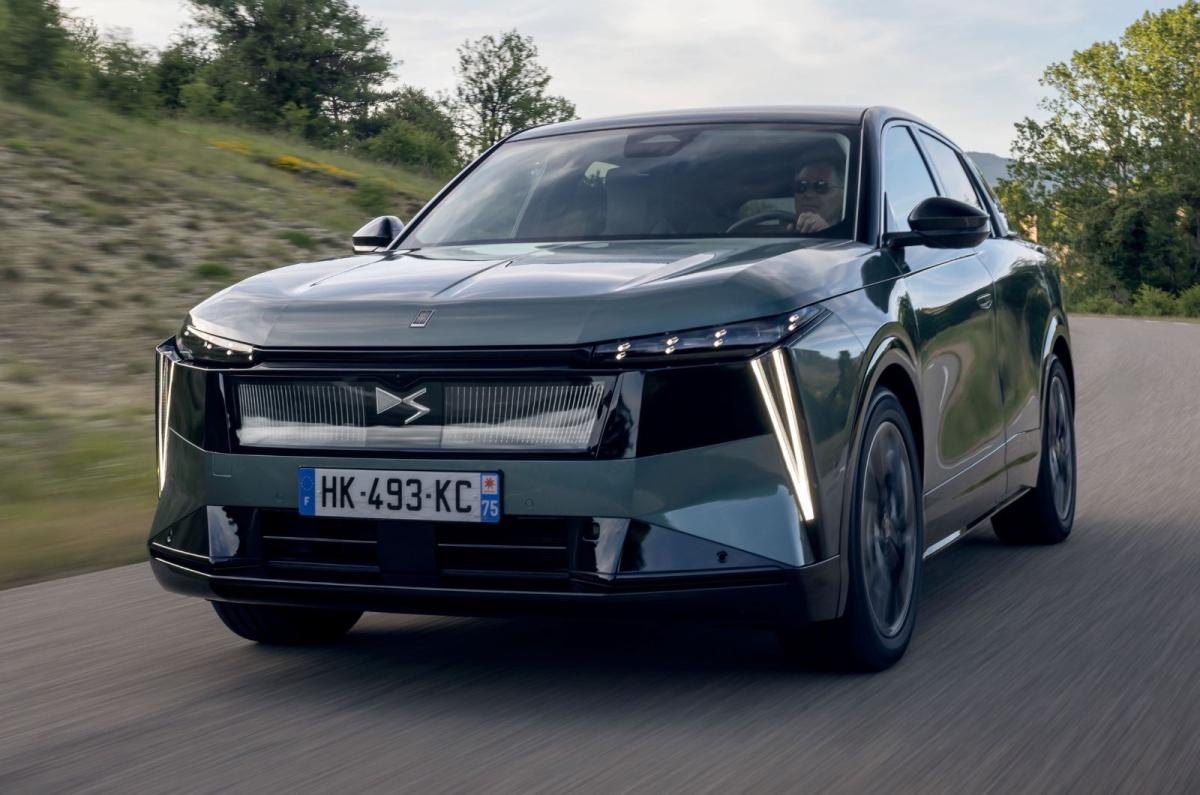
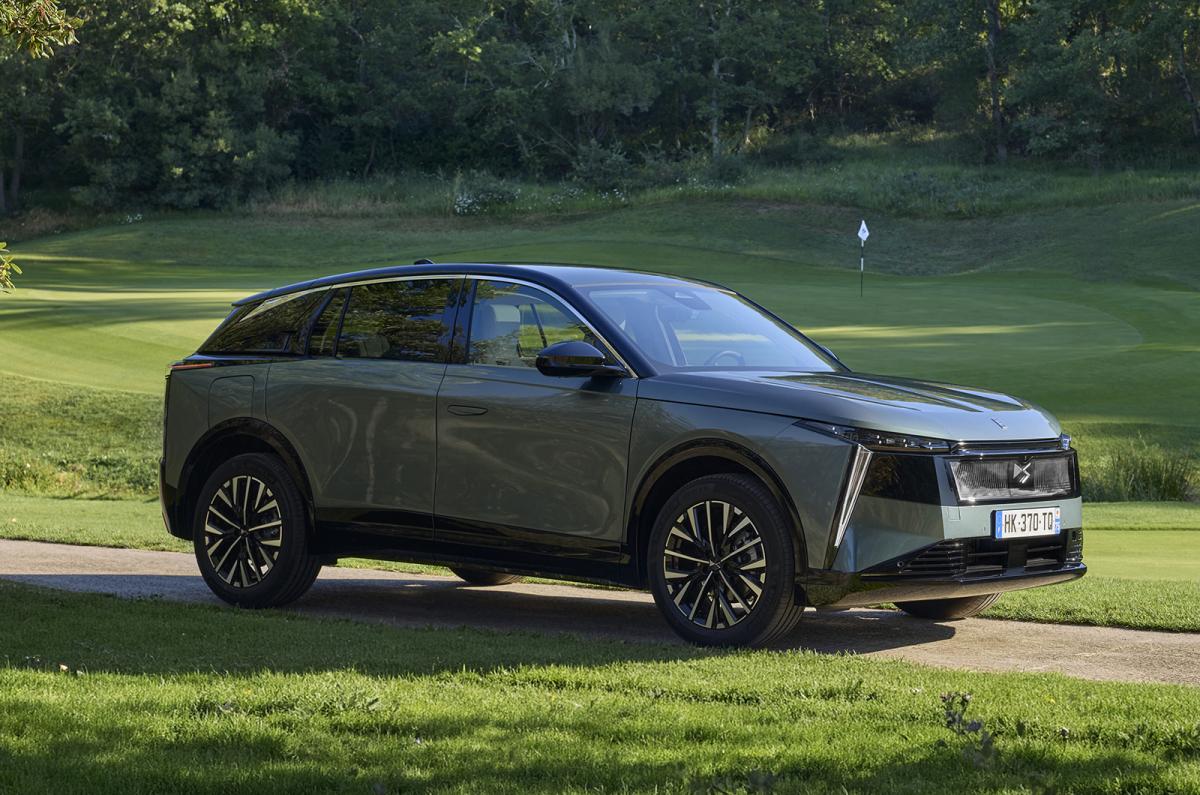
- DS No7 front dynamic
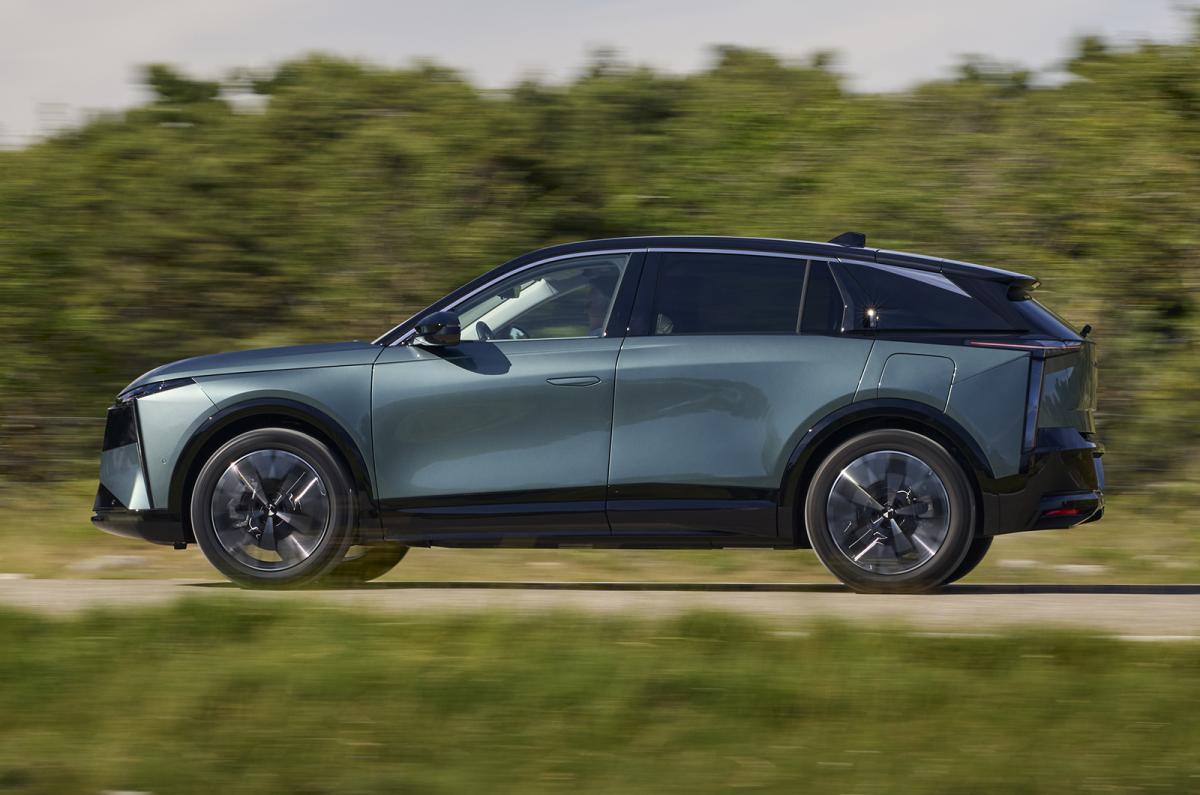
- DS No7 driving side
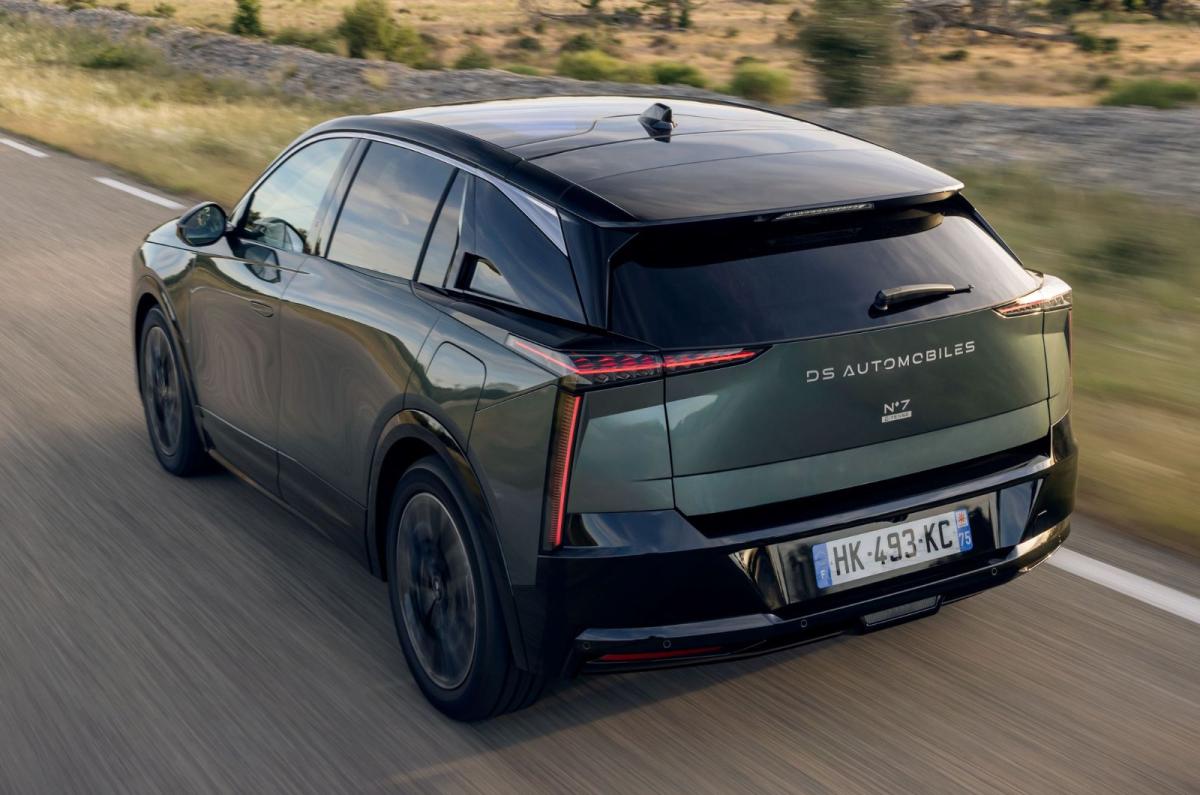
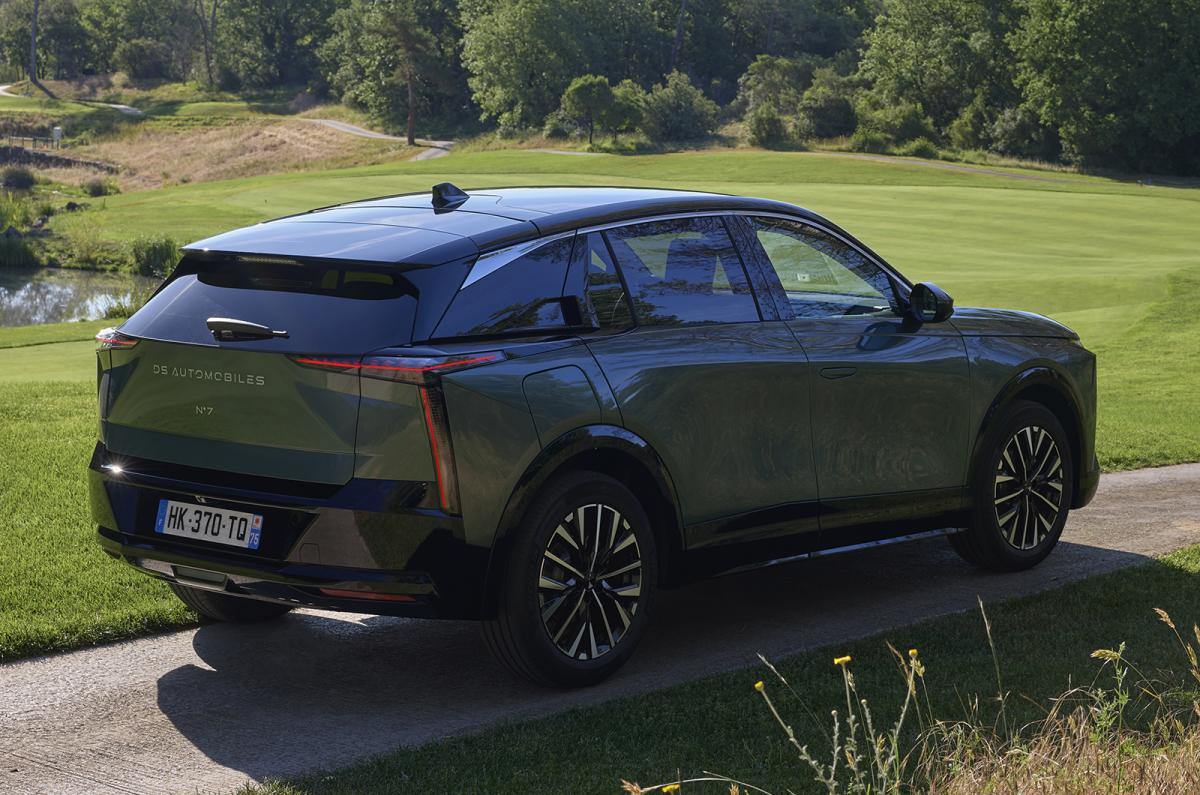
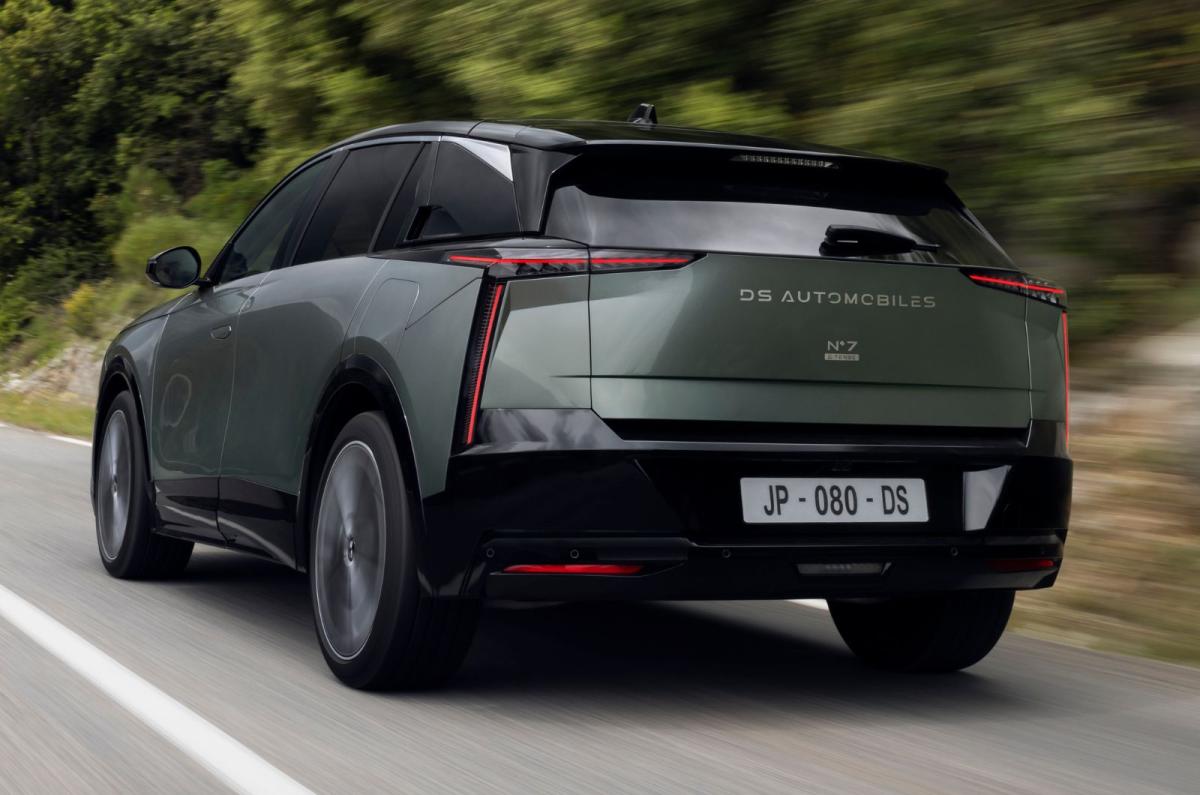
- DS No7 driving rear
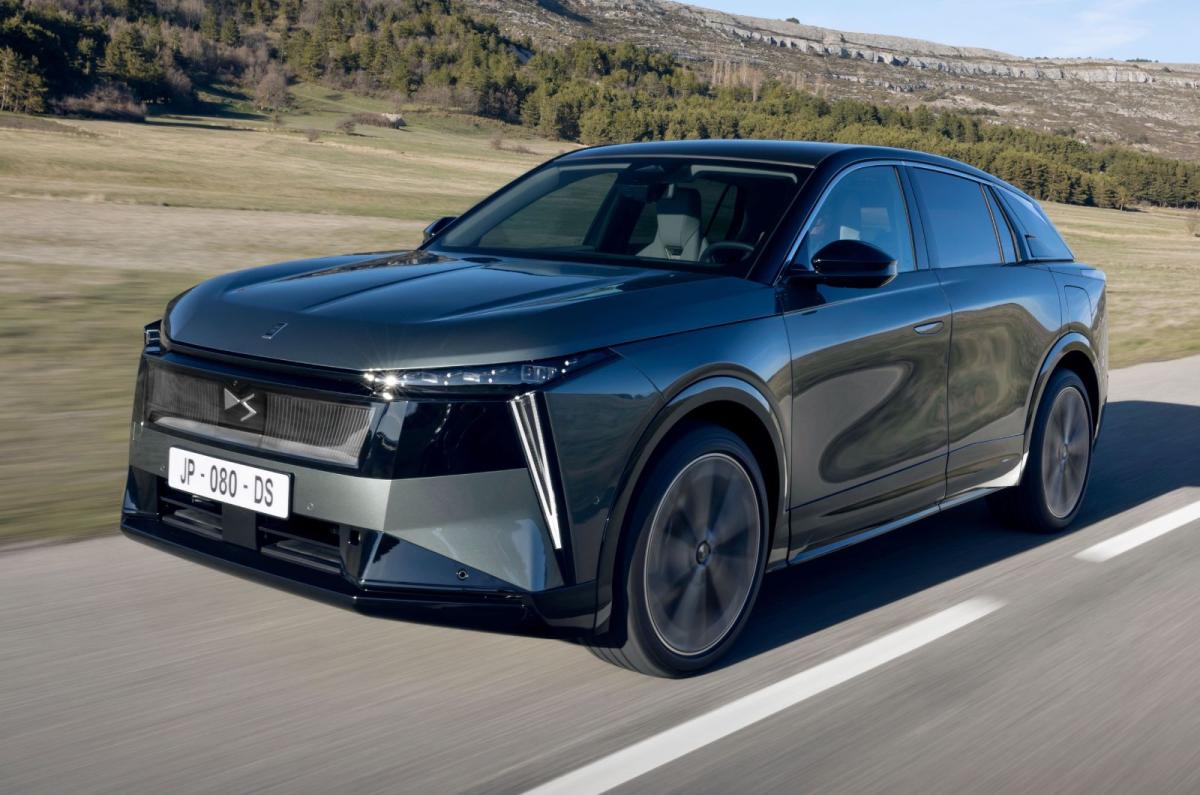
- DS No7 driving front left
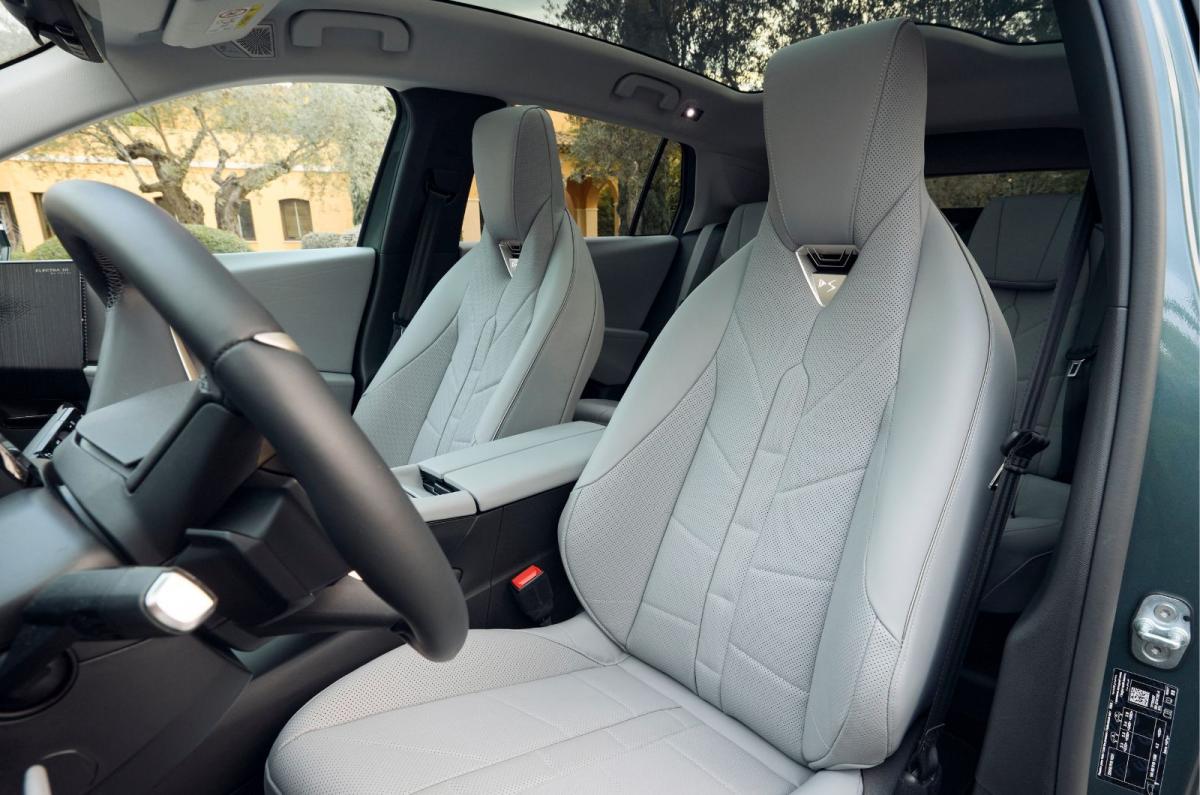
- DS No7 interior seats
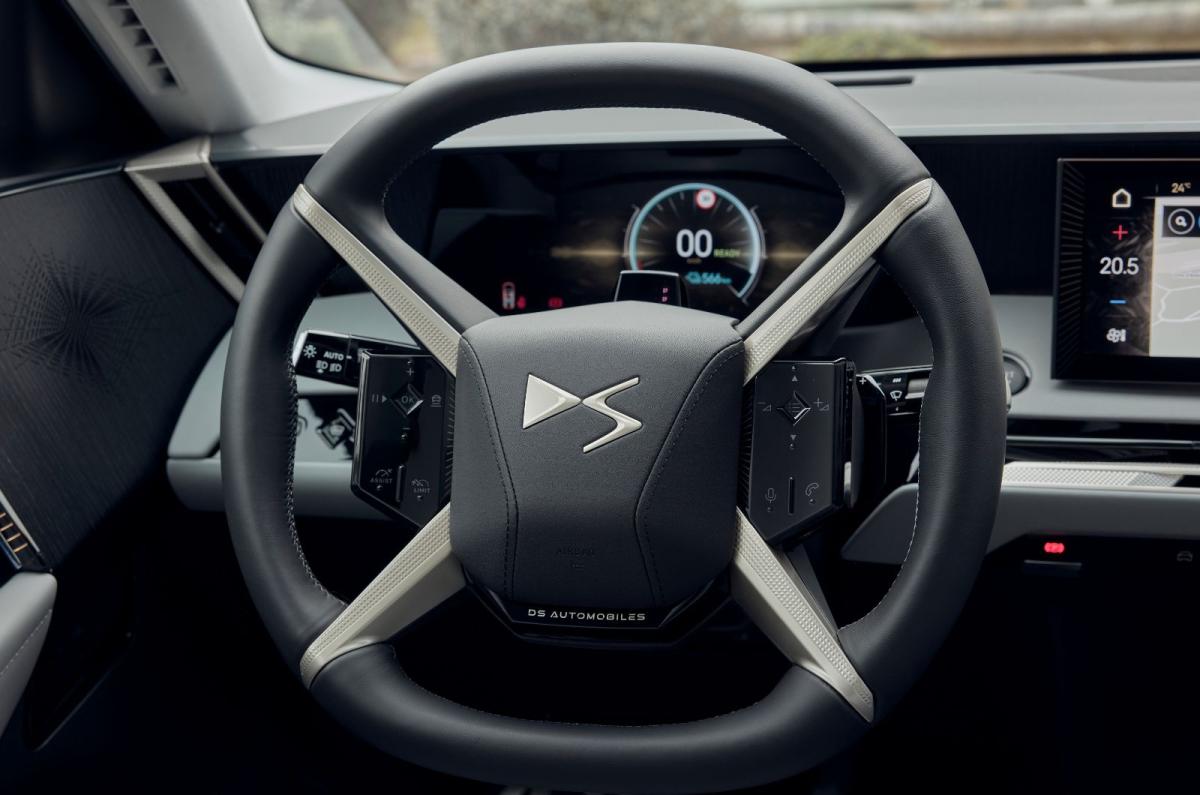
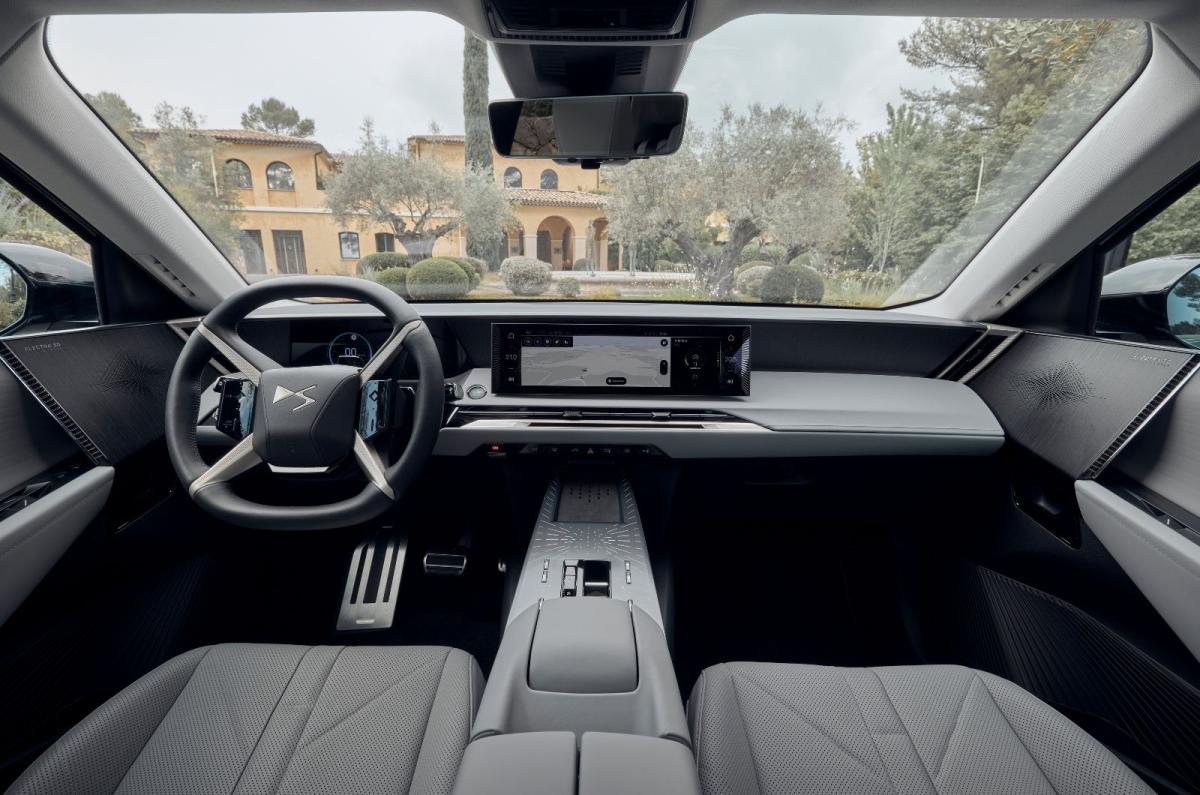
- DS No7 interior steering wheel
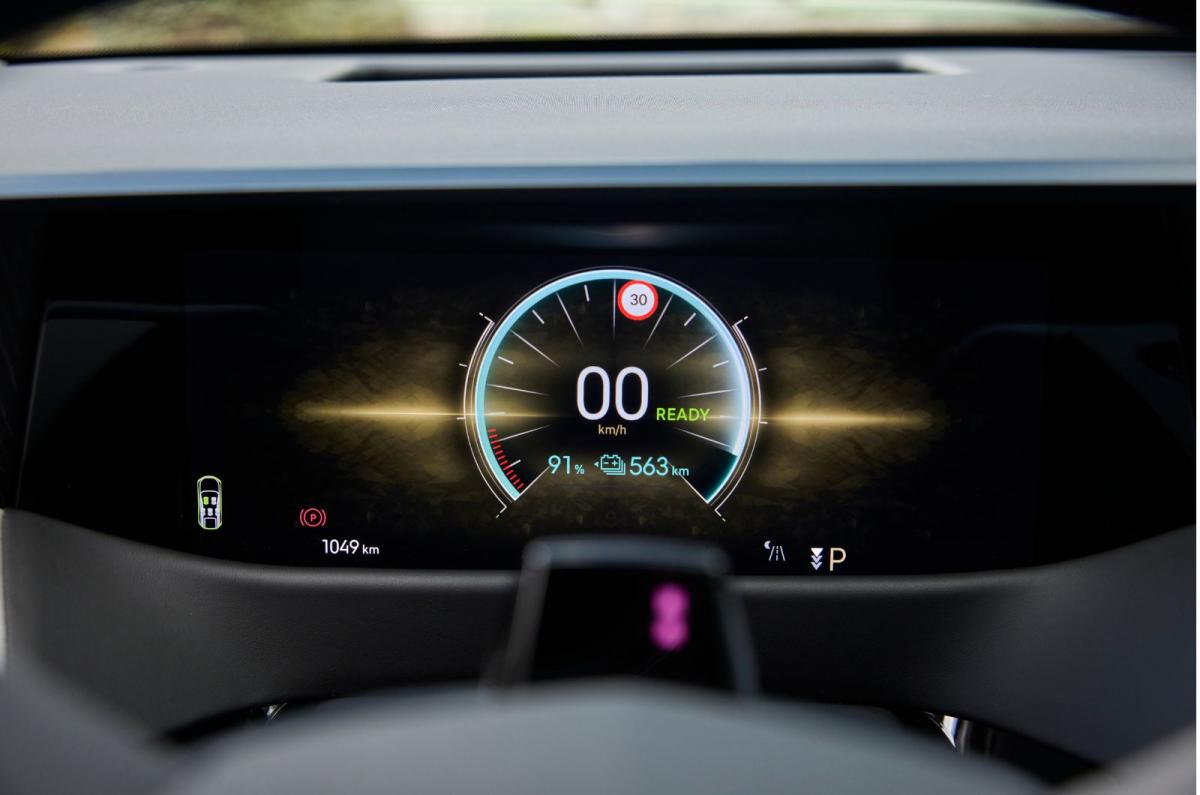
- DS No7 interior display
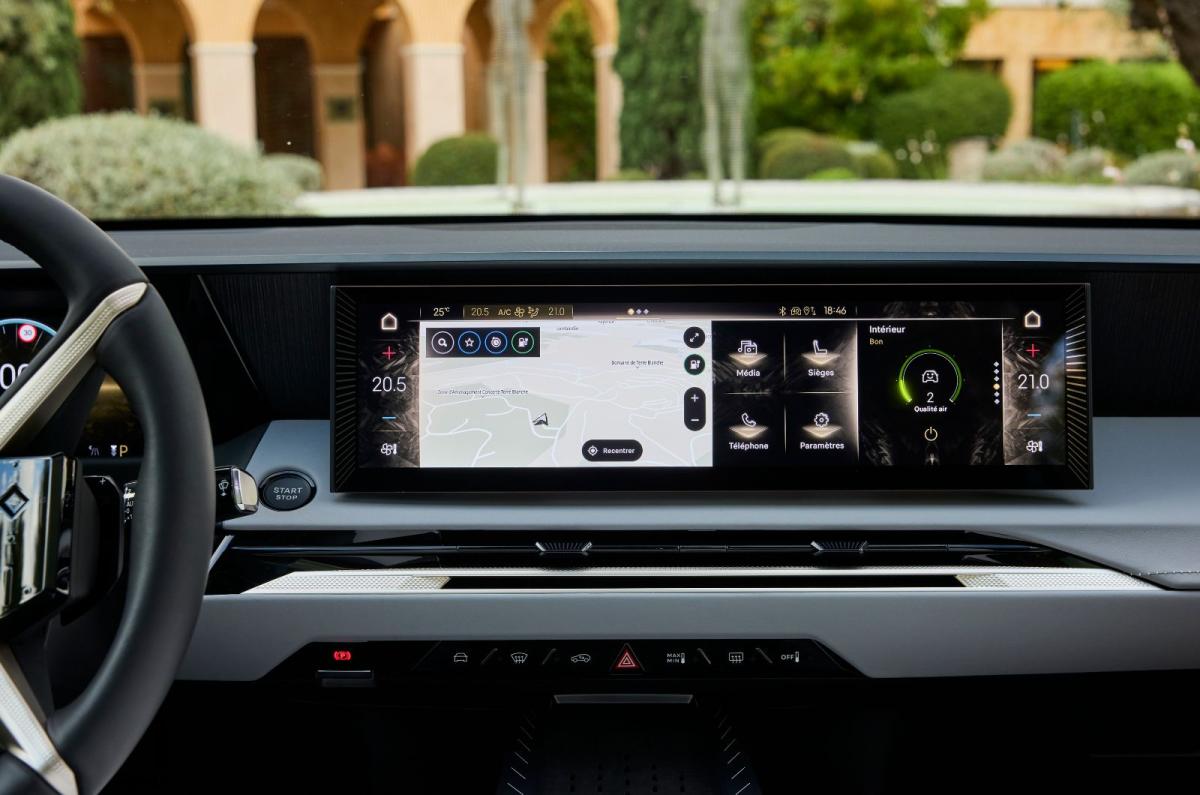
- DS No7 interior display infotainment
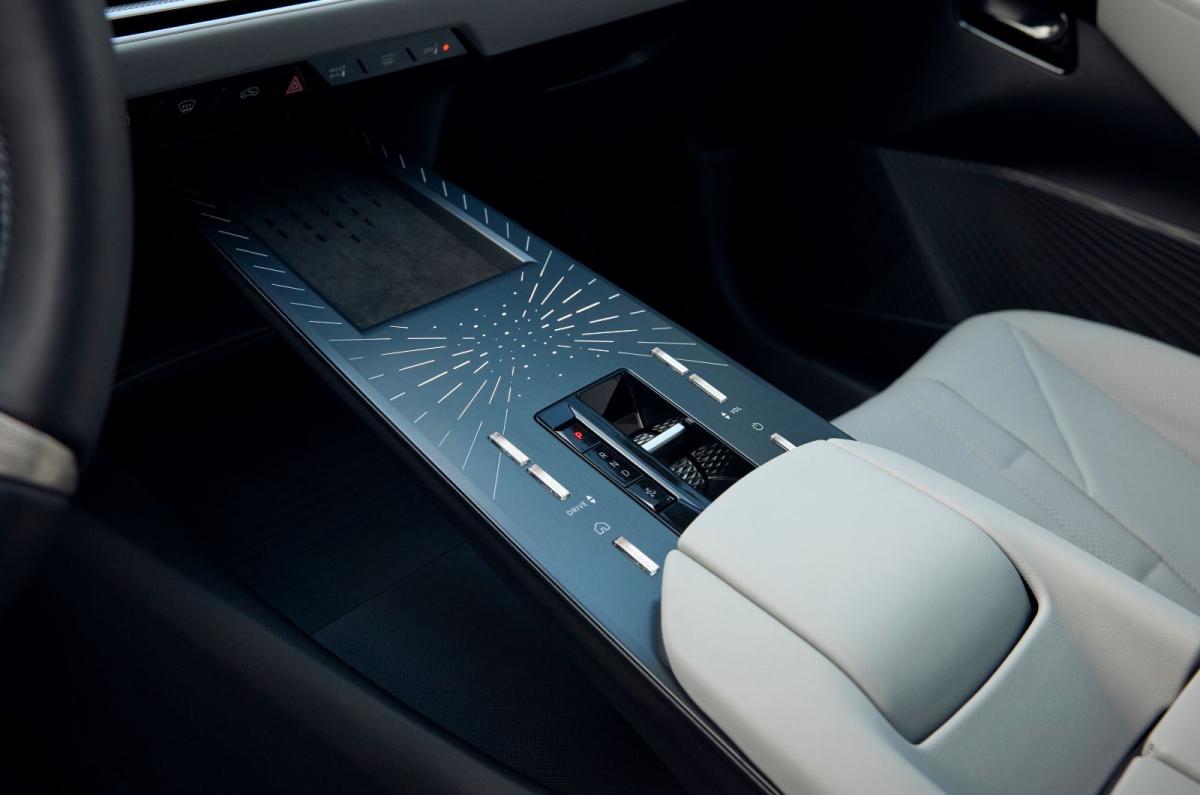
- DS No7 interior centre console
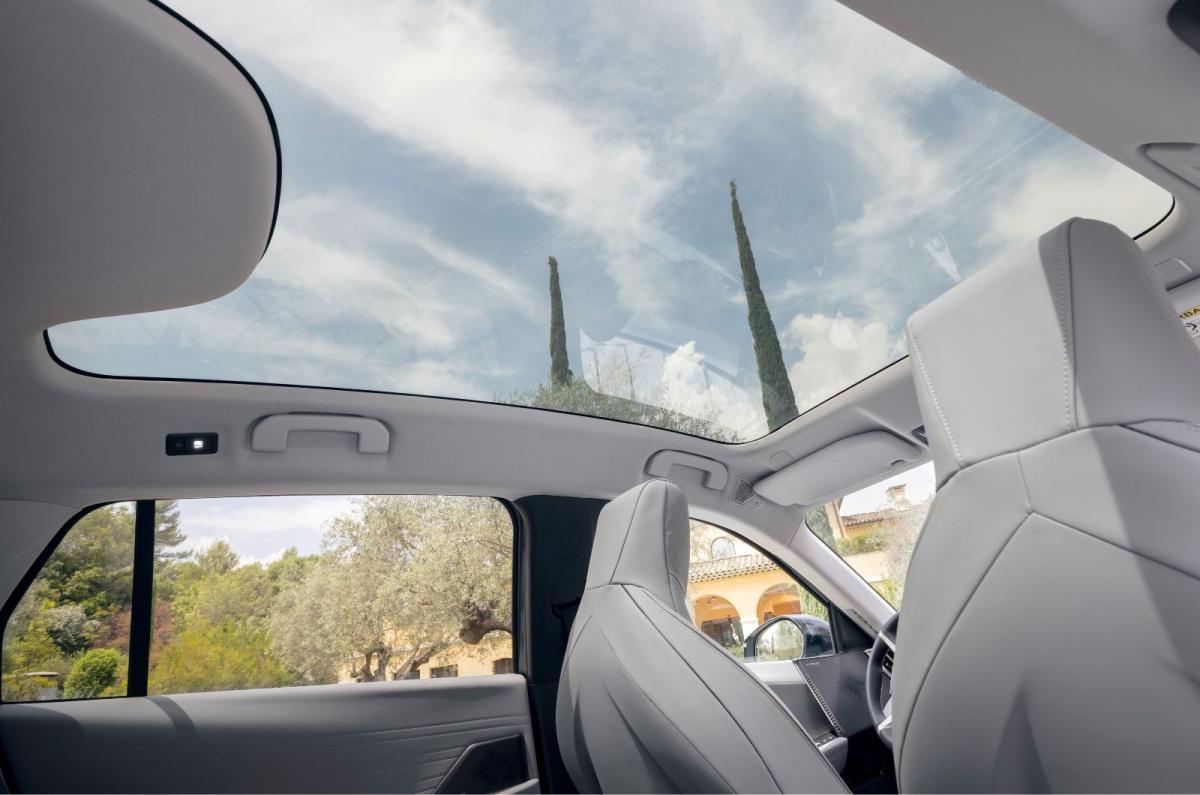
- DS No7 interior panoramic roof
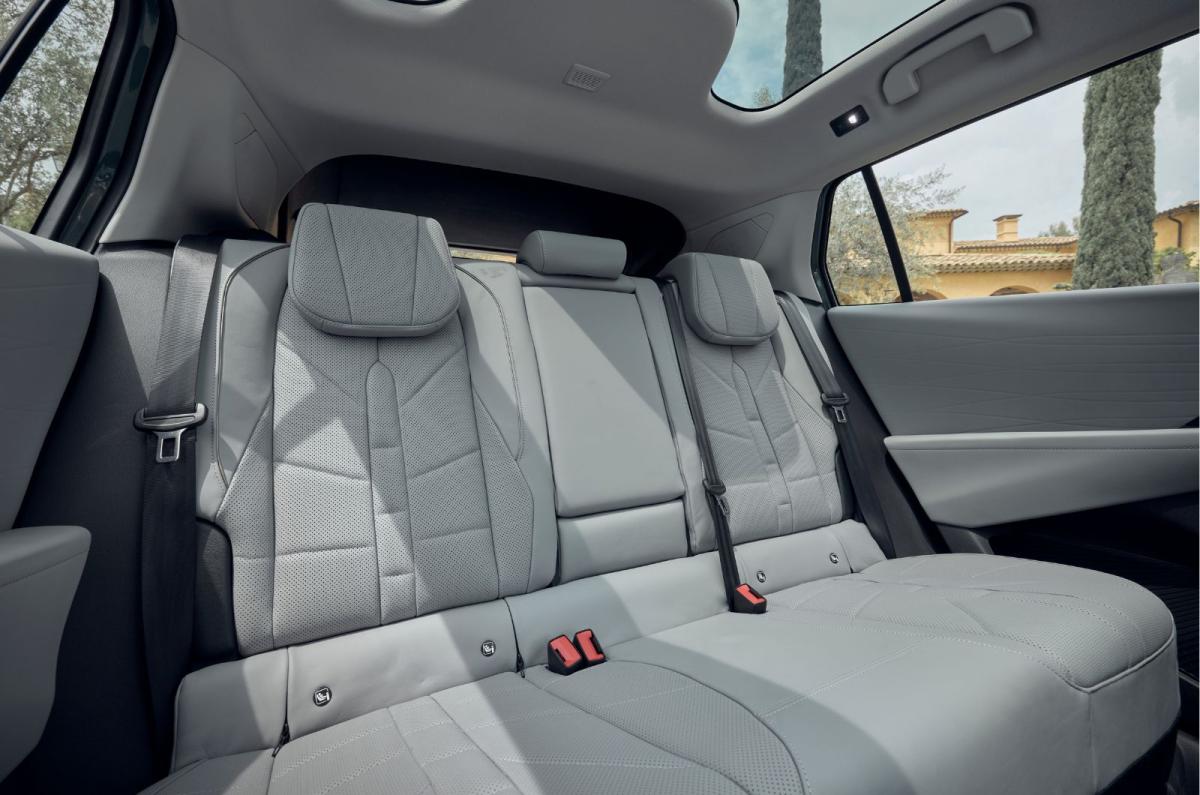
- DS No7 interior rear seats
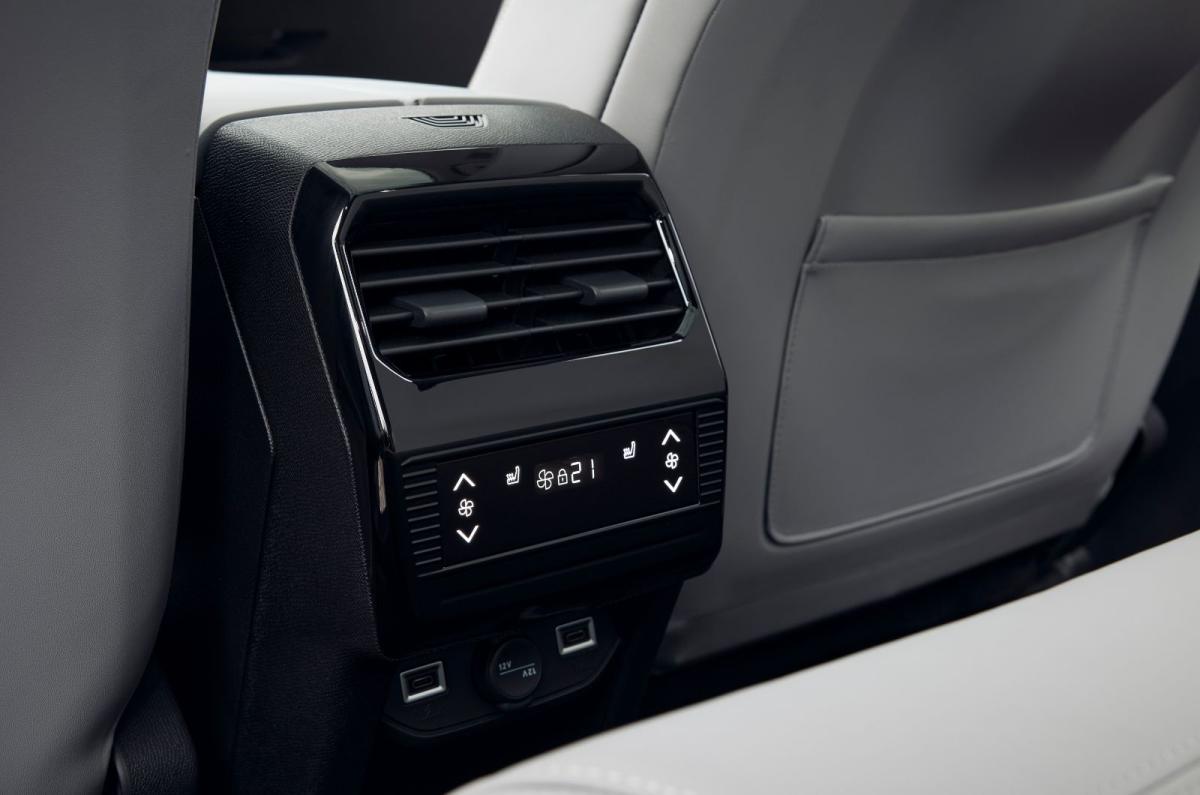
- DS No7 interior rear vents
- DS No7 static front right
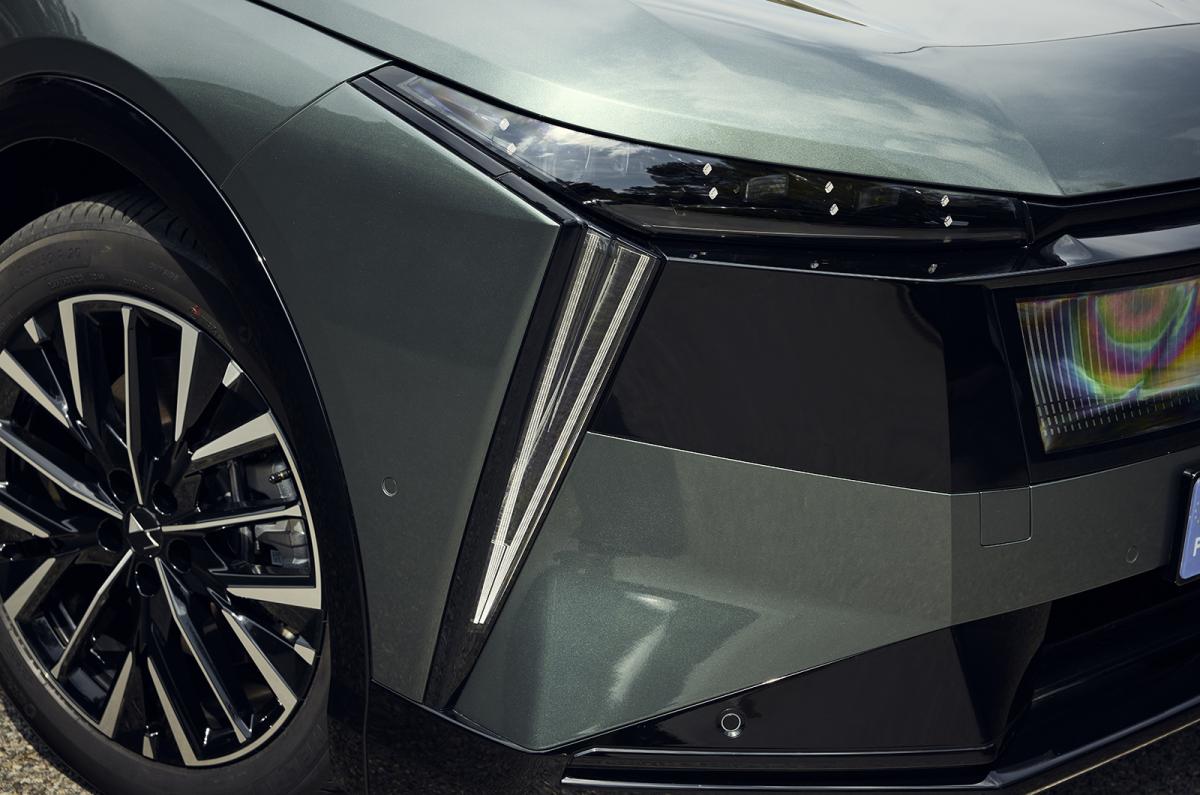
- DS No7 static headlight detail
- DS No7 static rear right
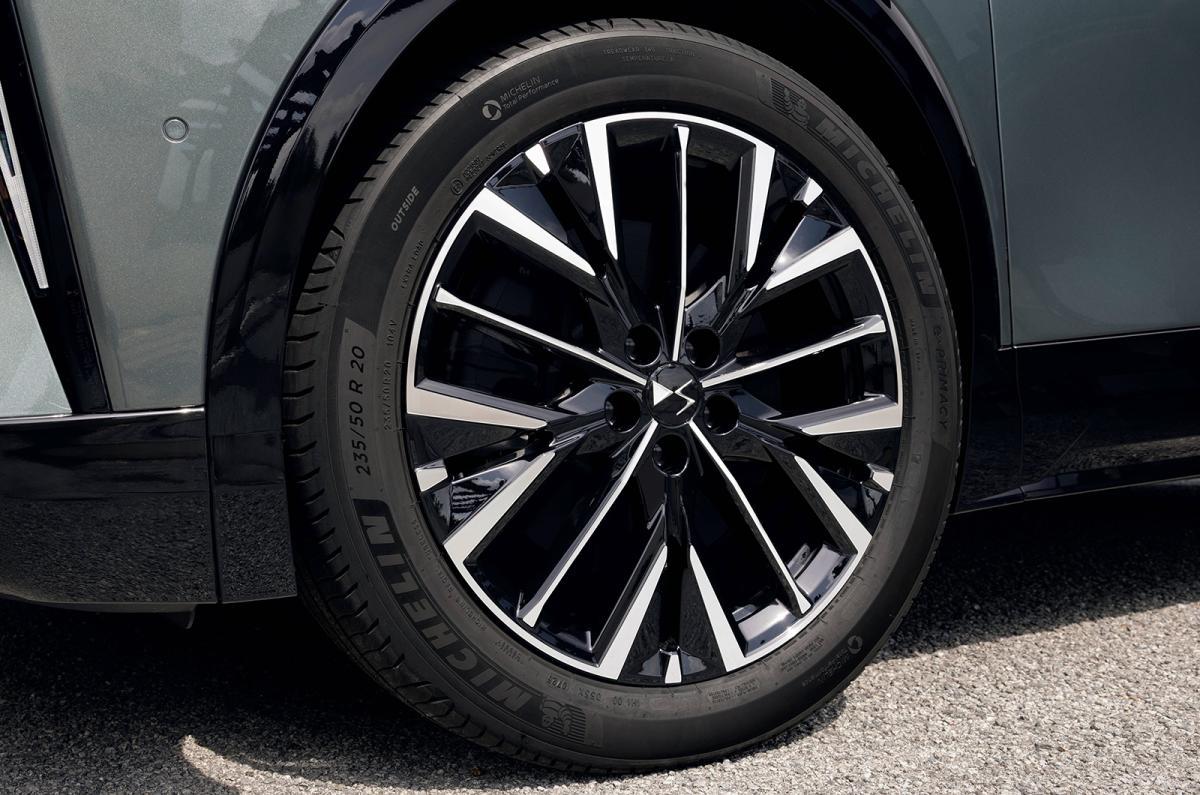
- DS No7 static wheel detail
- DS No7 rear dynamic
- DS No7 interior
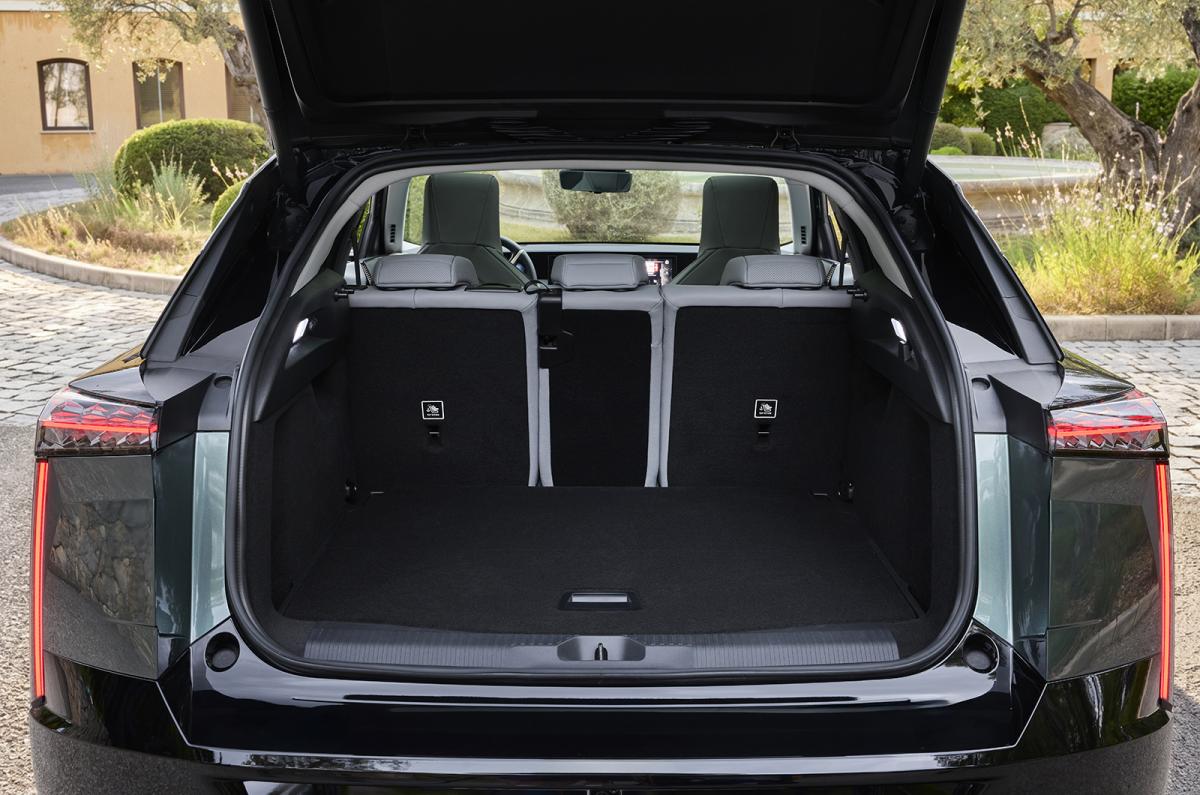
- DS No7 boot
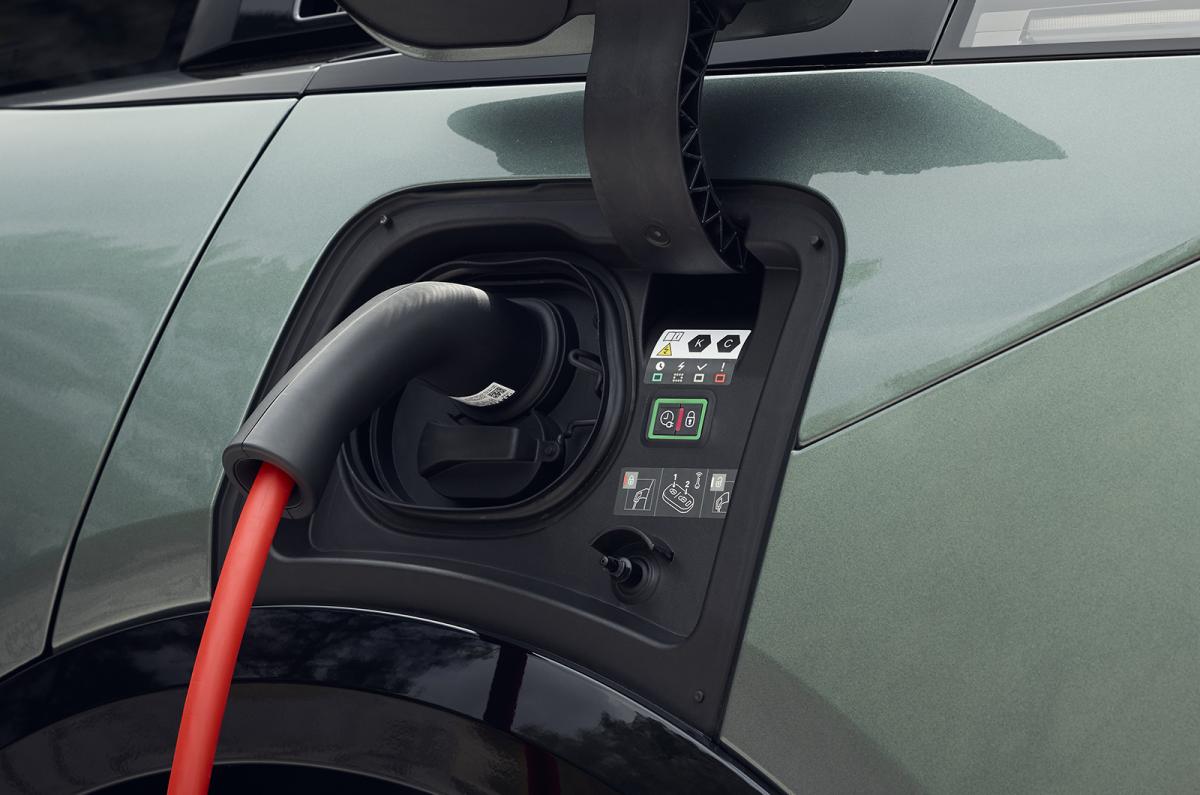
- DS No7 charging port detail

Introduction
Like a chameleon changing its colour to better suit its environment, the DS No 7 is the brand’s latest step towards better fitting the premium SUV market.
You might actually recognise the name, because the No 7 is the slightly renamed second-generation of the DS7. There’s more to this update than just a new badge, though, including a complete redesign, inside and out, so it shares more of a resemblance to other recently unveiled DS products like the DS No 4 and DS No 8.
Arguably the biggest change is the choice of engines. You see, unlike the old version, you can now have the DS No 7 with either a hybrid petrol engine or as a fully electric vehicle (EV). That puts it in a fairly unique position, with rivals spanning the closely related Citroën C5 Aircross and Vauxhall Grandland, all the way to EVs including the related Citroën ë-C5 Aircross and Tesla Model Y. Can it really hold off such varied competition?


As something to drive normally in, the No 7 is a decent thing. It has a great interior, and if you go for the EV, an impressive electric range. It really isn’t cheap, though, so we’d stick to the entry-level Hybrid or EV to get the best mixture of standard equipment and cost.
What's new?
- July 2026: We get behind the wheel of the DS No 7 for the first time, at its international launch event.
Pros
- Lots of standard equipment
- EV has an impressive official range
- Great interior quality
Cons
- Quite expensive to buy
- Not that great to drive
What's new?
- July 2026: We get behind the wheel of the DS No 7 for the first time, at its international launch event.
Performance & drive
What it's like to drive, and how quiet it is
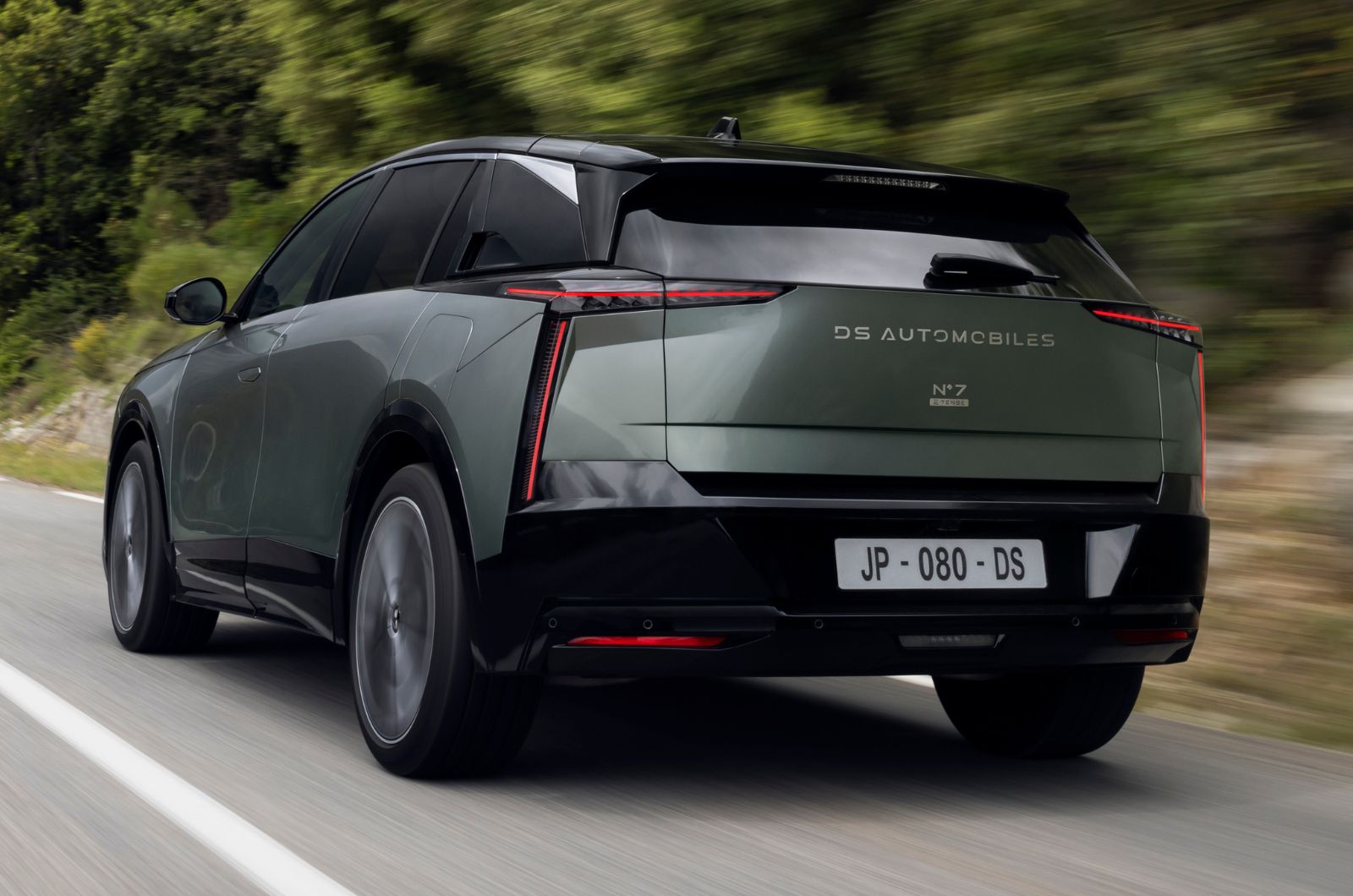
Strengths
- Impressive electric range
- EVs are quiet
Weaknesses
- Hybrid feels a bit underpowered
- Not that great to drive
- Brake pedal can be hard to judge
How fast is it and which version is best?
Starting with the Hybrid 145 petrol version, it gets a 1.2-litre, three-cylinder engine with assistance from a 28bhp electric motor. That gives it a total of 143bhp and a 0-62mph sprint time of 10.4sec, although it feels slower than that figure suggests. In fact, put your foot down and very little happens other than an increase in noise, something that isn’t helped by the slow gearbox.
Badged E-Tense, the EV range kicks off with the FWD (front-wheel drive), which has a single motor with 227bhp, but has the option of boosting that to 256bhp for short periods if you use the ‘boost’ function.
We’re yet to try the entry-level version, but have tried the FWD Long Range. Not only does it come with a bigger battery, it also gets some extra power from its electric motor, giving you 242bhp (276bhp in boost mode). Put your foot down and this No 7 doesn’t force you into your seat quite as much as in the Tesla Model Y, but the pleasant surge of power is more than sufficient for everyday driving.
For more performance, you’ll want the top-spec AWD (all-wheel drive). That version gets an additional electric motor and increases the power to 345bhp (370bhp with boost enabled) and brings the 0-62mph sprint time to 5.4sec.
Is it agile and is the ride comfortable?
You can have the electric No 7 with DS’s Active Scan suspension, which uses cameras to assess the road ahead and soften or firm the suspension accordingly. With that fitted, the No 7 tends to feel quite soft and, while it soaks up individual lumps and bumps well, repeated undulations can cause you to be thrown around in your seat a lot.
As you might expect, that softness means that it isn’t particularly engaging to drive quickly, becoming unsettled by mid-corner bumps and with lots of lean through corners. The steering doesn’t help matters either, with its inconsistent weighting making it hard to feel a connection to the front wheels.
The hybrid version goes without Active Scan and is better for it. Sure, it feels firmer over imperfections, but it’s more settled over undulations and suffers from less body lean. Better still, its lighter weight means that it feels a bit more nimble. It’s more competent on a country road but we’d still stop short of calling it anything close to sporty.
Is it quiet and how easy is it to drive smoothly?
If you go for one of the EV versions of the No 7, you’ll find that it's quite relaxing to drive around in, with no noise from the electric motors and little wind or road noise – that’s largely thanks to the double-glazed windows.
The petrol engine in the hybrid, meanwhile, is a bit noisier if you work it hard enough to make good progress. Indeed, while it’s reluctant to drop down a gear when you put your foot down, the eventual change seems to create more noise than anything else.
When it comes to the brakes, the electric versions get three different levels of brake regeneration and a one pedal mode. We found that the one pedal mode wasn’t that easy to use, largely due to the inconsistent force it uses to slow you down – aggressive when you lift off the accelerator pedal before easing off.
The other three modes, however, are far better judged and make it quite easy to slow down smoothly.
When you need to use the brake pedal itself, in either the hybrid or EV, it can be hard to judge how hard to press it. That’s because there’s a lot of travel where the pedal doesn’t do anything and then it suddenly bites.
What’s the range and efficiency like, and how quickly can it charge?
Entry-level FWD comes with a 73.7kWh (usable capacity) battery, giving it an official range of 337 miles – further than any Citroën ë-C5 Aircross and an entry-level Tesla Model Y.
All other versions of the No 7 E-Tense get a larger 97.2kWh (usable capacity) battery. The combination of a bigger battery and a single motor gives the FWD Long Range the longest range, officially allowing an impressive 459 miles between charges. That’s further than most of its rivals, including any version of the Kia EV6 and even the Model Y Long Range RWD. Of course, EVs rarely manage their official figures in the real world and we’d expect closer to 320 miles, unless you stick to the Eco mode and avoid motorways.
As you might expect, the AWD’s additional motor and performance comes at the cost of efficiency, reducing the official range to 421 miles. Considering most rivals can’t breach 400 miles, that’s still impressive, but it’s worth bearing that drop in mind if range is your biggest concern.
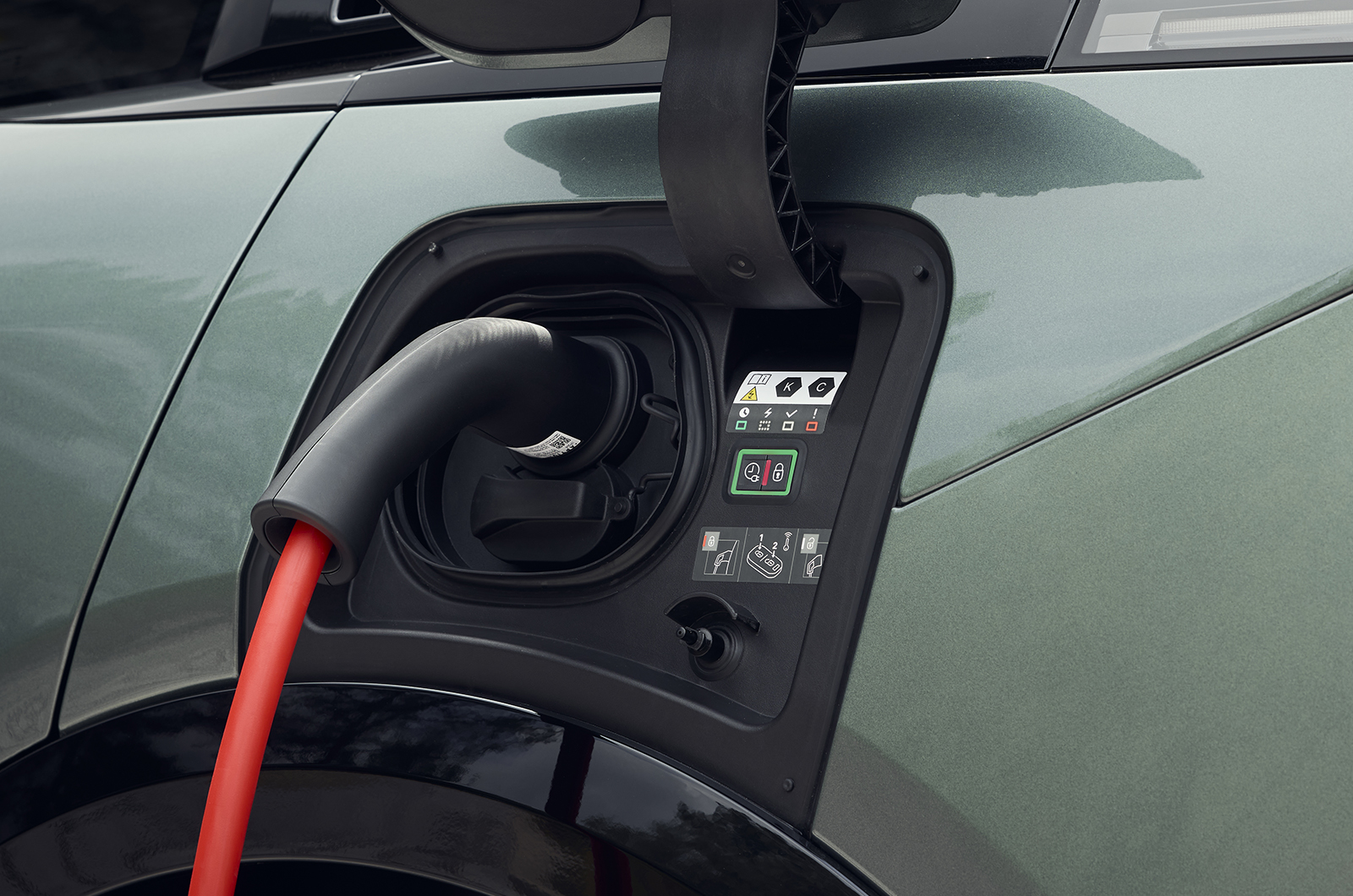
While the Hybrid 145 won’t need plugging in to charge, the electric versions will. We’re yet to see a maximum charging rate for the smaller battery, but do know that it takes 31min to charge from 20-80%. The larger battery, meanwhile, has a maximum charging rate of 160kW and charges slightly faster, reducing that time to 27min.
We’re yet to see exactly how far the FWD Long Range will realistically travel between charges but, if it can live up to DS’s numbers, it’ll be a tempting choice among its rivals.
Tips & Advice
Interior
The interior layout, fit and finish
Strengths
- Impressive interior quality
- Top-spec stereo is excellent
Weaknesses
- Slow infotainment system
- Lack of physical controls
What does the interior look like and is it well made?
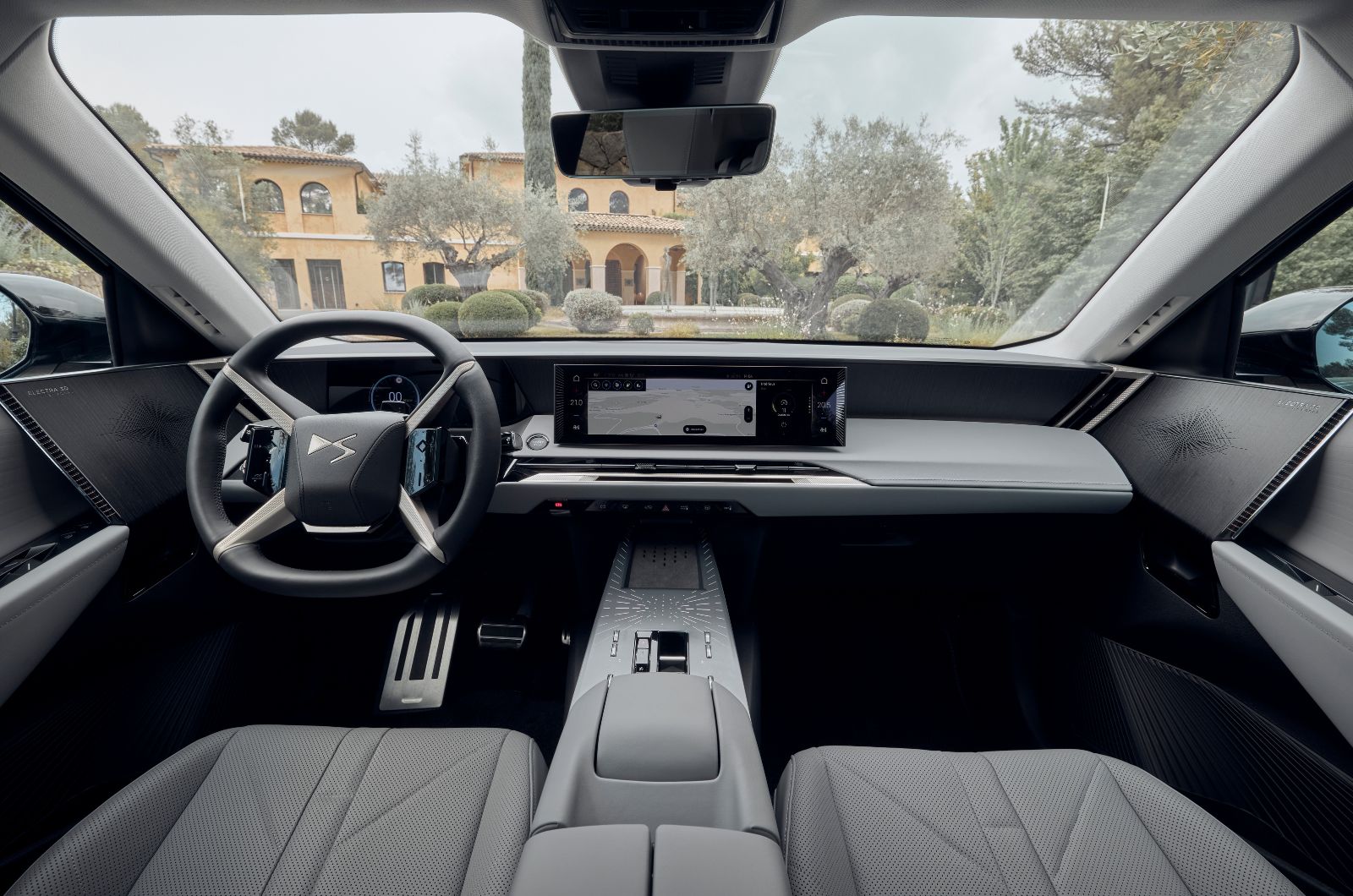
When it comes to showroom appeal, the DS No 7 is pretty impressive, with a mixture of material textures and multiple levels to its dashboard, adding plenty of interest.
Then there’s the steering wheel, which looks as if it has been taken straight from a luxury yacht. In that respect, it certainly fits the premium aesthetic that DS is after but it isn’t all that ergonomic, something we’ll get back to shortly.
In better news, the quality of the interior doesn’t disappoint. There are soft touch materials on pretty much every surface, including across the dashboard and on top of the doors, with any cheaper feeling plastics being hidden low down and out of sight. It's a genuinely nice place to be and a step up on the Citroën ë-C5 Aircross’s interior, which has way more hard plastics.
Is the driving position comfortable and is it easy to see out?
Every DS No 7 comes with comfort seats that feature electric adjustment, including lumbar support, and a memory function to save your driving position. The seats themselves are comfortable, and all of that adjustment makes it easy to tailor the driving position to your preference.
Top-spec La Première trim upgrades those seats to ‘Lounge seats’, adding a massage function for both front seat passengers and making long journeys even easier.
No matter which you go for, you sit quite high up within the No 7, helping to give you a great view out over the bonnet. Your view out at junctions isn’t quite as good, though, due to the windscreen pillars being decidedly chunky.
The view over your shoulder is reduced by the thick rear pillars, but the large rear window helps when it comes to seeing directly out of the back. To help with parking, every No 7 comes with front, rear and side parking sensors and a rear-view camera. Upgrading to mid-spec Étoile or above adds a 360-degree camera, to give you an even better view of what’s around you.
Is the dashboard and infotainment system easy to use?
Behind the steering wheel of every No 7, you’ll find a 10.0in digital driver display with sharp graphics that make it easy to read at a glance. It’s pretty configurable, too, allowing you to show a large map next to traditional gauges and such.
The other screen you’ll find is a 16.0in central touchscreen, which dominates the dashboard. Unlike many systems, most of that size is actual width; that real estate allows the screen to show a wealth of info at all times. For context, it means you can show things like the sat nav map, controls for the massage seats and climate control temperature controls all at once.
Speaking of which, you won’t find many physical controls inside the No 7, so those touchscreen controls are your main interface for the climate control system. Alternatively, you can also use the ChatGPT-powered voice assistant to make changes.
That’s good news because the system can be really slow to react to your prods and presses, often showing a button animation like it has registered your input but never actually responding and navigating to other menus.
You get a decent amount of features regardless of trim level, including Apple CarPlay and Android Auto smartphone mirroring, allowing you to bypass the native operating system.
As someone who is really into music, I was really impressed by the upgraded stereo that comes with the top-spec trim. Its mixture of 14 speakers and subwoofer gave a really deep sound.
Tips & Advice
Passenger & boot space
How it copes with people and clutter
Strengths
- Loads of front space
- Generous boot space
- 40/20/40 rear seats
Weaknesses
- Slightly raised middle seat reduces head room
- Yet to try a version without the panoramic roof
How much space does it have for people?
Up front, the DS No 7 has loads of space for a pair of six-footers, giving them plenty of head and leg room. Better still, the interior is fairly broad, meaning that even drivers with big shoulders will have room between them and their front seat passenger.
Likewise, rear space is pretty impressive, with plenty of leg room for those measuring six feet tall. So far, we’ve only tried the top-spec No 7, which gets a panoramic glass roof as standard. That version will give even your tallest friends decent head room, but we can’t say what it’ll be like without.
It is worth noting that the floor in the rear is quite high. The resulting position with raised knees won’t be that comfortable for everyone.
Middle seat passengers sit on a slightly raised seat, so six-footers will find that their head is just about touching the roof lining. There’s very little in the way of a central tunnel, though, so they’ll have plenty of foot space.
How much room does it have for luggage?
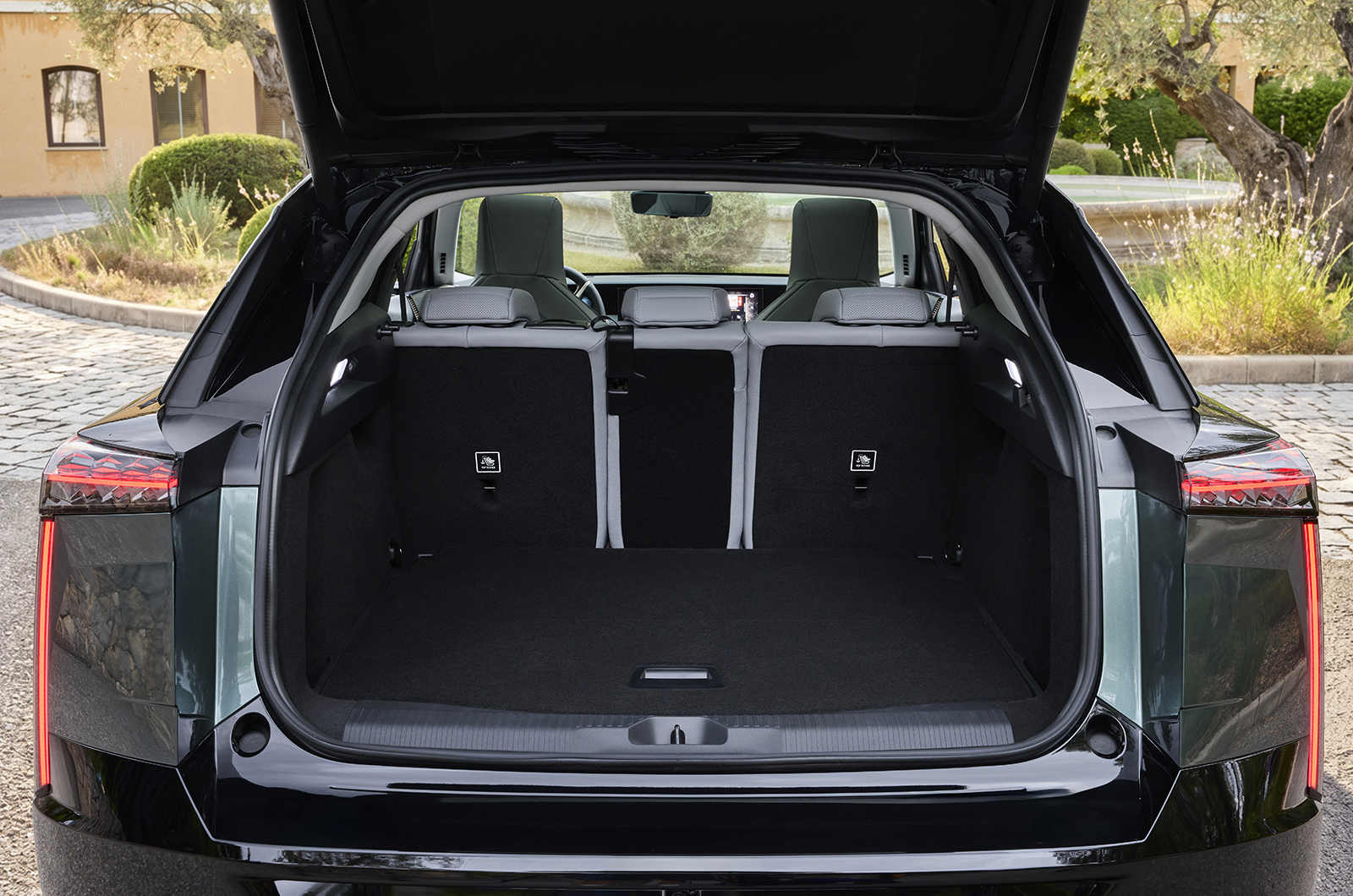
Most versions of the DS No 7 come with a 560 litre boot, while the top-spec AWD version reduces that to 500 litres, losing some space to the extra electric motor and a subwoofer. That’s way less space than the Tesla Model Y, a bit less than the Citroën ë-C5 Aircross but more than in any version of the Kia EV6.
In the real world, that means there’s plenty of space for a large weekly shop or a family's holiday luggage. For extra space you can drop the boot floor or, when it’s in its highest position, you have a small amount of storage under the floor (helpful for storing the EV’s charging cables).
If you need to load longer items into the No 7, you get 40/20/40 split-folding rear seats, allowing you to feed long items (like skis) through without sacrificing one of the outer rear seats.
Due to the No 7 being a Hybrid and an EV, you don’t get a frunk for extra storage. I think that’s a shame, especially when you consider you can fit an entire carry-on sized suitcase in the Tesla Model Y’s frunk.
Buying & owning
Everyday costs, plus how reliable and safe it is
Strengths
- Plenty of standard kit
Weaknesses
- Quite expensive to buy
- Disappointing safety rating
- No reliability data for DS
How much does it cost and what equipment do you get?
The cheapest version of the DS No 7 is the Hybrid, but it’s not particularly cheap next to its rivals, including the Citroën C5 Aircross Hybrid and Vauxhall Grandland Hybrid, both of which get the same engine.
Then there’s the electric versions. They’ll cost you a fair bit more than the No 7 Hybrid and even the entry-level version will cost you more than the Citroën ë-C5 Aircross, Kia EV6 and Tesla Model Y.
There are three different versions to choose from, starting with Pallas trim. To help with the price tag, even that version comes with a good amount of standard equipment, including keyless entry and start, an electric tailgate, dual-zone air conditioning, laminated front windows, LED headlights, wireless smartphone charging, a head-up display and adaptive cruise control.
Above that sits Etoile, which adds some styling tweaks (including a light up front grille), matrix LED headlights and the additional parking aids that we mentioned earlier. Top-spec La Première is a special edition version that’ll stick around a year from launch, but it gets loads of niceties, including a heated steering wheel, a heated windscreen, an upgraded stereo system and night vision.
The main problem with that top trim is that it’s really expensive, putting it up there with premium electric SUVs like the BMW iX3.
Is it reliable, and how long is the warranty?
Neither the DS No 7 or DS as a brand were included in the 2025 What Car? Reliability Survey. We can’t even extrapolate some idea from other, closely related, Stellantis brands because Citroën placed 10th out of 30 manufacturers and Fiat 28th.
What we can tell you is that, should something go wrong, every DS is covered by a three-year/60,000-mile warranty. That isn’t all that impressive, though, especially considering that Kia offers a seven-year/100,000-mile warranty.
How safe is it, and is it easy to steal?
When the safety experts at EuroNCAP tested the No 7, it was awarded four out of five stars, which isn’t hugely impressive when most cars in this class score the full five stars. The No 7 didn’t do particularly well in any category, but scored lowest when it came to protecting adults in the front.
At least you get plenty of standard safety equipment, including automatic emergency braking (AEB), driver attention monitoring and lane-keeping assistance.
Buy it if...
- You want an electric SUV with a decent range
- You like to have a posh-feeling interior
- Having lots of standard equipment is what you’re after
Don’t buy it if…
- You want a cheap electric SUV
- You want a hybrid will plenty of shove
- You’re after proven reliability
For all the latest reviews, advice and new car deals, sign up to the What Car? newsletter here
If it wasn’t for the price, the No 7 would be tempting next to its cheaper rivals. It just seems odd that DS insists on setting its sights on much more expensive rivals, including the 500 mile BMW iX3.
Tips & Advice
FAQs
DS AUTOMOBILES DS No7 specifications
RRP price range
MPG range across all versions
Available fuel types (which is best for you? )
Number of engines (see all)
Number of trims (see all)
Company car tax at 20% (min/max)
Company car tax at 40% (min/max)
About the writer