Porsche Cayenne Coupé Electric review
The Porsche Cayenne Coupé Electric is a sleeker but less practical version of the Cayenne Electric SUV


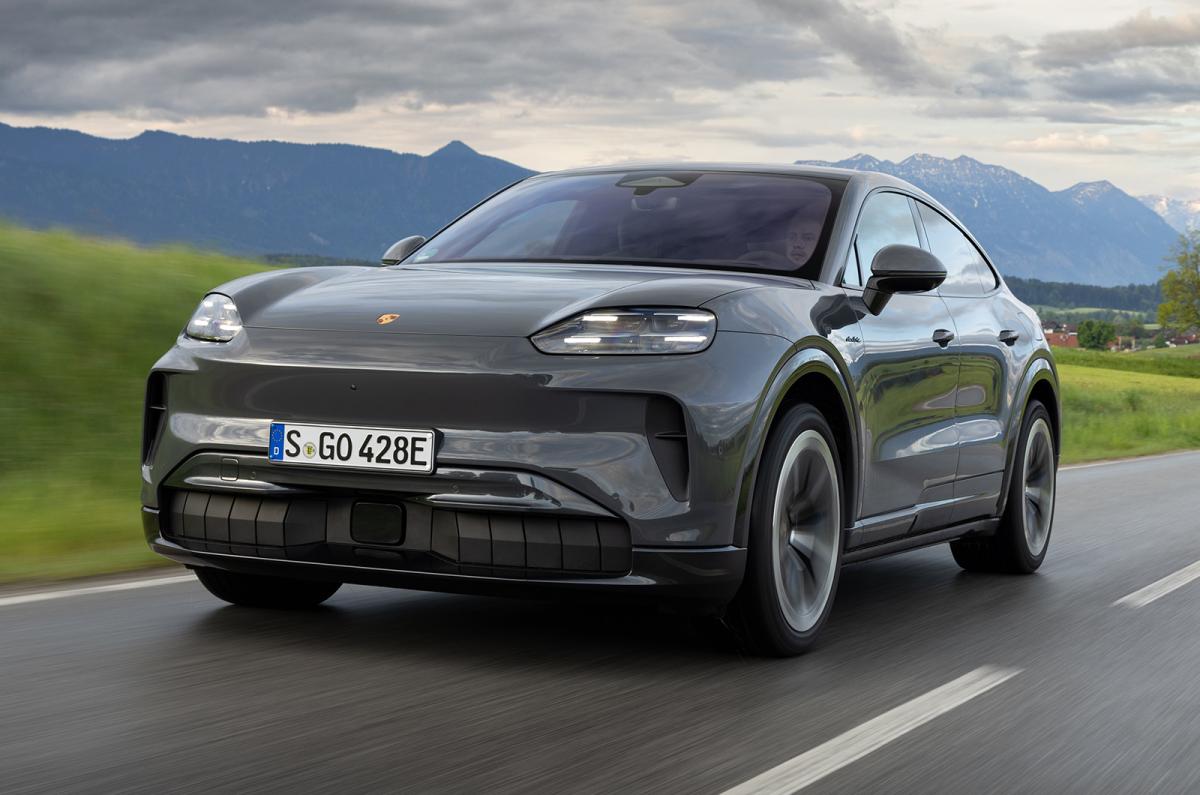
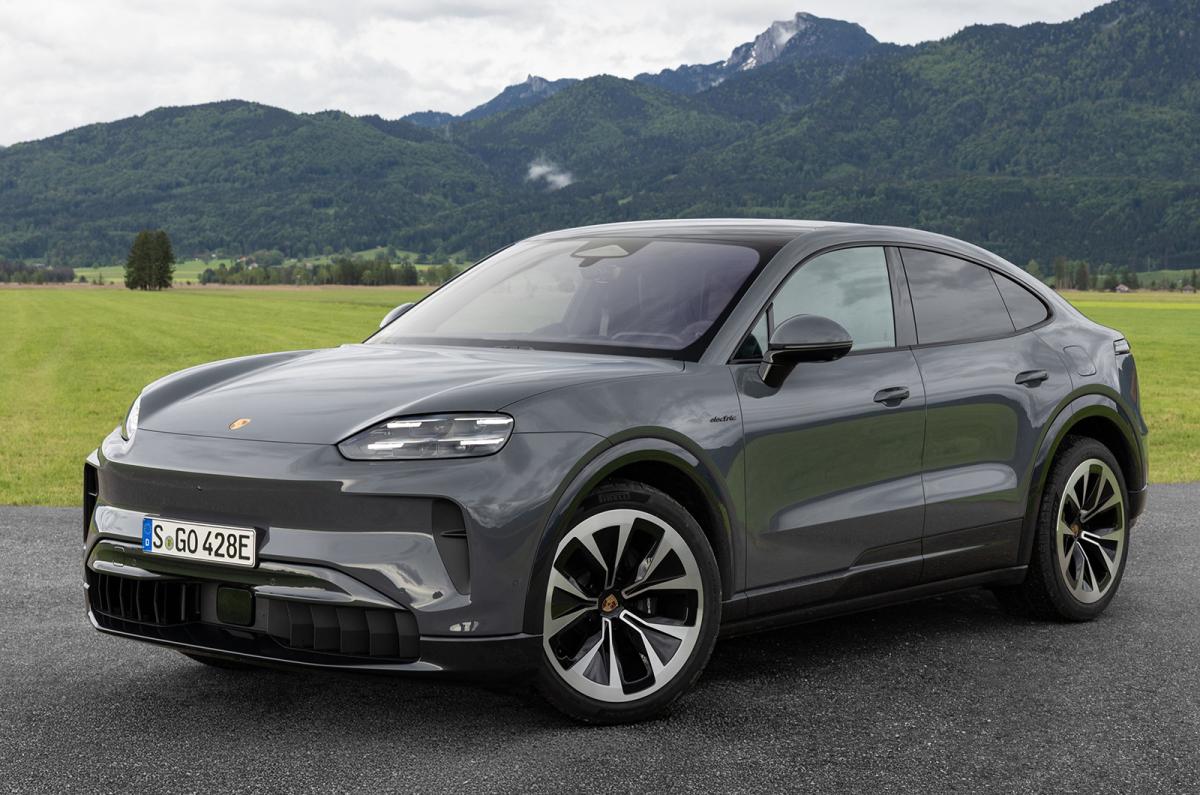

- Porsche Cayenne Coupé Electric driving front left
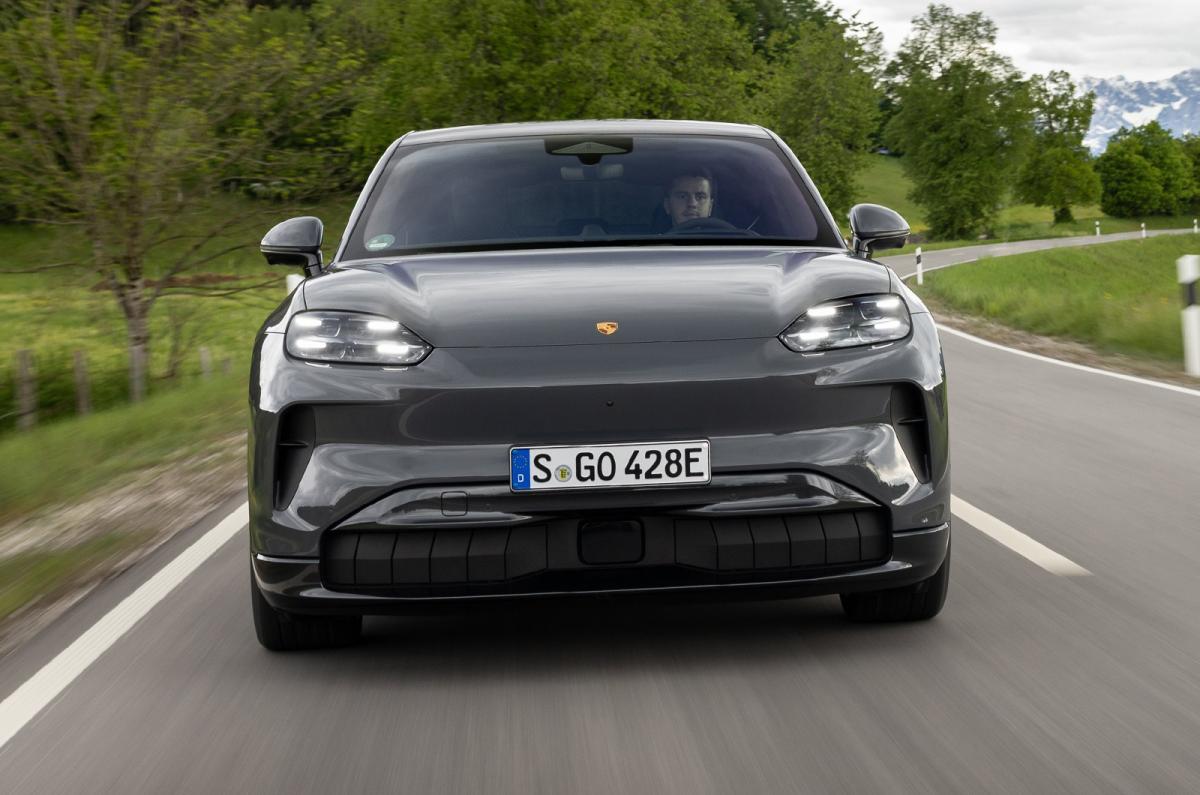
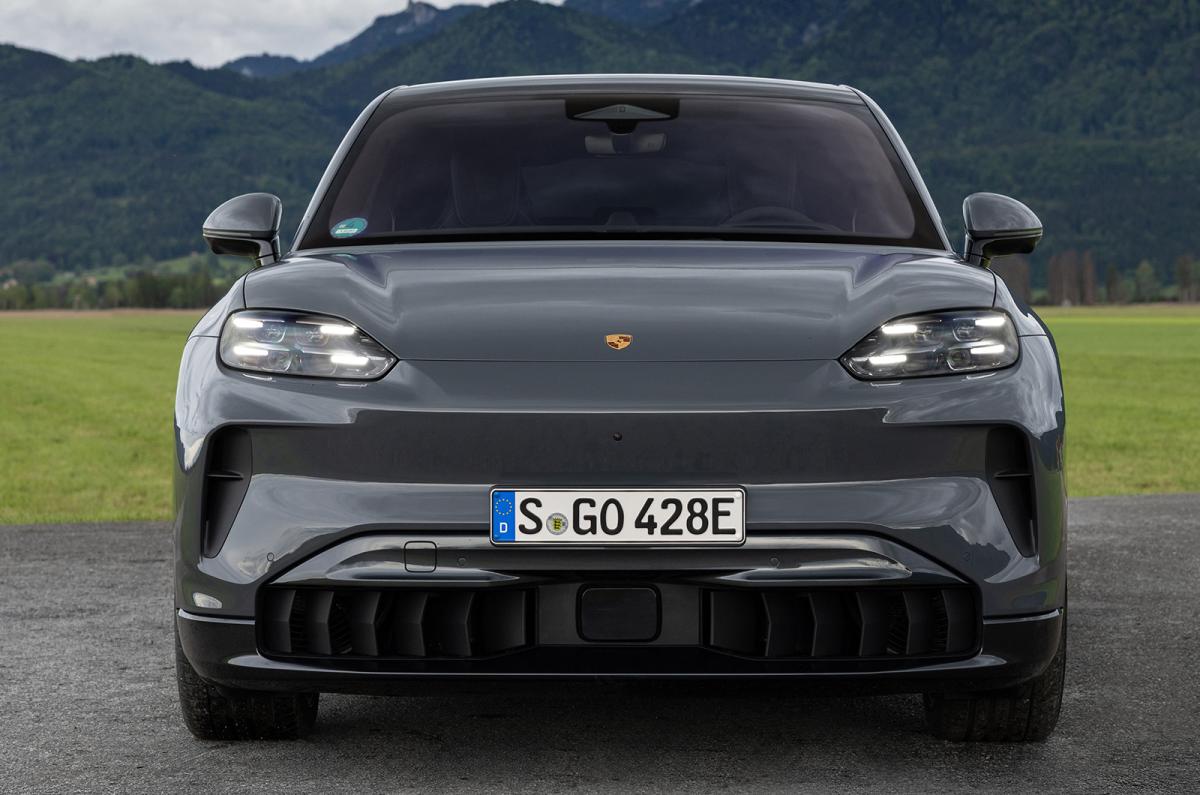
- Porsche Cayenne Coupé Electric driving front
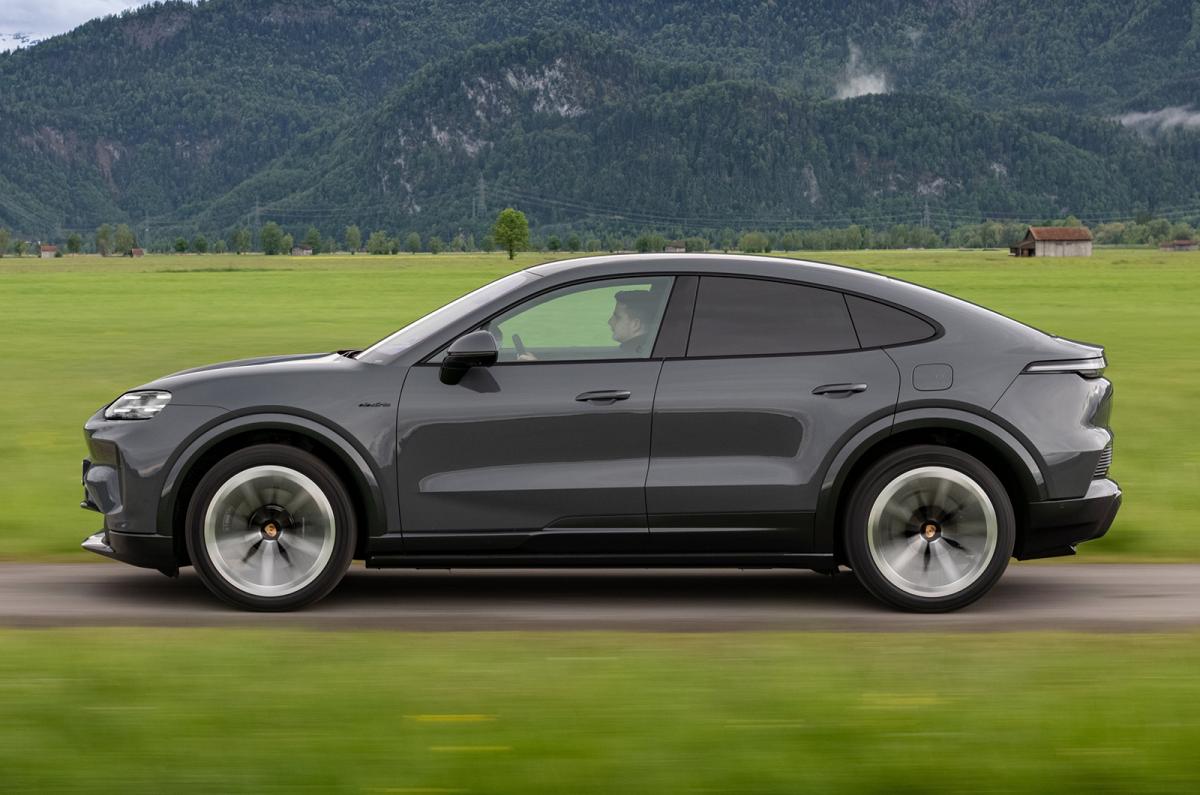
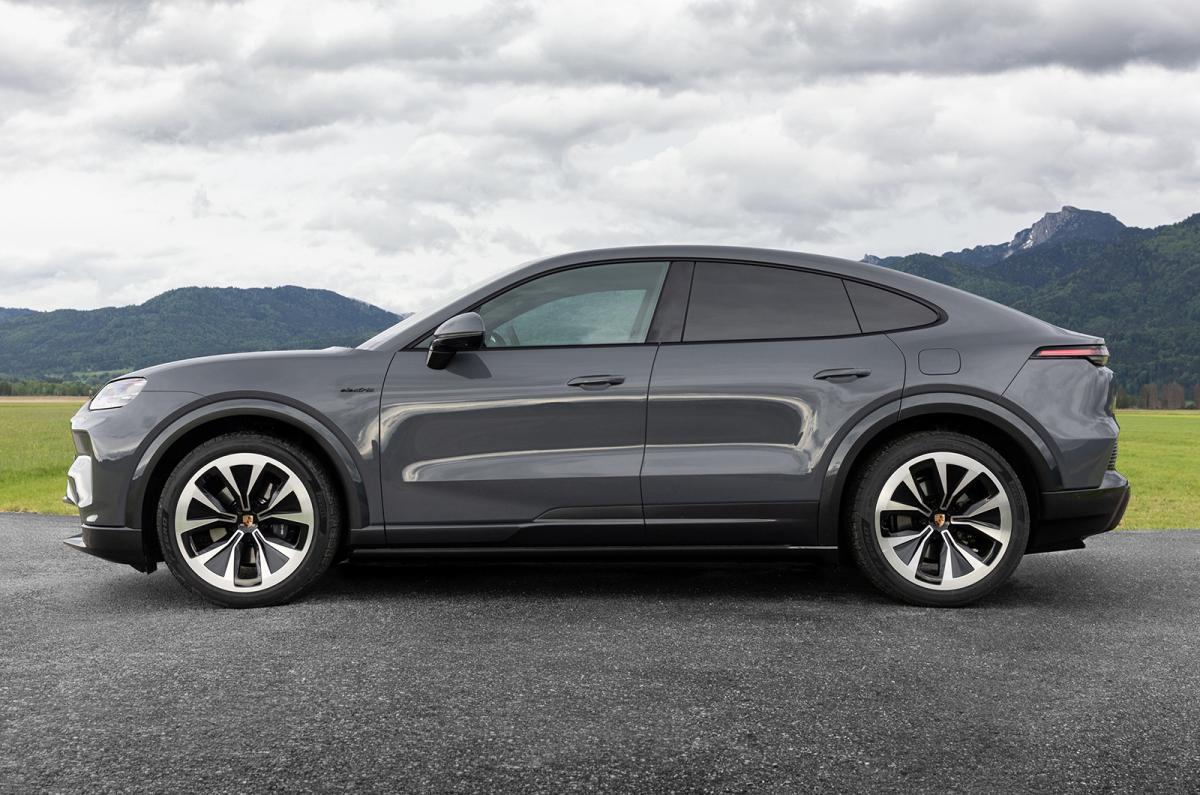
- Porsche Cayenne Coupé Electric driving side
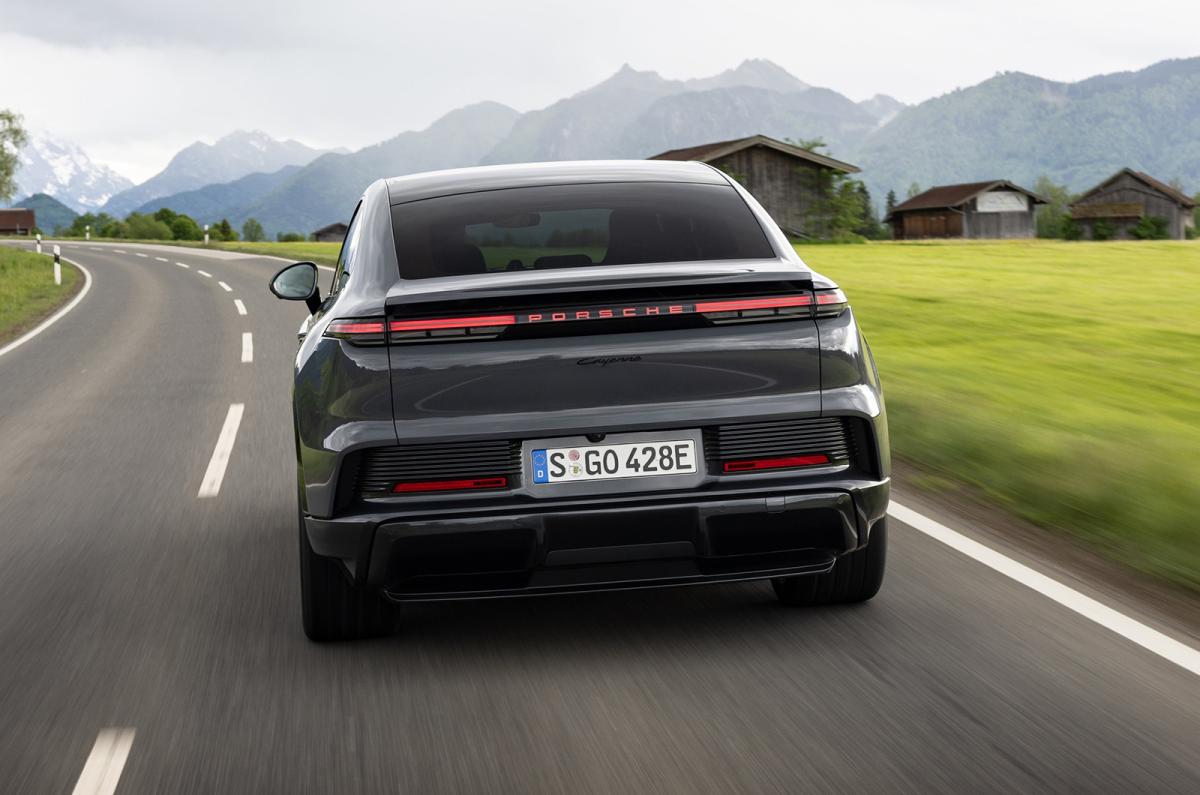
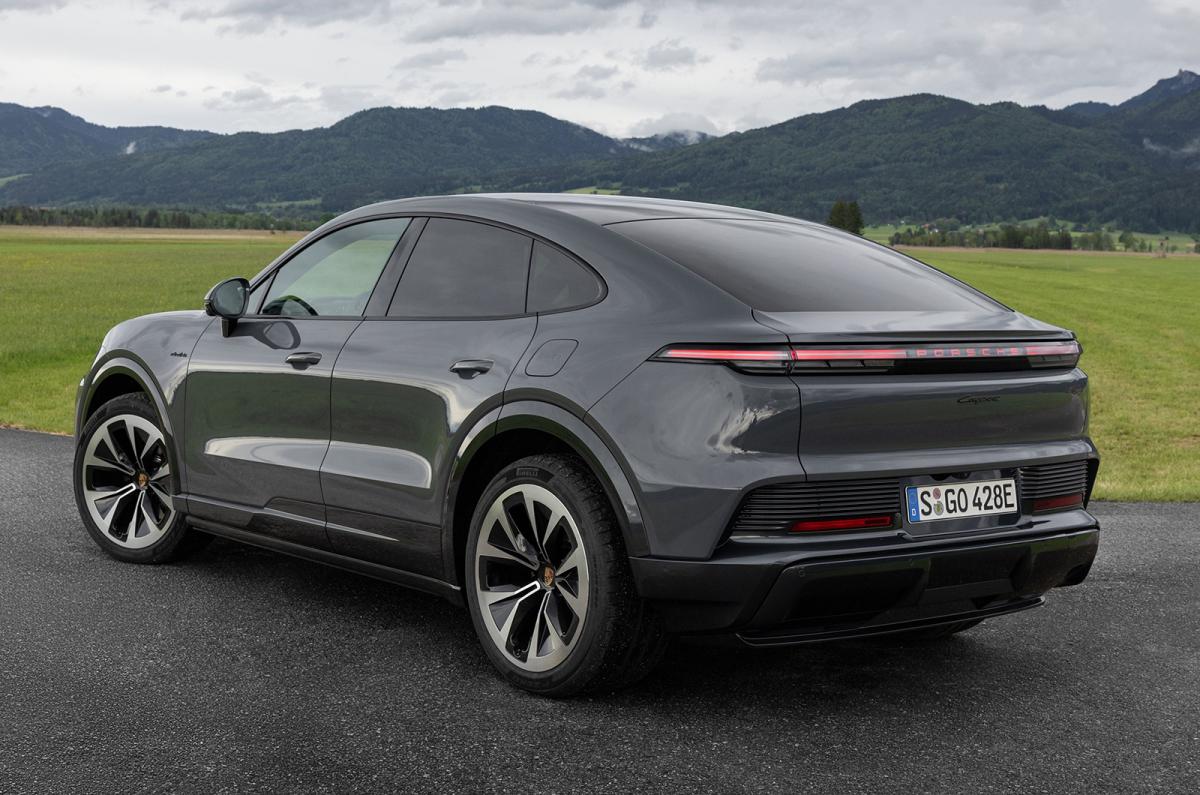
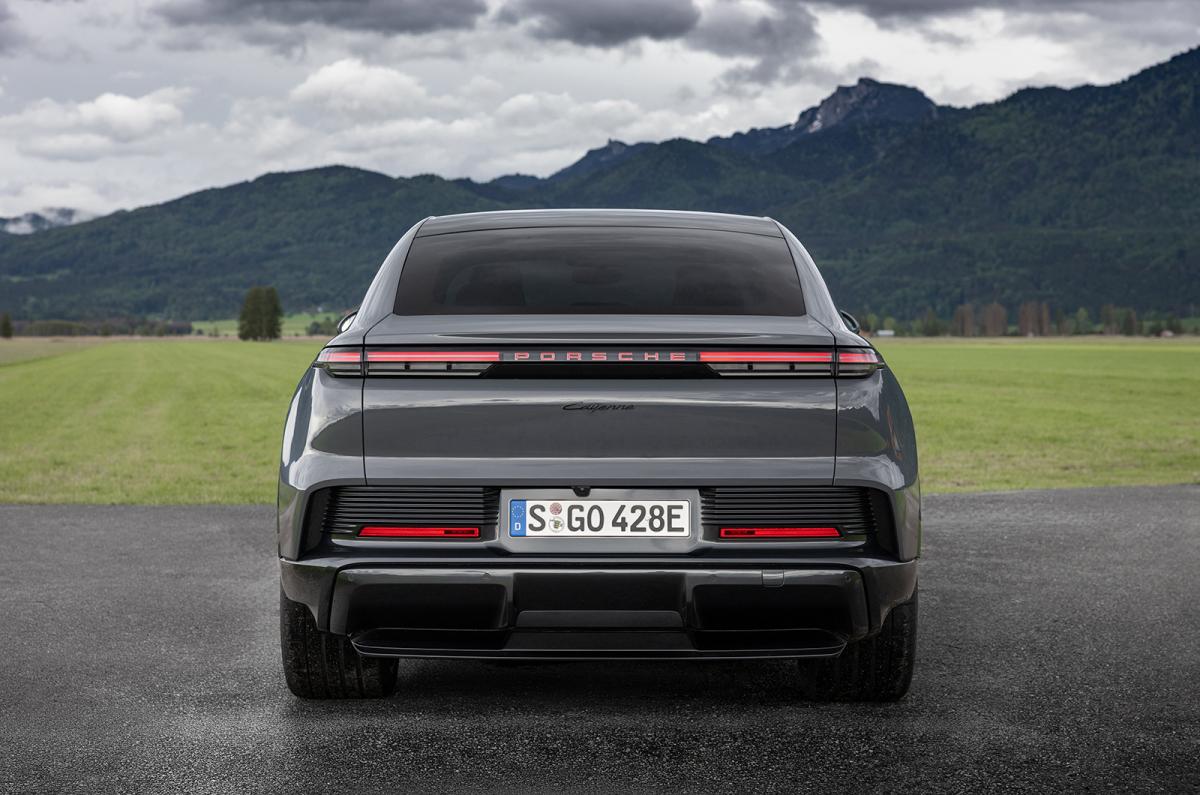
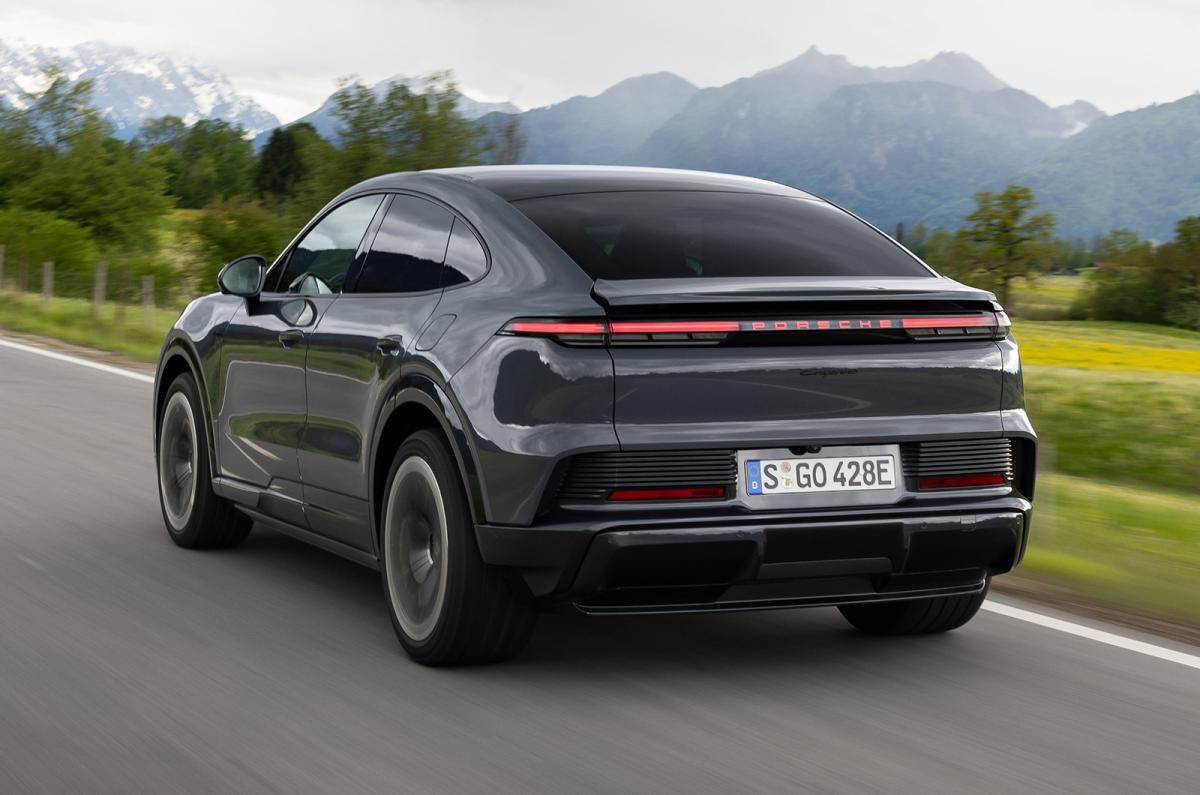
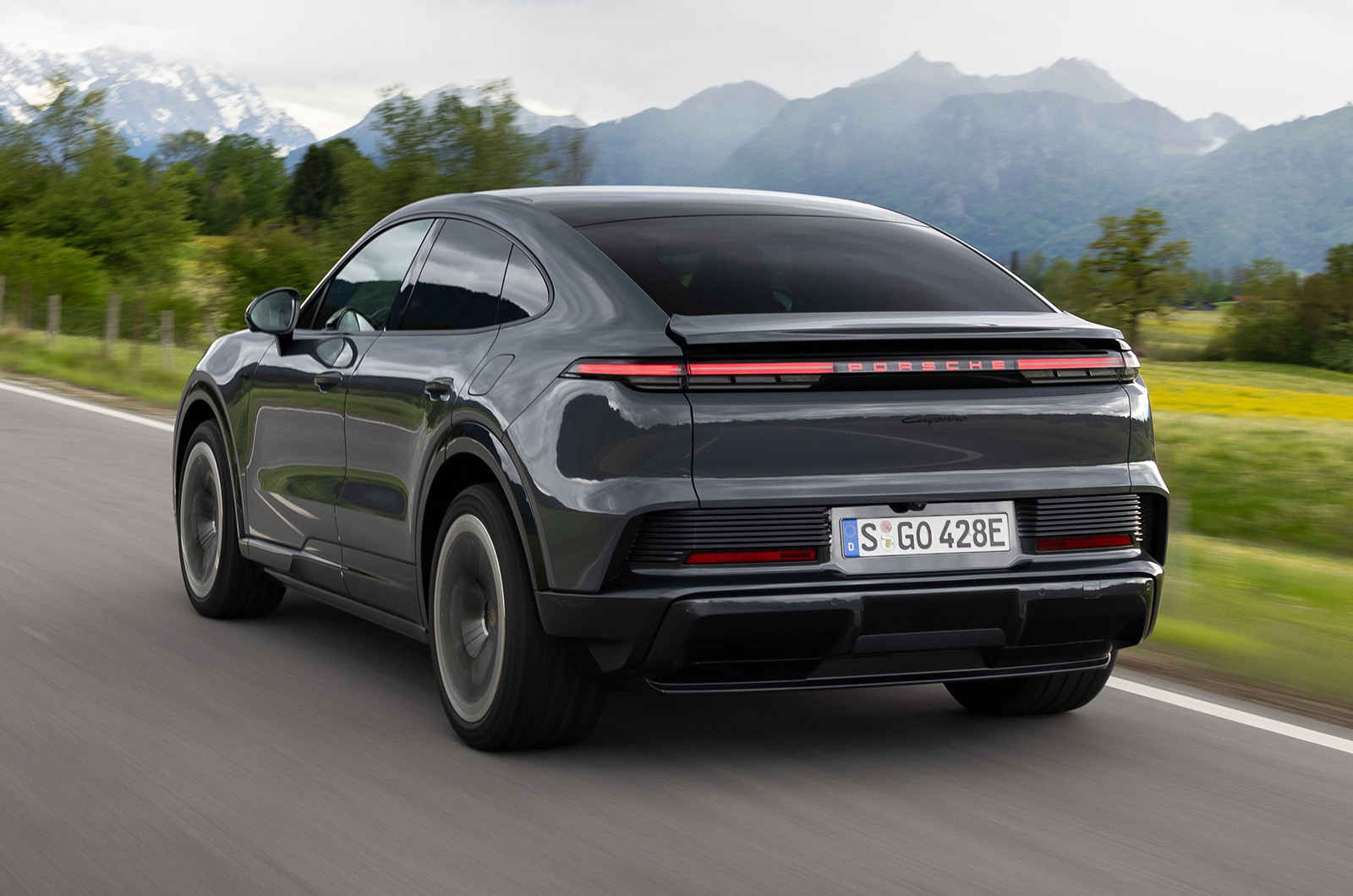
- Porsche Cayenne Coupé Electric driving rear
- Porsche Cayenne Coupé Electric static front left
- Porsche Cayenne Coupé Electric static front
- Porsche Cayenne Coupé Electric static side
- Porsche Cayenne Coupé Electric static rear left
- Porsche Cayenne Coupé Electric static rear
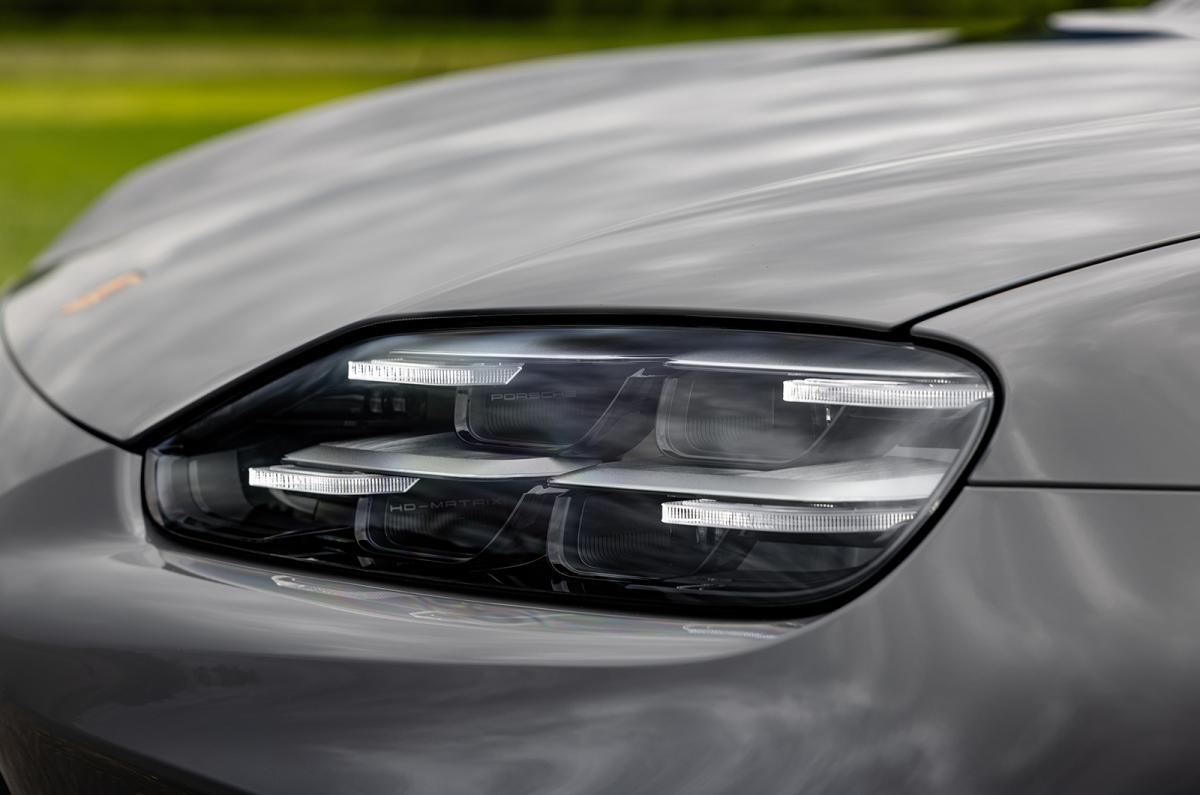
- Porsche Cayenne Coupé Electric headlight detail
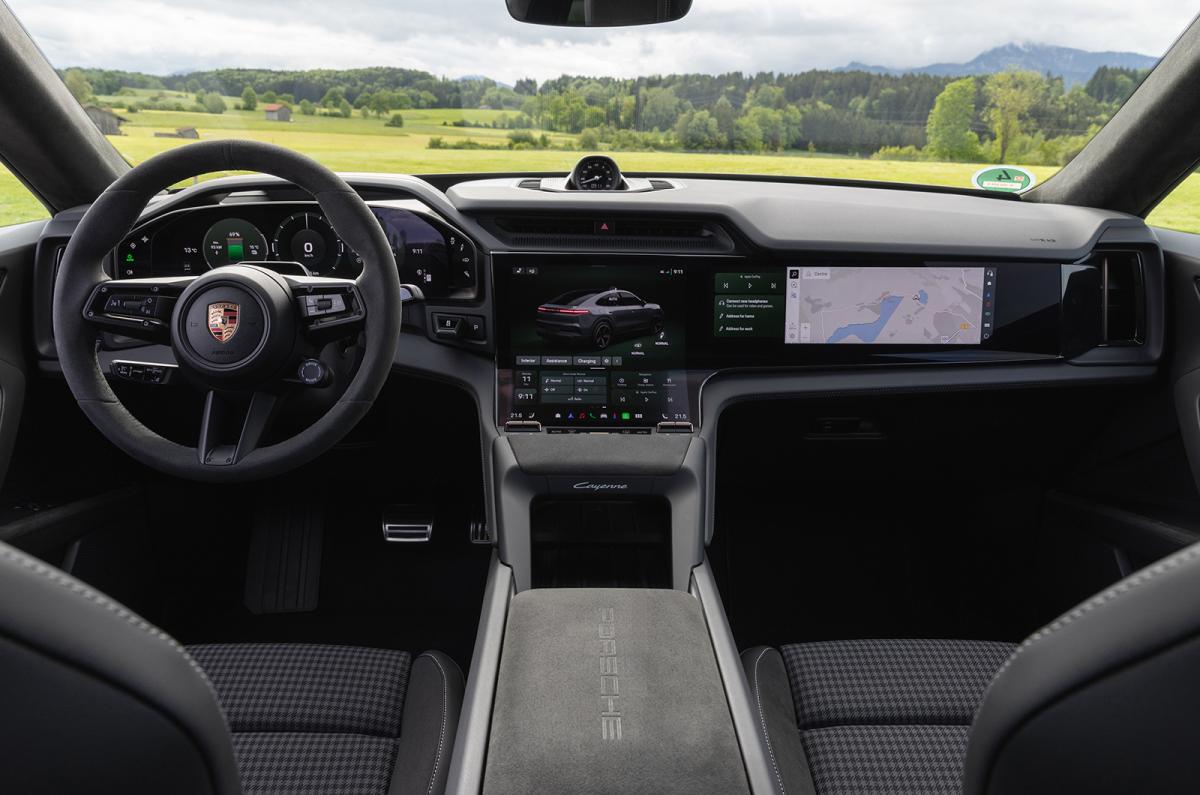
- Porsche Cayenne Coupé Electric dashboard
- Porsche Cayenne Coupé Electric interior detail
- Porsche Cayenne Coupé Electric wireless charger
- Porsche Cayenne Coupé Electric steering wheel detail
- Porsche Cayenne Coupé Electric seat detail
- Porsche Cayenne Coupé Electric roof detail
- Porsche Cayenne Coupé Electric rear cornering
- Stuart Milne driving the Porsche Cayenne Coupé Electric
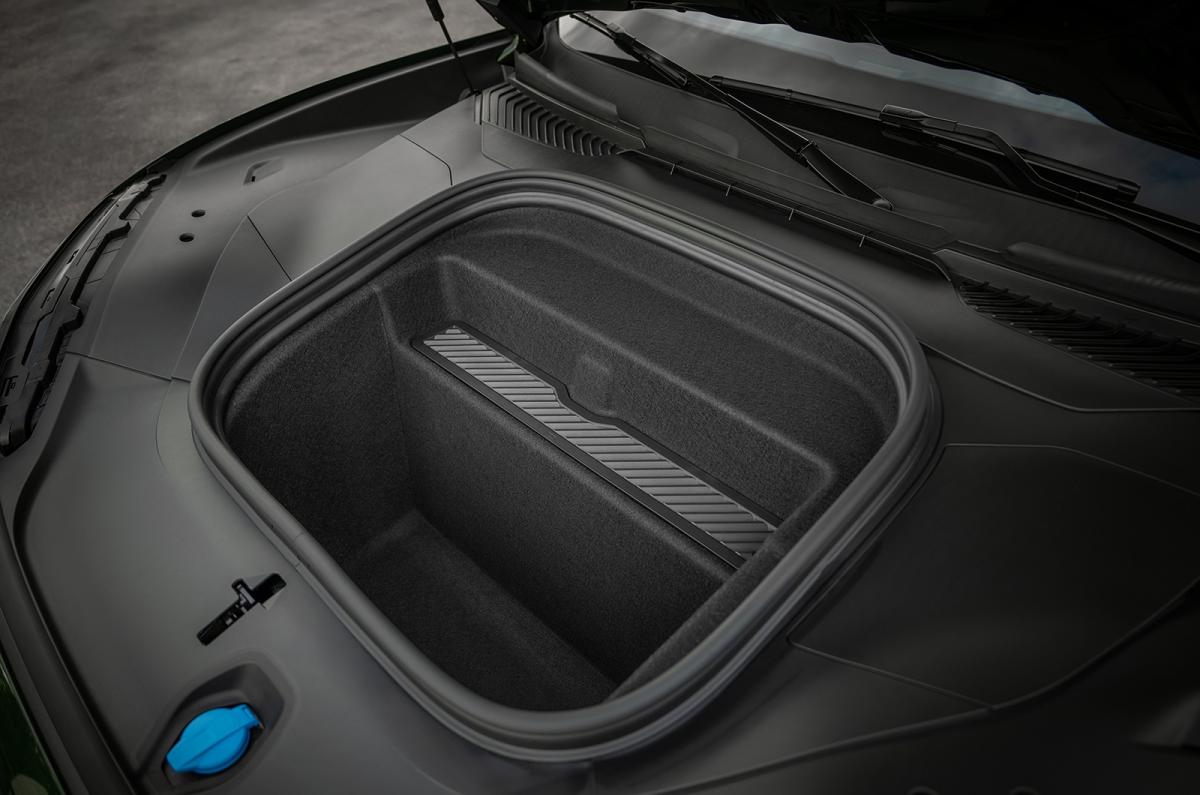
- Porsche Cayenne Coupé Electric front boot
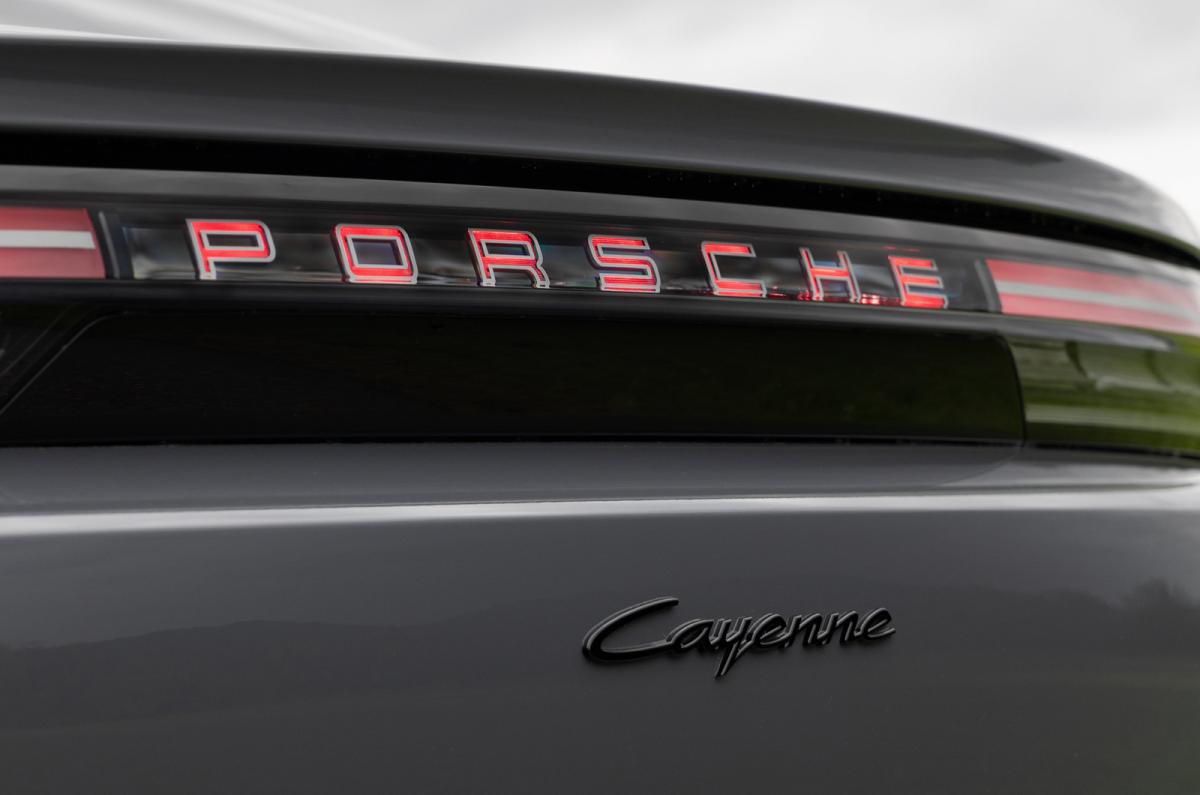
- Porsche Cayenne Coupé Electric badge


What is What Car? best price?
The What Car? best price shows you the cheapest way to buy your new car, whether it's by choosing an in-stock car through our partner Autotrader or placing a factory order.
RRP from: £86,265
About our price indicator
What Car? indicative Personal lease example (subject to status)
113kWh Coupe 5dr Electric Auto 4WD (442 ps)
| Expected annual mileage | 6000 |
| Term months | 48 |
| Deposit months | 12 |
| Monthly payment | £1,053.16 |
| Initial payment | £12,637.92 |
Step-by-step
Leasing works a bit like a long-term rental. You drive it, but you don’t own it.
- Choose your car, pick your terms and apply for lease credit online
- Pay monthly rental payments for your chosen term length
- Drive it, enjoy it, then give it back at the end
What you get
When you lease with Autotrader you get all of this:
- Full manufacturer’s warranty
- Road tax and roadside assistance included
- No admin fees
- Free returns within 30 days*

- Lower total monthly cost than PCP/HP
- No balloon payments
- Road tax included
Introduction
Take the Eames Lounge chair. It’s a highly-prized piece not because of its practicality, rather it’s something that dials the appeal to eleven. An office chair might be more comfortable and more usable, but it’s not going to stop you in your tracks.
So, then, the Porsche Cayenne Coupé Electric. It’s the sportier, more stylish – but ultimately less practical – sibling to the more familiar Porsche Cayenne Electric SUV. It’s business at the front – from the headlights to the windscreen pillars it’s identical to the SUV – but party from thereon in.
What is What Car? best price?
The What Car? best price shows you the cheapest way to buy your new car, whether it's by choosing an in-stock car through our partner Autotrader or placing a factory order.
RRP from: £86,265
About our price indicator
What Car? indicative Personal lease example (subject to status)
113kWh Coupe 5dr Electric Auto 4WD (442 ps)
| Expected annual mileage | 6000 |
| Term months | 48 |
| Deposit months | 12 |
| Monthly payment | £1,053.16 |
| Initial payment | £12,637.92 |
Step-by-step
Leasing works a bit like a long-term rental. You drive it, but you don’t own it.
- Choose your car, pick your terms and apply for lease credit online
- Pay monthly rental payments for your chosen term length
- Drive it, enjoy it, then give it back at the end
What you get
When you lease with Autotrader you get all of this:
- Full manufacturer’s warranty
- Road tax and roadside assistance included
- No admin fees
- Free returns within 30 days*
- Lower total monthly cost than PCP/HP
- No balloon payments
- Road tax included
The swooping roofline has, according to the firm, been inspired by the rakish Porsche 911. And as a result, it’s more aerodynamic, meaning that a charge can take it farther than the regular electric SUV.
Of course, being a Porsche, the bite matches the sporty bark, every model is fantastically fast: in top-spec Turbo guise, it’ll accelerate from 0-62mph in just 2.5sec – pace few cars can match, let alone a large SUV.
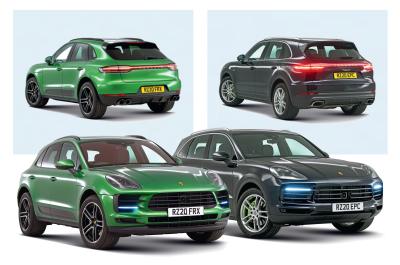
Now, there’s no shortage of fast coupé SUVs on the market – Audi Q8 and BMW X6 to name a couple – but very few electric coupé SUVs with this level of performance. As such, if you have the means, a Lotus Eletre will maybe fit the bill. Or indeed the regular Cayenne Electric, or smaller Audi SQ6 e-tron Sportback and Porsche Macan Electric.


What's new?
- May 2026 – We drive the Porsche Cayenne Coupé Electric for the first time
Pros
- Genuine sports car handling
- Tech-laden and upmarket interior
- Turbo provides incredible performance
Cons
- No full five-seat version
- Fiddly air vent controls
- Cheaper versions don’t feel that rapid
What's new?
- May 2026 – We drive the Porsche Cayenne Coupé Electric for the first time
Performance & drive
What it's like to drive, and how quiet it is
Strengths
- Impressive performance
- Excellent range
- Easy to drive smoothly
Weaknesses
- Standard model doesn’t feel as fast as it is
- Steering is slightly nervous around the dead-ahead
- Wireless charging is an expensive option
How fast is it and which motor is best?
Whichever of three versions of the Porsche Cayenne Coupé Electric you choose, you won’t feel short changed when it comes to straight-line oomph, which is remarkable when you consider all models are on the far side of 2.5 tonnes.
The eponymously-titled entry-level model takes just 4.8sec to accelerate from 0-62mph, and will continue to a top speed of 143mph. That’s swift, although it’s still a little slower than an Audi SQ6 e-tron Sportback or the SUV-esque Polestar 4 Long Range Dual Motor. Unlike those models, the standard car builds up to its 436bhp maximum – a little like a combustion-engined car – rather than delivering its surge of power and torque at once. While the stopwatch won’t lie, it doesn't feel quite as rapid as that number suggests; on the flip side, it means it’s easy to drive smoothly.
That’s especially true if you test drive it back to back with the Cayenne S Coupé Electric, because it packs 657bhp from its twin motors, slicing that 0-62mph time to 3.8sec and raises the top speed to 155mph.
Crowning the range is the Turbo (yes, we know an EV doesn’t have a turbo, but it’s long been used to denote the most potent models in Porsche’s range). That version is a flurry of big numbers, and one very small one: 1140bhp, 162mph top speed and a 0-62mph time of just 2.5sec. For context, that’s similar to the £2.5m, F1-inspired Aston Martin Valkyrie.
Is it agile and is the ride comfortable?
For such a big, heavy SUV, the Cayenne Coupé Electric is more agile than it really has any right to be. While there’s no hiding its significant dimensions – it’s longer and wider than a Range Rover Velar – which are felt around town, it somehow feels like a far smaller car on faster, winding roads.
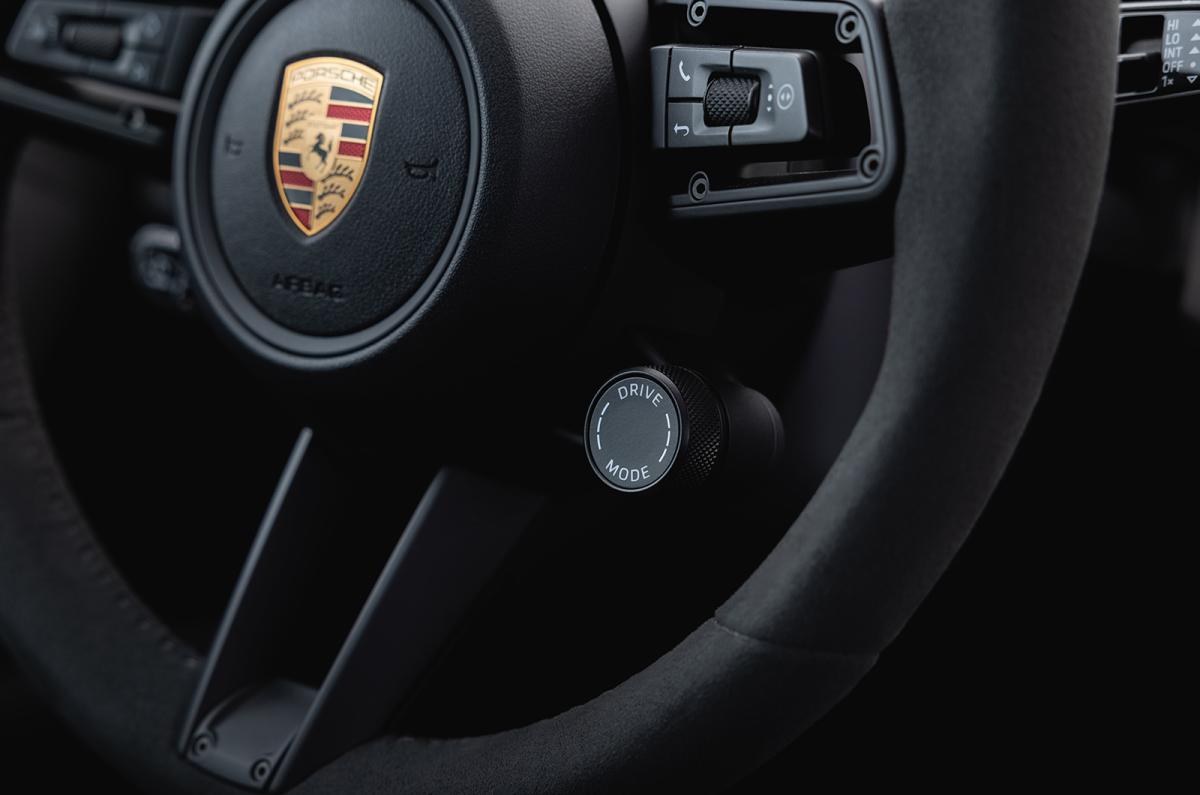
Regardless of the version you choose, it stays flat through corners, and there’s very little pitching and diving when accelerating or braking. For a car that also has some off-road ability (an off-road pack is available as an option), that’s quite remarkable. It has adaptive air suspension fitted as standard, which along with throttle response, steering, and an artificial (yet quite convincing) exhaust note, is controlled through various drive modes.
Porsche Active Ride is available as an option on S and Turbo versions, which is an advanced suspension system which virtually eliminates roll and pitch. If you’re a keen driver, it’s a worthwhile option, although we feel it comes at the expense of a slightly bumpier ride.
The Cayenne Coupé Electric has plenty of grip and feels stable through bends, especially when equipped with optional rear-wheel steering (which also serves to significantly reduce the turning circle). The steering is precise, too, even if it’s slightly too eager a few degrees off dead-centre, which can make it feel a little nervous.
The Turbo is fitted with torque vectoring and a limited-slip differential which boost grip through corners. It’s a feature that’s optional on the mid-spec S model.
Given the levels of grip and performance, it’s impressive how compliant the ride is. Yes, there’s a little jostling when in Sport Plus mode, but it’s unlikely to be something you or your passengers will complain about.
Is it quiet and how easy is it to drive smoothly?
Despite the prodigious power, every model in the Cayenne Coupé Electric range is extremely easy to drive, and even the 1140bhp Turbo is smooth enough to use every day. The steering is light enough for round-town driving, and weights up nicely as the speed builds.
The rear motor in the S and Turbo uses more advanced oil cooling technology which has filtered down from its Formula E race cars. It helps boost efficiency (which is why the S can travel farther than the standard car), and through which the car’s regenerative braking system can develop up to 600kW. It’s a shame, then, that the braking force when you decelerate isn’t particularly strong, so it lacks a one-pedal driving mode to bring the car to a stop. There aren’t many selectable modes, either: you get on, off or auto, which hooks up to the sat-nav and tracks vehicles ahead to adjust the braking force.
There’s a bit of road noise kicked up through the tyres, but the double-glazed windows and a good amount of sound proofing keeps you isolated from the drone of the outside world.
What’s the range and efficiency like, and how quickly can it charge?
You’re unlikely to encounter range anxiety in any version of the Cayenne Coupé Electric, because under official figures all hover around the 400 mile mark.
Like the regular Porsche Cayenne Electric, the range champion is the second rung up the ladder, the S. Despite its extra performance, it records a range of 414 miles under official figures, which is 44 miles more than the slower Audi SQ6 e-tron Sportback thanks to an oil-cooled rear motor which improves efficiency.
The standard Coupé Electric is a few miles behind it, with a 409 mile range. The Turbo performance flagship can still achieve 390 miles under official figures – but access that searing pace, and you’re unlikely to come anywhere close.
All versions use the same 108kWh (usable capacity) battery as the regular Cayenne Electric SUV, but the more slippery shape means each version of the Coupé will travel that little bit farther.
Big batteries equal big charging times, at least if you’re doing so at home. Hook a Cayenne Coupé Electric up to your 7.4kW home charger and you’ll be waiting around 17 hours to take it from flat to full. Wireless charging is available as a pricy option, but it’s very easy to use, means there’s no faffing with cables, and it’s 90% efficient.
If you can find an 800v public charger that can sate its ability to accept 400kW, it’ll take 16 minutes to charge from 10-80%. By comparison, a BMW iX M70 will take 35 minutes at 195kW.
Predictably, it’s slower when connected to a more common 400v charger; here that 10-80% charge will take 26 minutes, which is still around ten minutes less than the iX.
“The Turbo’s acceleration is akin to being shot out of a cannon. I’ve not experienced anything more rapid; certainly not in something so large." – Stuart Milne, Digital editor
Tips & Advice
Interior
The interior layout, fit and finish

Strengths
- First-rate driving position
- Crisp and responsive infotainment
- Huge scope for personalisation
Weaknesses
- Some desirable tech is optional
- Fiddly air vent controls
- Steering wheel can obscure some instruments
What does the interior look like and is it well made?
The Porsche Cayenne Coupé Electric looks every inch the modern SUV inside, and depending on the version you choose, it can have up to three large screens stretching almost all the way across the dashboard.
Befitting its sporty persona, you sit deep into the cockpit, with a high dashboard and centre console cocooning you to make you feel like you’re sitting closer to the ground than you actually are. It’s a clever trick, and one that the Lotus Eletre also employs. It feels more sporty than the BMW iX, too.
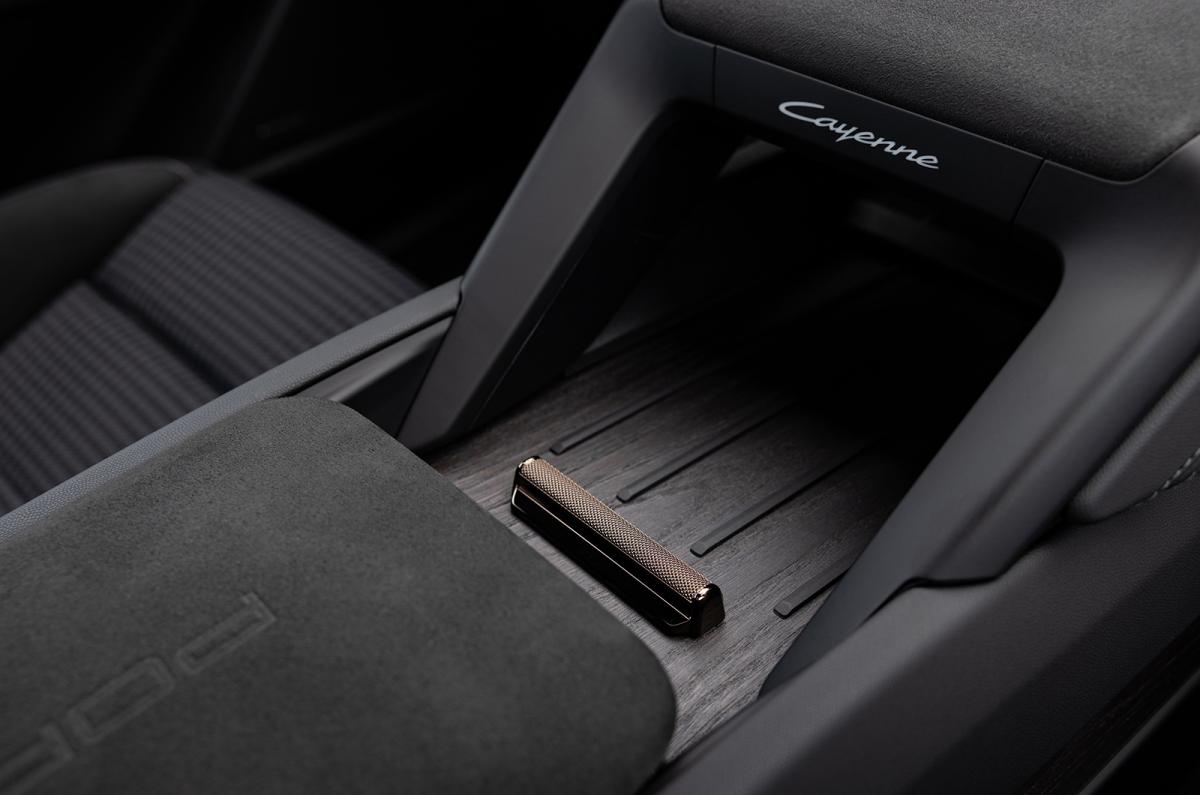
Most of the materials that you will touch regularly feel suitably upmarket, more so than the Audi SQ6 e-tron Sportback, and there’s a useful wrist support to help when operating the central touchscreen. That’s particularly handy because there aren’t that many physical controls – although those that are there feel nice to the touch.
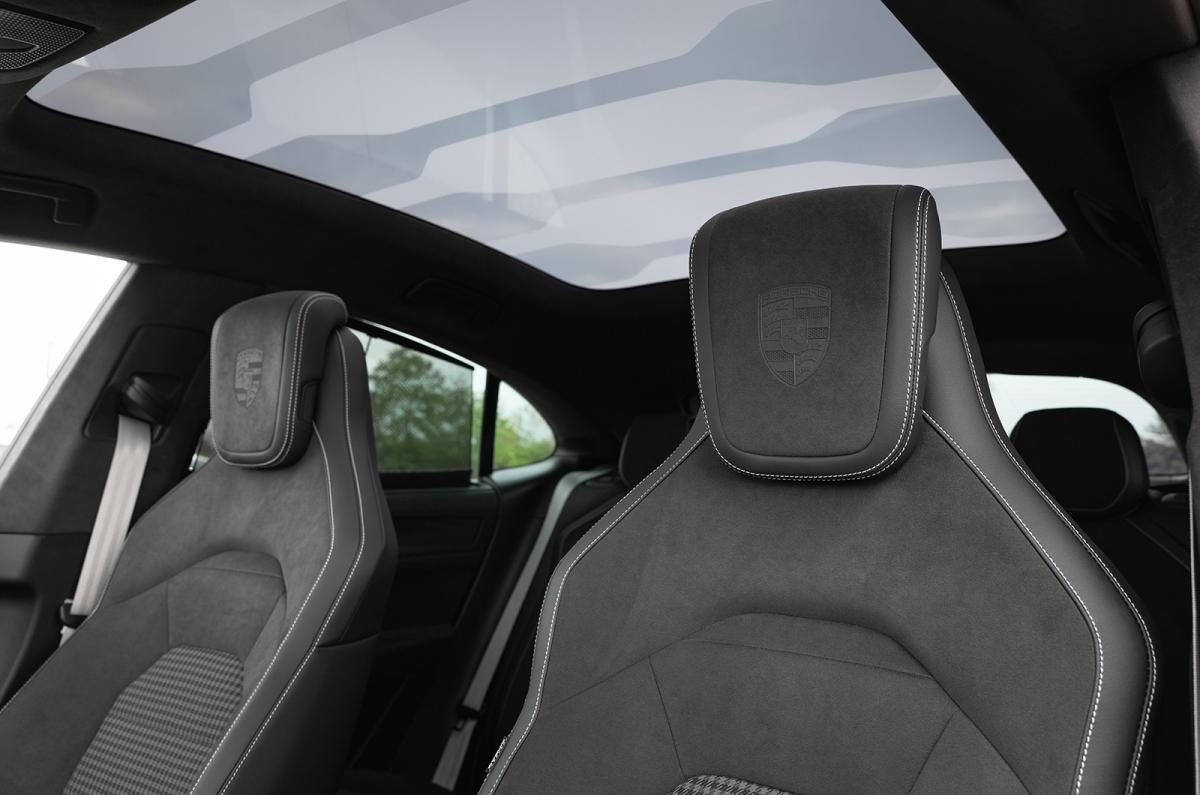
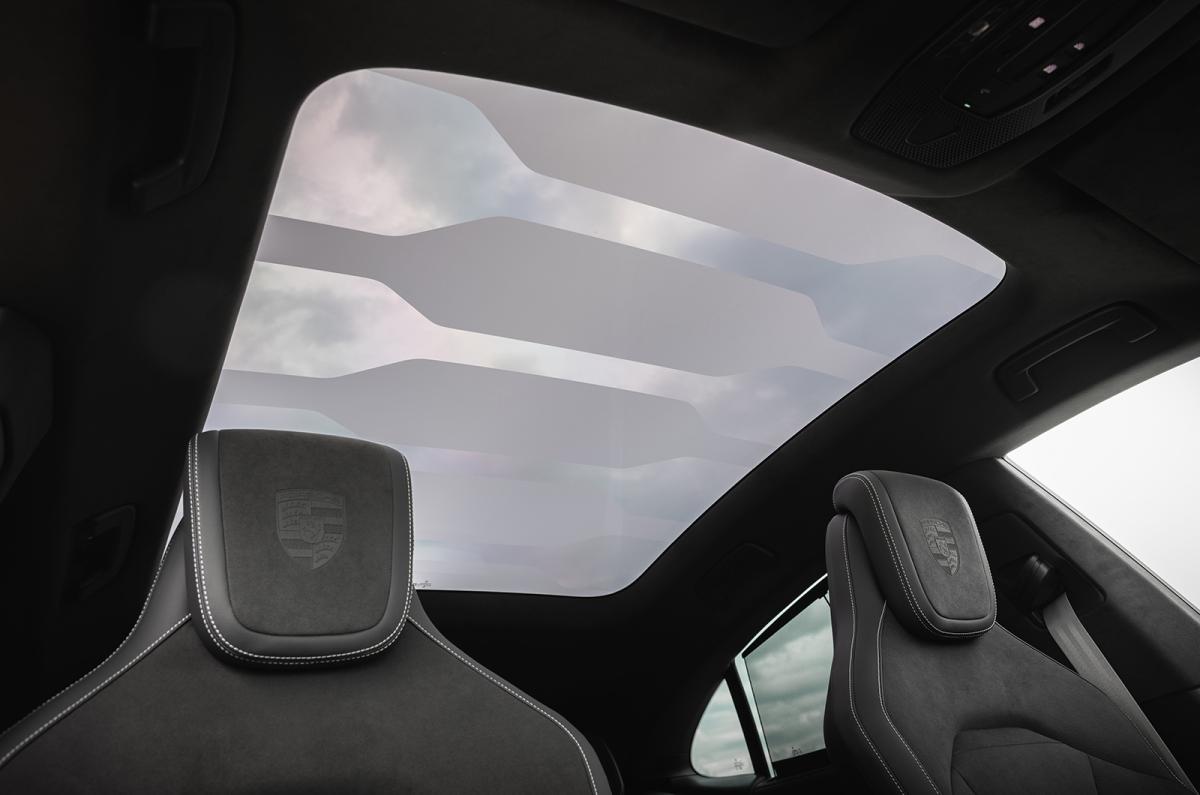
A panoramic roof comes as standard, and while it doesn’t open, it can darken itself electrically, removing the need for a space-sapping blind.
There’s a wide range of customisation options, too, with differing colours, fabrics and finishes all available – for a price.
Is the driving position comfortable and is it easy to see out?
Despite its size, the Cayenne Coupé Electric isn’t intimidating to drive because it’s easy to see out. There’s a good view over the bonnet, and despite that sloping rear window, there’s a decent view out of the back – even if the rear headrests hinder things slightly. If that’s an issue, you can forgo the token middle seat in models with a ‘2+1’ arrangement, and choose the strict four-seater version instead.
Even so, there are parking sensors and cameras all around, so it’s easy to slot the chunky Cayenne into a space.
It’s not hard to get a good driving position, because there’s plenty of adjustment in the steering wheel for both reach and rake. It moves electrically in the Turbo version.
The Turbo also gets 18-way adjustable sports seats which allow you to adjust the side bolsters on the back and seat base to hold you in. Other models get eight-way adjustable seats, but those which move in 14 ways are available as optional extras. Heating elements in the door tops and armrests, as well as the steering wheel and seats will keep occupants snug on cold days.
Matrix LED headlights are across the range, which shift their beams constantly to avoid dazzling other road users. The S and Turbo models have an upgraded system which can light up the road ahead more flexibly.
Are the dashboard and infotainment system easy to use?
As standard the Cayenne Coupé Electric comes with a pair of screens, with a passenger display as an option.
Ahead of the driver sits a 14.25in curved display with sharp graphics and configurable layout. Like the Audi SQ6 e-tron Sportback, it can also display the sat-nav view, which fills the entire screen. There’s a wealth of other information, but the arc of the squared-off steering wheel can easily hide whatever is shown in the top corners of the screen. It’s a problem which obscures the start button and gear selector, too.
There are additional buttons on the sides of the infotainment screen to adjust some of the car’s settings, and some physical controls on the steering wheel and centre console. The latter controls some of the air-con features, but it’s frustrating that you have to delve into the infotainment system to adjust the angle of the air vents. It’s fiddly and attempts to solve a problem that doesn’t exist.
The centre console is a curved 12.2in touchscreen which looks a little like a folding smartphone. Like the instrument display, it’s clear, crisp and uses vibrant colours. Frequently used buttons can be hidden or revealed with a swipe up, again, much like a smartphone, and while the buttons are quite small, there’s a padded wrist rest to help steady your arm. Wireless Apple CarPlay and Android Auto also come as standard.
A 14.9in passenger display is an option on all models, and allows the passenger to set the sat-nav, play games or even watch videos. To avoid distractions, it uses clever tech to obscure it from the driver’s view, and further distractions can be avoided by connecting it to wireless headphones.
A 10-speaker, 150-watt stereo comes as standard on the standard and S trims, while the Turbo gets a punchier 14-speaker, 710-watt Bose stereo system. A head-up display is optional, but it provides a wealth of information, and the graphics are superb.
“While I prefer physical buttons over a touchscreen, the wrist support makes using it so much easier on the move. Why don’t more car makers do this?" – Stuart Milne, Digital editor
Tips & Advice
Passenger & boot space
How it copes with people and clutter
Strengths
- Will easily carry four tall adults
- Reclining rear seats
- Impressive towing capacity
Weaknesses
- Not a genuine five seater
- Cayenne Electric SUV has a far bigger boot
How much space does it have for people?
Big cars should reveal big space, and the Porsche Cayenne Coupé Electric doesn’t disappoint – with one caveat. It’s not available as a full five-seater, rather it has the choice of a ‘2+1’ layout, meaning it has two full-sized seats and with a small one in between. The Cayenne Coupé Electric is also available as a strict four-seater, which only has two seats in the back. If you do this, you get a plastic tray in the middle – but it’s a shame it doesn't have a lid (unless you cover it with the fold-down armrest) and it doesn’t feel the same high-quality material used elsewhere.
Still, there’s no shortage of head, leg and elbow room for four passengers, and even taller adults should be fine in the back; despite that sloping roofline and panoramic roof, there’s more room than you’ll find in an Audi SQ6 e-tron Sportback. The rear seats slide and recline electronically, there’s plenty of space to slide your feet under the front seats to stretch out. But it’s worth noting that if you choose the no-cost 2+1 option, the middle passenger will have to negotiate a large central tunnel with their feet. That’s not a problem you’ll have in the Audi.
However, if you regularly carry loftier folk in the back then the regular Porsche Cayenne Electric will fit the bill better, and if you need space for five in comfort, look to the BMW iX.
There’s a decent amount of storage around the interior. The door pockets can just about hold a 500ml bottle each, but there’s lots of storage around the centre console. Highlights include a deep storage cubby with removable cupholders and a wireless smartphone charging pad and four USB-C sockets. An additional tray is hidden under the touchscreen, with a third under the armrest.
How much room does it have for luggage?
Perhaps the biggest penalty for choosing the Coupé over the SUV version of the Cayenne Electric is when it comes to boot space. The sleeker model provides up to 454 litres of room (there's slightly less with the Bose or Burmester sound system); that doesn’t compare so well with the 506 litres of the SUV, offering slightly less space than the BMW iX and Polestar 4.
Although the boot isn’t particularly tall, it’s a usefully square shape, with a couple of straps and nets to stop things sliding around. There’s some extra underfloor storage, too, although that’s restricted to a long but narrow space near the boot opening. Luggage for a weekend away or the weekly shop should cause few challenges, and the rear seats can slide forward to maximise space.
There’s no load lip, and while the boot close button might be quite a reach for shorter drivers when it’s open, the car can be lowered (or raised) to make loading easier.
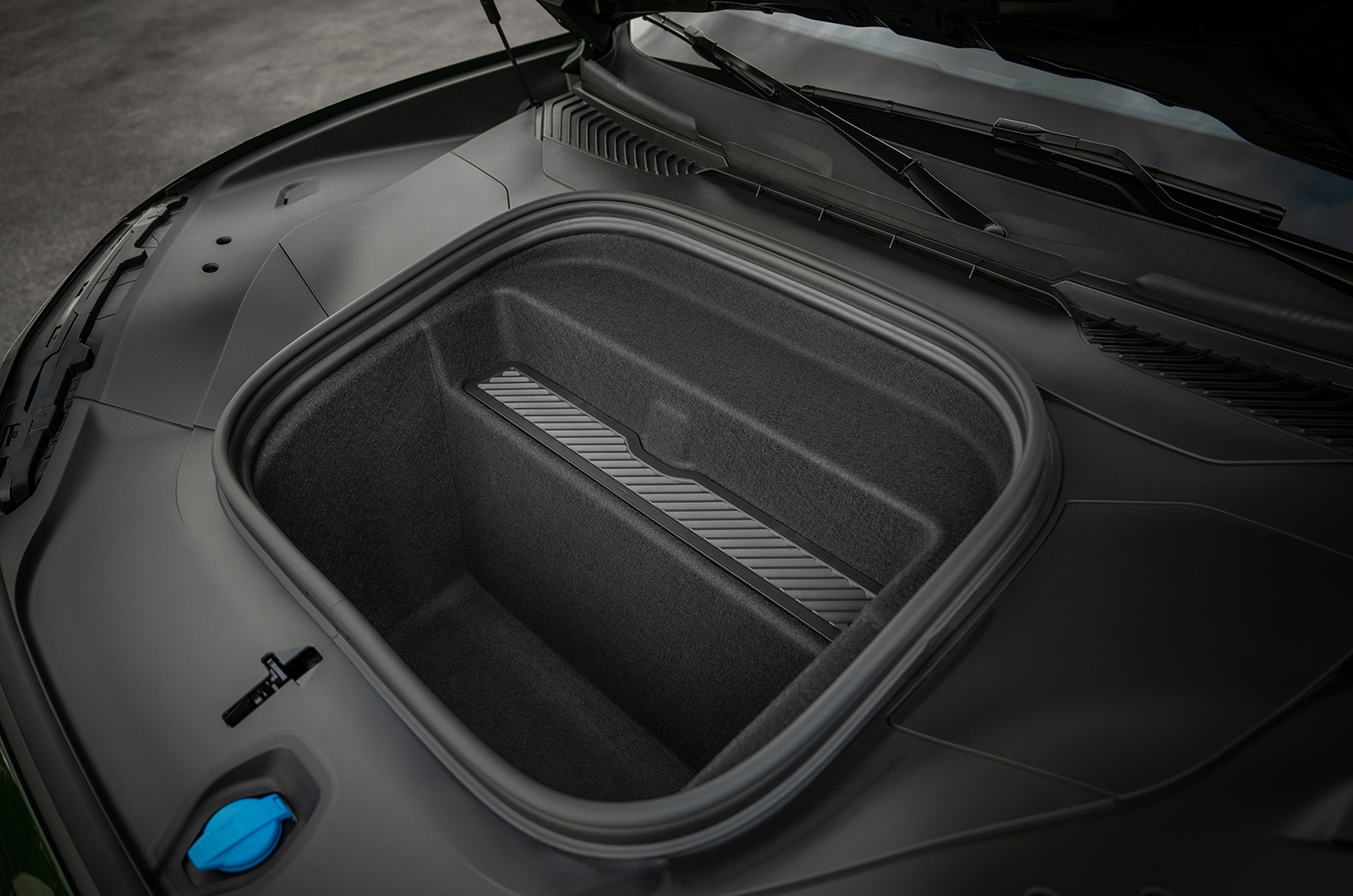
An extra 90 litres of space is in the ‘frunk’, under the bonnet, revealing a neat, square space ideal to store charging cables. It can be opened via a button on the driver’s arm rest.
Towing capacity stands at 3500kg, meaning it should be able to tow large trailers or caravans with ease.
“I like the doors’ soft-close feature. It means you don’t have to slam them shut, plus it’s a nice luxury-car touch.” – Stuart Milne, Digital editor
Buying & owning
Everyday costs, plus how reliable and safe it is
Strengths
- More standard equipment than regular version
- Enviable Euro NCAP crash rating
- Turbo offers hypercar performance
Weaknesses
- Expensive options list
- Reports of Porsche’s patchy reliability
- Expensive as a private purchase
How much does it cost and what equipment do you get?
The Porsche Cayenne Coupé Electric doesn’t cost all that much more than the SUV version, but that still puts the entry-level version even further from the cheapest Audi Q6 e-tron Sportback or BMW iX. The S version costs noticeably more, and the Turbo is too expensive to rationally recommend – although the promise of hypercar acceleration isn’t without appeal. Nevertheless, if you are looking for that kind of performance, it’s worth noting that the Porsche is a better all-round prospect than the Lotus Eletre.
Like many other electric cars, the Cayenne Coupé Electric is likely to shed quite a bit of value over the first three years, which may well translate into pricey PCP finance or car lease payments.
Ways to buy
But also like other electric cars, it will make an appealing company car choice, thanks to its low BIK tax ratings compared with the petrol-powered Porsche Cayenne.
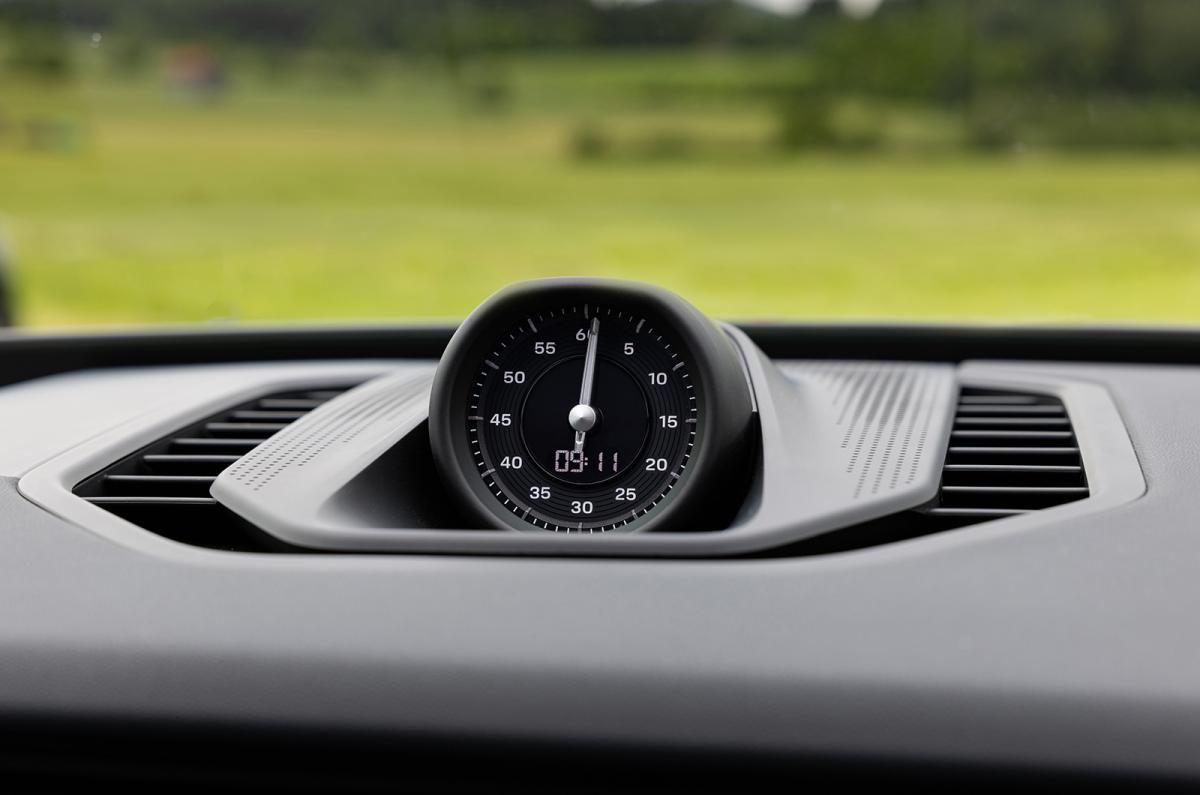
The entry level Cayenne comes with 20in alloy wheels, Matrix LED headlights, two-zone climate control, 8-way adjustable heated front seats, a heated steering wheel, an electrically dimming panoramic roof and soft-closing doors. The S adds a Push-to-Pass mode which uncorks extra power for overtaking, and the Sport Chrono Package which brings an analogue dash-mounted stopwatch, a boost mode and stiffer Sport Plus mode, plus the ability to add options normally found on the Turbo.
Turbo models come with 21in alloy wheels, 18-way adjustable sports seats, a Bose audio upgrade and a track endurance mode which manages battery temperature more effectively when the car is driven at high speeds.
While we wouldn’t blame you if you chose the S for its extra performance, the entry-level model is well-equipped, drives very well and offers as much performance as most drivers could really want. The jump in price to the S is significant, and it’s more of a leap to the Turbo.
Is it reliable, and how long is the warranty?
It’s too soon to accurately judge the reliability of the Cayenne Coupé Electric – or its SUV sibling for that matter – Porsche finished in 19th place out of 30 car makers in our list of the most reliable car brands. More worryingly, perhaps, was that the electric Porsche Taycan was rated the least reliable coupé by readers responding to our reliability survey.
It’s reassuring to know that Porsche offers a three-year, unlimited-mile warranty. That’s on a par with BMW’s and slightly better than Polestar’s cover, which it’s capped at 60,000 miles.
The Cayenne Coupé Electric’s high-voltage battery is guaranteed for eight years or 100,000 miles.
How safe is it?
Although the Cayenne Coupé Electric hasn’t been put through Euro NCAP crash tests, the SUV version has. It achieved a full five star rating, which puts it level with the BMW iX and Polestar 4.
Plenty of safety equipment is fitted as standard, including automatic emergency braking (AEB), lane-keeping assist, blind spot monitoring, speed-limit sign recognition, rear cross traffic alert and exit monitoring – to warn if you’re about to open the door on a cyclist. You also get Isofix mounts on the outer rear seats.
“If you find the advanced driver assistance systems annoying, you can switch most of them off by tapping a prominent button on the car’s touchscreen” – Stuart Milne, Digital editor
Buy it if…
– You want an electric SUV that stands out of the crowd
– You need a powerful electric tow car
– You’re looking for superb performance
Don’t buy it if…
– You need five proper seats
– You’re on a budget
– You need to carry lots of luggage
For all the latest reviews, advice and new car deals, sign up to the What Car? newsletter here
Tips & Advice
Similarly priced cars


If you're interested in finding a Porsche Cayenne, or any of the other electric cars mentioned here, head over to our Cars available now pages to find new cars listed for sale at great prices.
FAQs
Porsche Cayenne specifications
RRP price range
Battery range (miles)
Available fuel types (which is best for you? )
Available colours
Number of engines (see all)
Number of trims (see all)
Company car tax at 20% (min/max)
Company car tax at 40% (min/max)
What is What Car? best price?
The What Car? best price shows you the cheapest way to buy your new car, whether it's by choosing an in-stock car through our partner Autotrader or placing a factory order.
RRP from: £86,265
About our price indicator
What Car? indicative Personal lease example (subject to status)
113kWh Coupe 5dr Electric Auto 4WD (442 ps)
| Expected annual mileage | 6000 |
| Term months | 48 |
| Deposit months | 12 |
| Monthly payment | £1,053.16 |
| Initial payment | £12,637.92 |
Step-by-step
Leasing works a bit like a long-term rental. You drive it, but you don’t own it.
- Choose your car, pick your terms and apply for lease credit online
- Pay monthly rental payments for your chosen term length
- Drive it, enjoy it, then give it back at the end
What you get
When you lease with Autotrader you get all of this:
- Full manufacturer’s warranty
- Road tax and roadside assistance included
- No admin fees
- Free returns within 30 days*
- Lower total monthly cost than PCP/HP
- No balloon payments
- Road tax included
About the writer